


People wear hoodies in the summer for sun protection, comfort, fashion expression, temperature control in air-conditioned spaces, and personal identity.
5 Main Reasons Why People Wear Hoodies in the Summer
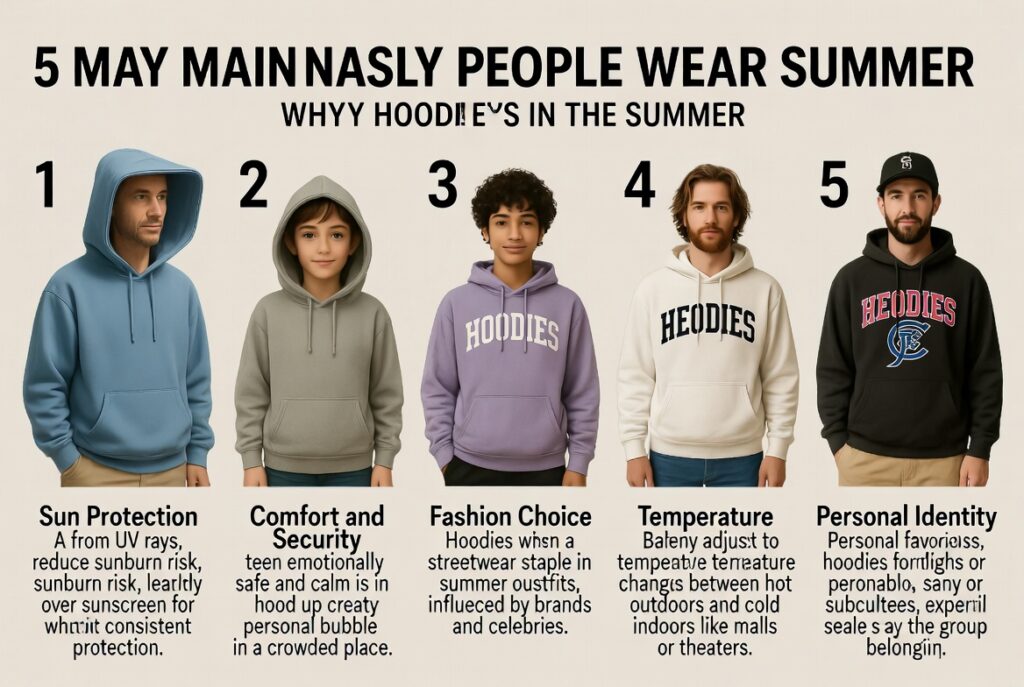
Sun Protection
Wearing a hoodie during summer actually shields your skin from harmful UV rays. The fabric acts as a physical barrier between your skin and the sun, reducing the risk of sunburn and long-term skin damage. Many people living in sunny areas choose hoodies over sunscreen because they provide consistent protection throughout the day without reapplication.
Comfort and Security
There is something calming about pulling on your favorite hoodie, even when it is hot outside. Many teens and young adults feel emotionally safe when wearing hoodies. The soft fabric and the ability to pull up the hood creates a personal bubble that helps reduce stress and anxiety in crowded or unfamiliar places.
Fashion Choice
Streetwear culture has made hoodies a style staple for every season. Brands, influencers, and musicians constantly showcase hoodies in their summer outfits, proving that this piece works year-round. The hoodie is not just clothing anymore—it is a fashion statement that shows you understand current trends and personal style.
Temperature Balance
Walking into a heavily air-conditioned mall, movie theater, or classroom after being outside in the heat can feel like entering a freezer. A lightweight hoodie helps your body adjust to these temperature swings. Modern fabrics are designed to be breathable while still providing warmth when you need it, making them perfect for indoor-outdoor summer days.
Personal Identity
Your hoodie can say a lot about who you are. Whether it shows your favorite band, sports team, gaming community, or just your preferred aesthetic, hoodies let you express yourself. Some people wear them for privacy and anonymity, while others use them to signal belonging to a specific group or subculture.
Psychology Behind Why People Wear Hoodies in the Summer
Clothing choices connect deeply to our emotions. Many people develop strong attachments to certain pieces, and hoodies often become comfort items. The familiar feel of a favorite hoodie can reduce anxiety, especially in social situations where you might feel judged or uncomfortable.
Wearing a hoodie creates a sense of security. The hood itself acts like a shield, giving you control over how much of yourself you show to the world. For teens dealing with body image concerns or social pressure, a hoodie becomes emotional armor. It is not about hiding—it is about feeling confident enough to face the day on your own terms.
This psychological comfort explains why people reach for hoodies even when the weather suggests otherwise. The mental benefit outweighs any physical discomfort from extra warmth.
Fashion and Cultural Influences on Why People Wear Hoodies in the Summer
The hoodie journey from basic gym wear to cultural icon is fascinating. What started as practical athletic clothing in the 1930s transformed into a symbol of youth culture, rebellion, and street style. By the 2000s, hoodies became mainstream fashion, embraced by everyone from skaters to students to celebrities.
Influencers and musicians play a huge role in keeping hoodies trendy all year. When your favorite artist drops a music video wearing a hoodie in summer, it normalizes the look. Athletes wear them during warm-up sessions regardless of season, and brands like luxury hoodie manufacturers create premium versions using lightweight materials specifically for warmer weather.
Fashion brands promote the idea that hoodies transcend seasons. They release summer collections featuring thin, breathable hoodies in light colors and materials that work perfectly for hot weather. This marketing reshapes how people think about seasonal dressing.
Celebrity and Media Influence on Why People Wear Hoodies in the Summer
Celebrities regularly wear hoodies in hot climates, from Los Angeles to Miami beaches. This visibility makes the choice seem normal and even desirable. When famous people pair hoodies with shorts or layer them over tank tops, they create a blueprint for “effortless cool” that fans copy.
Social media amplifies this effect. A single photo of a celebrity in a summer hoodie can inspire thousands of people to adopt the style. The message is clear: fashion rules are flexible, and personal comfort matters more than traditional seasonal expectations.
Practical Reasons Why People Wear Hoodies in the Summer
Beyond style, wearing hoodies in summer serves practical purposes. Indoor spaces often blast air conditioning to extreme levels. A hoodie prevents the uncomfortable chill without requiring you to dress in heavy layers all day. You can easily remove it when you go back outside.
Modern hoodie materials have evolved significantly. Lightweight cotton blends, moisture-wicking fabrics, and breathable synthetics allow air circulation while providing coverage. These are not the heavy fleece hoodies of winter—they are specifically designed for versatility across temperatures.
Hoodies also protect against environmental irritants. They block bugs during evening activities, shield skin from pollution in urban areas, and hide sweat marks that might show on t-shirts. For people who cycle, skateboard, or spend time outdoors, a hoodie offers practical benefits that outweigh any extra warmth.
Health Considerations in Why People Wear Hoodies in the Summer
Some people wear hoodies for medical reasons. Skin conditions like eczema or psoriasis benefit from covered skin that stays protected from sun, dirt, and irritation. People with scars, birthmarks, or other visible differences might choose hoodies to avoid unwanted attention or questions.
Dermatologists often recommend protective clothing for people with sun sensitivity or those taking medications that increase sun damage risk. A hoodie provides reliable coverage without the chemicals found in sunscreen, which some people cannot use due to allergies or skin reactions. For these individuals, summer hoodies are not a fashion choice—they are a health necessity.
Social and Personal Identity in Why People Wear Hoodies in the Summer
Your clothing choices communicate who you are before you say a word. Hoodies serve as identity markers for different communities. Gamers, artists, skaters, and athletes all embrace hoodies as part of their visual identity. The specific style, brand, or graphics tell others about your interests and values.
Hoodies express mood and desired interaction level. Putting your hood up signals that you want space or are focused on something. Wearing an oversized hoodie might show you prioritize comfort over appearance that day. These non-verbal messages help you control social dynamics without speaking.
For many teens, hoodies represent independence and self-expression. Choosing to wear one in summer despite raised eyebrows from adults is a small act of rebellion that asserts personal choice. The psychological boost from dressing exactly how you want creates genuine confidence that extends beyond clothing.
Scientific Factors Behind Why People Wear Hoodies in the Summer
The science of body temperature is more complex than most people realize. Covered skin can actually help cooling through a process called evaporative cooling. When sweat evaporates from skin under light fabric, it pulls heat away from your body more efficiently than exposed skin in direct sunlight.
Desert cultures have worn flowing, covered clothing for centuries because this approach works better than bare skin in extreme heat. The fabric creates a barrier between hot air and skin while allowing air circulation. Modern breathable hoodie materials apply this same principle.
Humidity affects how hot you feel more than actual temperature. In dry climates, a lightweight hoodie can be comfortable even at 85 degrees. In humid areas, the same hoodie might feel oppressive at 75 degrees. Understanding your local climate helps determine when summer hoodies make scientific sense for comfort.
Downsides of Why People Wear Hoodies in the Summer
Wearing hoodies in summer does carry risks if you are not careful. Overheating can lead to heat exhaustion, especially during physical activity or in extreme heat. Dehydration happens faster when your body works harder to cool down. Dark-colored, heavy hoodies in direct sunlight create the most risk.
Choosing the right hoodie matters. Look for moisture-wicking materials that pull sweat away from skin, light colors that reflect rather than absorb heat, and loose fits that allow air movement. Avoid heavy fleece or thick cotton in truly hot conditions. Know when to remove your hoodie before discomfort becomes danger.
Pay attention to your body signals. Dizziness, excessive sweating, nausea, or confusion mean you need to cool down immediately. Remove the hoodie, drink water, and find shade or air conditioning. Fashion should never compromise your health.
Expert Insights on Why People Wear Hoodies in the Summer
Dermatologists recognize that proper sun protection prevents skin cancer and premature aging. Dr. Sarah Chen, a dermatologist in California, notes that “clothing provides the most reliable UV protection when sunscreen alone is not enough.” She recommends lightweight, long-sleeved options like thin hoodies for extended outdoor exposure, especially for people with fair skin or family history of skin issues.
Fashion consultants explain the trend psychology differently. Marcus Rodriguez, who works with teen clothing brands, says “Hoodies represent authenticity and comfort in a world that often demands performance. Teens wear them because they feel real, not because they are trying to impress anyone.” This insight reveals why the trend persists despite impracticality.
Psychologists observe that body image concerns drive some summer hoodie choices. Dr. Lisa Thompson specializes in adolescent mental health and explains that “clothing that provides coverage can reduce anxiety about appearance and help teens feel more confident in social settings. The hoodie becomes a tool for emotional regulation rather than just clothing.”
Best Hoodie Manufacturer (Texasia)
Finding quality hoodies that work for summer requires the right manufacturer. Texasia operates from Finland and Bangladesh, supplying hoodies worldwide. They understand that summer hoodies need different construction than winter versions, focusing on breathable materials and lightweight designs.
Texasia creates hoodies that balance style with comfort across seasons. Their understanding of how hoodies fit ensures products work for different body types and style preferences. They also produce specialized options like weighted hoodies for those seeking additional sensory comfort benefits.
| Feature | Summer Hoodies | Winter Hoodies |
|---|---|---|
| Material Weight | 200-280 GSM | 400-500 GSM |
| Fabric Type | Cotton blend, moisture-wicking | Fleece, heavy cotton |
| Average Price | $25-$45 | $40-$80 |
| Primary Use | Sun protection, AC comfort | Warmth, insulation |
Conclusion
Why do people wear hoodies in the summer comes down to personal choice shaped by multiple factors. From practical sun protection and temperature management to fashion expression and psychological comfort, hoodies serve purposes that go beyond keeping warm. Understanding these reasons helps explain why you see this trend everywhere, regardless of season. Whether for health, style, or emotional security, summer hoodies have earned their place in modern wardrobes as a versatile, meaningful piece of clothing that works for individual needs and preferences.
