
Choosing what clothes to wear for yoga can make or break your practice session. The right outfit lets you move freely through poses, stay comfortable during challenging stretches, and focus on your breathing instead of adjusting your clothes. For teens starting their yoga journey, understanding proper yoga attire means getting the most out of every session while feeling confident and supported.
Why Wearing the Right Clothes for Yoga Matters
Comfort and Flexibility in Yoga Clothing
Your clothing directly affects how well you can move through different yoga poses. When you wear the wrong outfit, simple movements like downward dog or warrior pose become frustrating battles with fabric. Flexible fabrics allow your body to bend, stretch, and twist without restriction. Think about trying to do a deep lunge in stiff jeans versus stretchy leggings – the difference is huge. Your muscles need room to work properly, and your clothes should move with you, not against you.
Different yoga styles require different levels of flexibility. Power yoga demands clothes that stretch in all directions, while gentler practices like restorative yoga allow for slightly looser fits. The key is finding that sweet spot where your clothes support your movement patterns without getting in the way.
Safety and Support During Yoga Practice
Proper-fitting yoga clothes help prevent injuries by staying in place during tricky poses. Imagine attempting a headstand while your shirt slides over your face – that is both dangerous and distracting. Well-fitted tops stay put when you go upside down, and secure waistbands prevent embarrassing wardrobe malfunctions during floor work.
Support goes beyond just staying covered. Good yoga clothes provide gentle compression that supports your muscles during challenging poses. This support helps maintain proper alignment and reduces the risk of straining muscles. For girls, a supportive sports bra is essential for preventing discomfort during jumping or flowing sequences.
Enhancing Focus and Mindfulness
When your clothes feel right, your mind stays focused on your practice. Comfortable yoga wear helps you maintain concentration on your breathing and body awareness instead of constantly adjusting your outfit. Yoga is about connecting your mind and body, and uncomfortable clothing creates a barrier to that connection.
The mental side matters too. Wearing clothes that make you feel good boosts your confidence on the mat. When you feel comfortable in your skin and your outfit, you are more likely to push yourself and try new poses without self-consciousness holding you back.
4 Key Factors to Consider When Choosing Clothes to Wear for Yoga
Fabric and Material
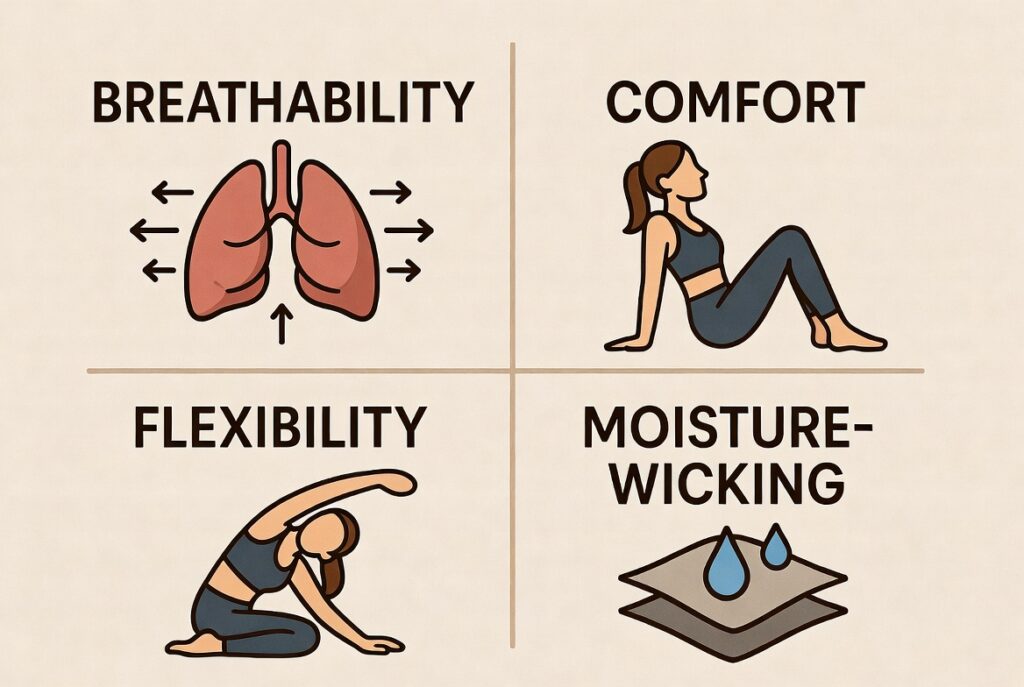
Breathable, moisture-wicking fabrics keep you dry and comfortable throughout your practice. Natural materials like cotton feel soft and breathable, making them perfect for gentle yoga styles. Cotton absorbs sweat, which works well for low-intensity sessions but can feel heavy during hot yoga.
Synthetic blends containing spandex or polyester offer excellent stretch and quick-drying properties. These fabrics pull moisture away from your skin, keeping you cool during intense flows. Bamboo fabric combines the best of both worlds – natural softness with moisture-wicking abilities. Look for blends that contain at least 10-15% spandex for proper stretch.
Avoid heavy, non-breathable materials like thick fleece or denim that trap heat and restrict movement. These fabrics make you sweat more and limit your range of motion. Stick with lightweight, stretchy materials designed for athletic activities.
Fit and Comfort
The right fit means snug enough to stay in place but loose enough to breathe. Your yoga clothes should feel like a second skin – present but not restrictive. Test your outfit by doing a few basic stretches at home. Can you bend over comfortably? Do squats without fabric pulling? Reach your arms overhead without your shirt riding up?
Too-tight clothing cuts off circulation and makes breathing harder, especially during deep belly breathing exercises. Overly loose clothes create their own problems – they bunch up, get in your way, and might reveal more than you want during inversions. Find that middle ground where you forget you are wearing clothes at all.
Pay special attention to waistbands. Elastic should be firm but not digging into your skin. Many yoga pants now feature wide, flat waistbands that distribute pressure evenly and stay put during movement.
Style and Coverage
Choose modest styles that provide proper coverage for all yoga poses. High-waisted leggings prevent your lower back from showing during forward folds. Longer tops or fitted tanks stay in place during inversions. Think about the poses you will be doing – child’s pose, downward dog, and shoulder stands all put your clothing to the test.
For tops, fitted styles work better than loose, flowing shirts that fall over your head during downward dog. Racerback or cross-back designs prevent straps from sliding off your shoulders. Some people prefer cropped tops for hot yoga, while others feel more comfortable in longer tanks or fitted tees.
Darker colors hide sweat stains better than light colors, which matters if you are self-conscious about visible perspiration. Solid colors or subtle patterns also help you focus on your practice instead of busy designs.
Climate and Environment
Hot yoga requires lightweight, minimal clothing that lets heat escape from your body. Tank tops and shorts work well for heated studios. Look for fabrics specifically designed for hot yoga – they are usually thinner and more breathable than standard yoga wear.
Regular temperature studios allow for more variety. You might start class in a light hoodie or sweatshirt and remove it as you warm up. Layering lets you adjust to your comfort level as class progresses.
Cold studios or outdoor yoga sessions need warmer base layers. Long-sleeved fitted tops under your regular yoga clothes trap heat while still allowing movement. Just make sure your layers are still stretchy and non-restrictive.
| Yoga Style | Best Clothing Choice | Fabric Type |
|---|---|---|
| Hot Yoga | Minimal, breathable | Moisture-wicking synthetic |
| Power/Vinyasa | Fitted, supportive | Spandex blends |
| Yin/Restorative | Comfortable, loose | Soft cotton or bamboo |
| Outdoor Yoga | Layered, adaptable | Mixed materials |
Recommended Types of Clothes to Wear for Yoga
Yoga Pants and Leggings
Leggings are the most popular choice for yoga because they move with you and stay in place. Full-length leggings work for most yoga styles and provide complete coverage. Capri-length options keep you cooler during hot yoga while still offering good coverage.
High-waisted styles are perfect for teens because they stay up during movement and provide extra core support. Mid-rise options work too if you prefer less compression around your waist. Look for flat seams that will not rub or irritate your skin during long holds.
For guys, fitted athletic pants or joggers with tapered legs prevent fabric from getting in the way. Some prefer shorts with compression liner shorts underneath for support and coverage.
Yoga Tops and Tanks
Fitted tank tops and t-shirts give you freedom of movement without excess fabric. Look for tops that are long enough to tuck into your waistband or naturally stay put during movement. Built-in shelf bras in tanks provide light support for low-impact practices.
T-shirts made from moisture-wicking fabric work great for all yoga styles. Choose fitted styles over baggy tees that bunch up and get in your way. Longer length tees or those with curved hems stay tucked better than straight-cut styles.
For hot yoga, shorter crops or sports bras alone might feel more comfortable. Just make sure your studio allows bare midriffs before showing up in just a bra top.
Sports Bras and Undergarments
A supportive sports bra is essential for comfortable practice. Medium-support bras work for most yoga styles, while high-impact support helps during power yoga or vinyasa flows with jumping. Look for wide straps that do not dig into your shoulders and smooth bands that sit flat under your top.
Skip regular underwear with visible panty lines or uncomfortable seams. Seamless underwear or none at all (if your leggings are thick enough) prevents distraction. Some yoga pants have built-in underwear, which simplifies things.
Optional Accessories
Yoga socks with grip dots help if you practice on slippery surfaces or prefer not to go barefoot. Most studios encourage bare feet for better grip and connection with the mat, but socks can help if you have sweaty feet or feel uncomfortable barefoot.
Headbands keep hair out of your face during forward folds and inversions. Wide, stretchy bands work better than thin elastic ones that slip. Wristbands help if you have sweaty palms that slip on the mat during downward dog.
Tips for Choosing the Perfect Yoga Clothes
Start by prioritizing comfort and fabric quality over trendy styles or brand names. Your clothes need to work hard during your practice, so investing in good quality pieces pays off. Quality fabrics last longer, maintain their stretch, and feel better against your skin.
Consider your specific yoga style and intensity level. Power yoga needs different clothing than restorative yoga. Hot yoga requires minimal, breathable pieces while regular classes allow more variety. Match your wardrobe to your practice style.
Build a versatile yoga wardrobe with mix-and-match pieces. Two or three pairs of quality leggings and four or five tops give you plenty of outfit combinations. Stick with coordinating colors that work together so everything matches.
Try different brands and styles to find what fits your body best. Everyone has different preferences – some love high waists while others prefer mid-rise. Some like compression while others want more give. The only way to know what works for you is trying different options.
Common Mistakes to Avoid When Selecting Yoga Clothes
Wearing clothes that are too tight restricts your breathing and movement. You should be able to take deep belly breaths without your waistband cutting in. Too-loose clothing creates its own problems – fabric gets in your way and might expose you during inversions.
Ignoring fabric breathability leads to uncomfortable, sweaty practices. That cute cotton shirt might feel great at first but becomes heavy and clingy once you start sweating. Choose athletic fabrics designed to handle moisture.
Picking inappropriate styles for your specific yoga practice causes frustration. Loose, flowing pants might work for gentle yoga but become dangerous during faster-paced classes where you might step on your own pant legs. Tiny shorts might feel too revealing during wide-legged poses.
Forgetting to test your outfit before class leads to mid-practice wardrobe adjustments. Do a few poses at home in your new yoga clothes before wearing them to class. Make sure nothing rides up, falls down, or restricts your movement.
Conclusion
Understanding what clothes to wear for yoga sets you up for a better practice experience. The right outfit supports your movement, keeps you comfortable, and lets you focus on connecting your mind and body. For teens starting yoga, investing in a few quality pieces beats buying lots of cheap clothes that do not perform well.
Comfort, flexibility, and proper coverage matter more than following trends. Your yoga clothes should make you feel confident and supported, not self-conscious or restricted. Start with basic pieces that work for your body and your practice style, then expand your wardrobe as you figure out what you love.
The best yoga outfit is the one you forget you are wearing – it just works. Take time to find pieces that fit well, feel good, and support your practice. Your yoga journey deserves clothing that helps rather than hinders your progress on the mat.
FAQ
What are the best fabrics for yoga clothes, and why do breathability and moisture-wicking matter?
Spandex blends, bamboo, and polyester work best because they stretch, breathe, and pull sweat away from your skin for comfort.
Should yoga clothes be tight-fitting or loose, and what are the pros and cons of each?
Fitted clothes stay in place and move with you, while loose styles can bunch up or get in your way during poses.
What should men wear for yoga to ensure comfort and full range of motion?
Fitted athletic pants or joggers with moisture-wicking t-shirts or tanks provide comfort, support, and unrestricted movement for men.
How does clothing differ for hot yoga compared to regular or gentler styles like yin or restorative yoga?
Hot yoga needs minimal, breathable pieces like shorts and tanks, while gentler styles allow comfortable, slightly looser cotton or bamboo clothing.
Ready to Build Your Perfect Yoga Wardrobe?
Texasia offers quality, comfortable clothing perfect for your yoga practice. From supportive leggings to breathable tank tops, find everything you need to practice with confidence. Explore our collection of athletic wear designed for movement, comfort, and style that supports your wellness journey.

