
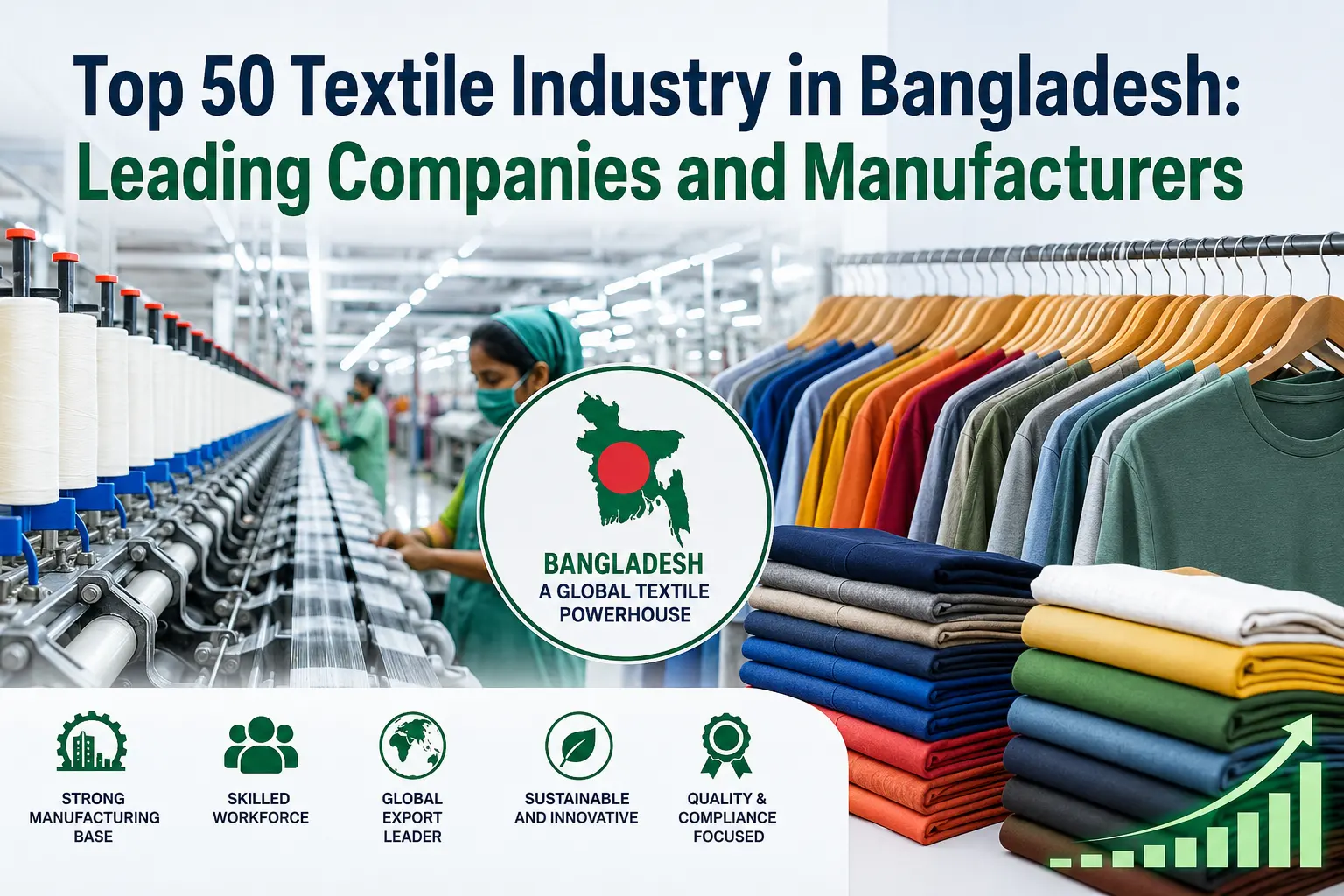
Bangladesh ranks among the world’s top textile and apparel producers. Thousands of spinning, knitting, weaving, dyeing, and finishing units keep this sector running. This guide covers the top 50 textile industry in Bangladesh, comparing major names by product range, factory location, and buyer suitability. You will find company profiles, product categories, sourcing tips, and a practical buyer checklist. Whether you run a small brand or a large retail chain, this list helps you find a top textile company in Bangladesh to match your order.
Overview of the Textile Industry in Bangladesh
Textiles account for a large share of the national economy here. Garment and textile exports bring in close to $40 billion each year, according to recent industry figures. Millions of workers, many of them women, depend on this sector for income. Gazipur, Narayanganj, Dhaka, and Chattogram host the densest factory clusters. Local demand keeps smaller mills busy, while global brands drive the large export houses.
The textile industry in Bangladesh spans several production stages. Spinning mills turn raw cotton into yarn. Knitting and weaving units convert that yarn into fabric. Dyeing and finishing plants add color and texture. Garment factories then cut, sew, and pack finished clothing for shipment. Many large groups now run all four stages under one roof, a setup known as vertical integration.
How Does the Textile Supply Chain Work in Bangladesh?
Raw Material and Yarn Production
Most of the cotton used here is imported, since local cotton production remains limited. Spinning mills process raw cotton and synthetic fibers into yarn. This yarn serves as the base material for all fabric types. Quality checks at this stage affect the final garment’s strength.
Knitting and Weaving
Knitting machines turn yarn into stretchy fabric used for T-shirts, polos, and sweatshirts. Weaving looms create sturdier fabric for shirts, trousers, and denim. Each method suits different garment categories and price points.
Dyeing, Printing, and Finishing
Fabric moves next through dyeing drums for color application. Printing units add patterns, logos, and custom designs. Finishing steps include washing, softening, and shrink testing before cutting begins.
Garment Manufacturing and Export
Product development starts with a tech pack and sample request. Factories then produce sampling runs for buyer approval. Bulk production follows, along with inspection, folding, and packing. Export teams handle documentation, customs paperwork, and shipping schedules for international buyers.
How We Selected the Top 50 Textile Industries in Bangladesh
This ranking uses public research, not an official government list. No single authority ranks all factories here, so buyers should treat this guide as a starting point. Selection criteria included manufacturing scale, product variety, export history, and known compliance records. Sustainability efforts, factory location, and vertical integration also shaped the order.
| Evaluation Factor | Suggested Weight |
|---|---|
| Manufacturing capability | 20% |
| Product range | 15% |
| Export experience | 15% |
| Certifications and compliance | 15% |
| Sustainability practices | 15% |
| Production capacity | 10% |
| Publicly verifiable information | 10% |
Top 50 Textile Industry in Bangladesh Comparison Table
| Rank | Company | Location | Main Products | Best Suited For |
|---|---|---|---|---|
| 1 | Ha-Meem Group | Dhaka | Denim, shirts, jackets | Large-volume denim buyers |
| 2 | Beximco Textiles and Fashions | Dhaka | Fabric, knitwear, garments | Global fashion brands |
| 3 | Square Fashions | Uttara, Dhaka | Knitwear, denim yarn | Bulk knitwear orders |
| 4 | DBL Group | Dhaka | T-shirts, polos, kidswear | Mid-range fashion brands |
| 5 | Noman Group | Gazipur | Home textiles, terry towels | Home textile importers |
| 6 | Zaber and Zubair Fabrics | Gazipur | Sustainable fabric | Eco-conscious brands |
| 7 | Envoy Group | Dhaka | Knitwear, denim | Compliance-focused buyers |
| 8 | Fakir Group | Narayanganj | Knit fabric, garments | Vertically integrated sourcing |
| 9 | Pacific Jeans | Chattogram | Denim jeans | Denim specialty brands |
| 10 | Palmal Group | Dhaka | Woven and knit garments | Diverse product buyers |
| 11 | Ananta Group | Dhaka | Denim, woven apparel | Casualwear brands |
| 12 | Youngone Group | Chattogram | Outerwear, sportswear | Technical apparel buyers |
| 13 | Mohammadi Group | Dhaka | Sweaters, towels, lingerie | Multi-category sourcing |
| 14 | Meghna Group | Narayanganj | Spinning, weaving, garments | Full supply chain buyers |
| 15 | Viyellatex Group | Dhaka | Knitwear, printing | Custom print orders |
| 16 | Echotex Ltd | Habiganj | Denim fabric and garments | Sustainable denim buyers |
| 17 | KDS Group | Chattogram | Ready-made garments | Export-focused retailers |
| 18 | Epyllion Group | Dhaka | Knitwear | Fashion knitwear brands |
| 19 | Opex and Sinha Group | Dhaka | Woven garments | Mid-size order buyers |
| 20 | AKH Group | Dhaka | Knit and woven garments | General apparel buyers |
| 21 | Standard Group | Dhaka | Jeans and casualwear | Denim importers |
| 22 | Interstoff Group | Dhaka | Denim and casualwear | Youth fashion brands |
| 23 | Renaissance Group | Dhaka | Woven garments | Basic apparel buyers |
| 24 | Islam Garments | Dhaka | Knit garments | Small to mid orders |
| 25 | Silver Composite Textile Mills | Gazipur | Composite knit fabric | Composite fabric buyers |
| 26 | Cotton Club BD | Gazipur | Knitwear | Casual knitwear brands |
| 27 | Swan Group | Dhaka | Knit garments | Regional buyers |
| 28 | Youth Group | Dhaka | Casual apparel | Youth fashion labels |
| 29 | Hop Lun Bangladesh | Dhaka | Intimate apparel | Lingerie and swimwear brands |
| 30 | Rupa Group | Narayanganj | Knit and yarn | Yarn buyers |
| 31 | Northern Tosrifa Group | Dhaka | Woven and knit garments | Mixed category buyers |
| 32 | Four H Group | Dhaka | Knitwear | Basic knitwear orders |
| 33 | Mascot Group | Dhaka | Sweaters and knitwear | Winterwear brands |
| 34 | Jinnat Group | Chattogram | Knit and woven garments | Diverse sourcing needs |
| 35 | Vision Group | Dhaka | Apparel manufacturing | General apparel buyers |
| 36 | T and T Group | Dhaka | Textile and garments | Mid-volume buyers |
| 37 | Fortis Group | Dhaka | Woven garments | Formal wear brands |
| 38 | Robintex Group | Narayanganj | Knit fabric and garments | Knit fabric buyers |
| 39 | SQ Group | Dhaka | Textile products | General textile buyers |
| 40 | Nassa Group | Dhaka | Woven and knit apparel | Large export orders |
| 41 | Reliance Group | Dhaka | Garment manufacturing | Standard apparel buyers |
| 42 | Asian Group | Dhaka | Garments and textiles | Mixed apparel sourcing |
| 43 | Clifton Group | Dhaka | Textile manufacturing | General buyers |
| 44 | Shasha Denims | Narayanganj | Denim fabric | Denim fabric mills |
| 45 | Regent Group | Dhaka | Garment production | Mid-size buyers |
| 46 | Dragon Group | Dhaka | Sweaters and knitwear | Winter apparel brands |
| 47 | Liberty Knitwear | Gazipur | Knit garments | Knitwear specialty buyers |
| 48 | Akij Group | Dhaka | Diversified textiles | Conglomerate-level sourcing |
| 49 | Esquire Knit Composite | Gazipur | Composite knit facility | Full-package knitwear buyers |
| 50 | Texasia International Fashion | Dhaka | Hoodies, denim, polos, T-shirts | Small and growing brands |
Certification and export market details change often. Always confirm current status directly with each factory before placing an order.
Best Textile Companies in Bangladesh by Product Category
The best textile companies in Bangladesh vary by product type. A denim specialist may not be suitable for a home textile order.
Best Spinning Mills: Meghna Group and Noman Group operate large yarn and spinning operations that feed both local and export markets.
Best Knit Textile Manufacturers: Square Fashions, DBL Group, and Epyllion Group lead in knit fabric and finished knitwear.
Best Woven Fabric Manufacturers: Renaissance Group, Opex, and Sinha Group focus on shirts, trousers, and woven basics.
Best Denim Manufacturers: Pacific Jeans, Echotex, and Shasha Denims stand among the strongest denim specialists in the country.
Best Home Textile Manufacturers: Noman Group, with its Zaber and Zubair Fabrics unit, leads the production of bedsheets, towels, and household textiles.
Best Dyeing and Finishing Companies: Vertically integrated groups such as Ha-Meem and Fakir Group operate in-house dyeing and washing units.
Best Sustainable Textile Factories: Echotex and DBL Group publish sustainability reports covering water use and renewable energy.
Best Textile Companies for Small Buyers: Texasia International Fashion Co Ltd and similar mid-sized exporters often work with lower minimum orders than the largest conglomerates. You can review product lines directly on the Texasia clothing manufacturer profile to see current export categories.
The right manufacturer depends on product type, order size, budget, and delivery timeline. A larger company name does not always mean a better fit for your brand.
Advantages of Working with Textile Companies in Bangladesh
Manufacturing costs here stay competitive compared with many other exporting regions. A large, trained workforce keeps production moving at scale. Many factories operate vertically integrated setups, reducing handoff delays between the fabric and garment stages. Buyers gain access to strong knitwear and woven capability under one roof. Export experience runs deep, since factories have shipped to Europe, the USA, and Australia for decades. Certified factories are widely available for brands needing verified compliance.
Disadvantages and Potential Challenges
Large factories often set high minimum order quantities, which can block small brands. Communication gaps sometimes appear between buyers and production teams. Quality can vary between factories, even within the same group. Lead times run longer during peak export seasons. Dependence on raw material imports adds costs and shipping risk. Buyers should always confirm details through a factory audit rather than relying solely on quoted claims. Unverified sourcing agents add another layer of risk that warrants scrutiny.
How to Choose a Textile Manufacturer in Bangladesh
Step 1: Define Your Product Requirements. List fabric type, GSM, color, sizing, and finishing details clearly before contacting any factory.
Step 2: Determine Your Target MOQ. Order volume shapes both pricing and which factories will accept your project.
Step 3: Verify the Company Legal Identity. Check business registration, export license, and physical factory address before moving forward.
Step 4: Check Certifications. Confirm certificates directly through the issuing certification body, not through factory-provided images alone.
Step 5: Request Samples. Ask for fabric swatches, development samples, and a pre-production sample before bulk approval.
Step 6: Confirm Production Capacity. Make sure the factory can handle your order volume within your required timeline.
Step 7: Compare Quotations. Review product price, sampling cost, testing fees, packaging, and shipping terms side by side.
Step 8: Arrange a Factory Audit. A physical or third-party inspection reveals real conditions behind any quoted claim.
Step 9: Approve a Pre-Production Sample. Confirm the material, color, measurements, and trims before bulk production begins.
Step 10: Use a Written Agreement. Document quality standards, deadlines, payment terms, and a clear dispute process.
Textile Manufacturing Prices in Bangladesh
Prices shift based on fabric composition, yarn count, and GSM weight. Design complexity, dyeing method, and printing style also affect cost. Order quantity plays a major role in final unit pricing. Testing requirements, packaging style, and shipping terms also factor in. Textile prices in Bangladesh depend heavily on raw material cost and buyer specifications. Always request an updated quotation directly from the manufacturer rather than relying on old published figures.
Minimum Order Quantities and Production Lead Times
| Product Type | Typical MOQ | Sample Time | Bulk Lead Time |
|---|---|---|---|
| Basic T-shirt | Confirm with supplier | 7 to 14 days | 30 to 60 days |
| Denim jeans | Confirm with supplier | 10 to 20 days | 45 to 75 days |
| Polo shirt | Confirm with supplier | 7 to 14 days | 30 to 60 days |
| Bedsheet set | Confirm with supplier | 10 to 20 days | 40 to 70 days |
These figures serve only as general estimates. Always confirm exact numbers with your chosen factory before planning production.
Common Mistakes When Choosing a Textile Company in Bangladesh
Selecting a Factory Only by Price: The lowest quote often hides quality gaps or delivery delays later.
Not Verifying Certifications: A certificate image proves nothing without direct confirmation from the issuing body.
Skipping Product Testing: Shrinkage, colorfastness, and fabric strength tests catch problems before mass production.
Accepting an Unclear Quotation: Every cost and specification must be documented clearly before you place an order.
Ignoring MOQ Requirements: Mismatched order sizes against factory minimums result in wasted time and failed negotiations.
Placing Bulk Orders Without Samples: A sample approval step protects your brand from costly production errors.
Failing to Check Production Capacity: An overbooked factory can significantly delay your delivery date.
Skipping Third-Party Inspection: Independent inspectors catch defects that internal factory reports may miss entirely.
Real-World Textile Sourcing Example
A UK-based clothing startup needed 5,000 organic cotton T-shirts in three colors. The team first prepared detailed product specifications, including GSM and fit. They shortlisted five factories from a list of Bangladesh textile companies matching their category. Quotations came in from each shortlisted supplier for comparison. The buyer then verified GOTS certification directly with the certifying body. Samples arrived within two weeks, and one supplier was selected after review. Pricing was negotiated based on fabric cost and order volume. Production began after both sides signed a written agreement. A third-party inspector checked the goods before shipping began.
Textile Factory Verification and Compliance
Verification starts with checking business registration and export license records. Factory audits confirm real working conditions and safety standards. Labor compliance, fire safety, and building safety all matter for buyer protection. Environmental and chemical management practices reveal how responsibly a factory operates. Certification validity should always bebe verified by the original issuing organization, not just a factory-shared image.
Sustainability in the Bangladesh Textile Industry
Bangladesh now hosts many green-certified factories built around energy-efficient machinery. Water recycling systems and effluent treatment plants reduce environmental impact. Some factories use recycled fibers and low-impact dyeing methods. Renewable energy adoption continues to grow across larger manufacturing groups. Waste reduction programs and internationally recognized sustainability certifications support this shift. Buyers focused on eco-friendly sourcing should request verified sustainability reports directly from each factory.
Major Textile Manufacturing Locations in Bangladesh
Gazipur hosts one of the densest clusters of large textile and garment factories nationwide.
Narayanganj is of great importance for the manufacturing of knitwear and textile fabrics.
Dhaka houses corporate offices, buying houses, and countless garment production units.
Chattogram provides key export infrastructure, industrial zones, and denim manufacturing strength.
Savar and Ashulia form another major garment and textile manufacturing cluster near Dhaka.
FAQ
Which is the largest textile company in Bangladesh?
Largest can mean different things, including revenue, workforce size, factory count, or export value. Based on workforce and factory count, Ha-Meem Group and Beximco Textiles rank among the biggest names in the country.
How many textile companies are there in Bangladesh?
Industry sources report that over 1,800 integrated textile mills are registered nationwide. This includes hundreds of spinning mills and roughly one thousand fabric manufacturing units.
Which area has the most textile factories in Bangladesh?
Gazipur, Narayanganj, and Dhaka together hold the highest concentration of textile factories. Chattogram also carries a strong industrial presence, especially for denim production.
What products does the Bangladesh textile industry manufacture?
Factories here produce yarn, knit and woven fabric, denim, sweaters, home textiles, and finished garments. The product range spans basic T-shirts to technical outerwear and lingerie.
How can I find a reliable textile supplier in Bangladesh?
Verify business registration, request samples, and check certifications directly with the issuing body. A factory audit or third-party inspection adds further confidence before ordering.
What is the typical MOQ for Bangladesh textile factories?
MOQ varies by product type, fabric choice, and factory size. Smaller exporters may accept lower minimums than large vertically integrated conglomerates.
Are textile factories in Bangladesh internationally certified?
Many larger factories hold certifications such as GOTS, OEKO-TEX, WRAP, or BSCI. Always confirm the current certificate status directly with the certifying organization before ordering.
How can I verify a textile company in Bangladesh?
Check the official company website, export registration records, and any published certification database. Requesting a factory audit adds another layer of confirmation.
What is the difference between a textile mill and a garment factory?
A textile mill produces yarn or fabric as raw material. A garment factory cuts, sews, and finishes the fabric into wearable clothing.
Can small fashion brands source products from Bangladesh?
Yes, though minimum order sizes at large factories can pose a challenge. Mid-sized manufacturers and export houses often accept smaller order volumes instead.
How long does textile manufacturing take in Bangladesh?
Timelines depend on the combined sampling, sourcing, and bulk production stages. Most orders take between six and twelve weeks from sample approval to shipment.
Why is Bangladesh popular for textile manufacturing?
Competitive pricing, a large skilled workforce, and decades of export experience all support this reputation. Strong supply-chain infrastructure across major cities adds further advantage for global buyers.
Conclusion
This guide to the top 50 textile companies in Bangladesh provides buyers with a practical starting point. Compare product focus, certifications, and MOQ before choosing any factory. Always verify claims directly and request samples first.

