
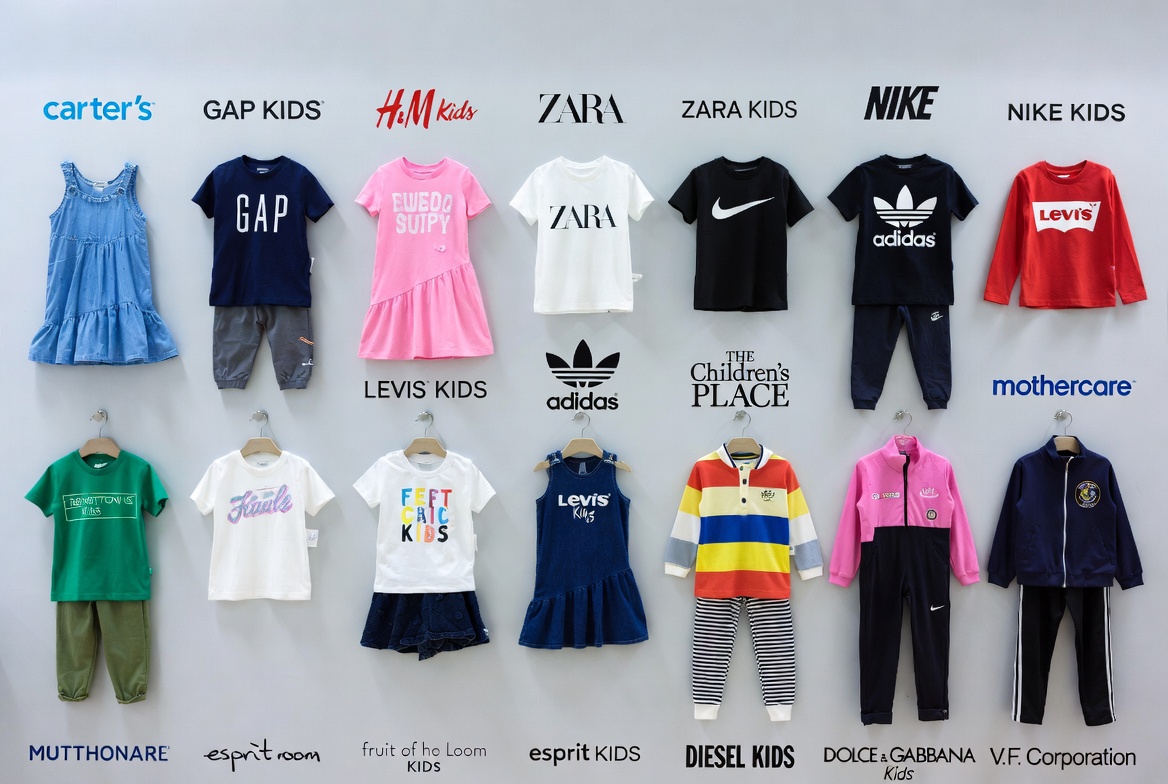
When parents shop for their children, they want more than just cute designs. They want comfort, safety, durability, and value. That is why choosing the right kids’ wear brand matters so much. This guide covers the top 15 kids’ wear brands in the world, breaking down what makes each one trusted by millions of families globally.
From budget-friendly basics to luxury designer labels, the global children’s apparel market offers something for every type of buyer. You will also learn how Bangladesh plays a key role in kids’ wear manufacturing and how manufacturers like Texasia fit into the broader global supply chain for children’s clothing.
What Are the Top 15 Kids’ Wear Brands in the World?
The top 15 kids’ wear brands in the world were not chosen randomly. Each brand on this list earned its place through global recognition, strong market presence, parent trust, and consistent product quality. The selection covers mass-market staples, premium labels, and sportswear-focused names, because real buyers across different income levels and regions shop from all three categories.
These brands serve newborns, toddlers, school-age children, and teens. Some focus on basics. Others go after style. A few target performance and active lifestyles. Together, they present the full picture of the global kids’ clothing market today.
Why These Kids Wear Brands Matter
Parents do not just buy clothes. They buy trust. A brand that delivers soft fabric, safe materials, consistent sizing, and reasonable pricing earns repeat business. The brands on this list have built that trust across multiple countries and retail channels. Fabric quality, design consistency, and global distribution set leading kids’ wear brands apart from generic labels.
Children have sensitive skin. They move constantly. They grow fast. So the best kids wear brands balance comfort, stretch, wash durability, and age-appropriate style in every product they make.
Selection Criteria for Kids’ Wear Brands
To keep this list EEAT-friendly and grounded in real market data, the following criteria were used:
- Global brand presence across retail and online channels
- Price positioning that reflects real buyer behavior
- Product variety covering different age groups and occasions
- Reputation built through consistent quality and safety records
- Retail and e-commerce availability in multiple markets
Texasia is a global manufacturer of kids’ wear.
Texasia is a Bangladesh-based kids’ wear manufacturer operating in the global children’s apparel supply chain. The company produces high-quality children’s clothing for international buyers and offers OEM and private-label manufacturing services. Texasia follows compliance-driven production standards, making it a reliable sourcing partner for brands and retailers seeking quality kids’ wear at competitive prices. With a focus on fabric safety, ethical production, and export-grade quality, Texasia represents the kind of manufacturing capability that supports the world’s leading kids’ clothing brands.
Top 15 Kids Wear Brands in the World
Here is a brand-by-brand breakdown of the top 15 kids’ wear brands in the world, including what each one does best and who it serves.
1. Carter’s Kids Wear
Carter’s is one of the most recognized kids’ wear brands in the United States. It specializes in infant and toddler apparel, including bodysuits, pajamas, and gifting sets. Parents love Carter’s for its softness, simple designs, and affordable pricing. It is a go-to brand for newborn basics and everyday comfort wear.
2. Gap Kids
Gap Kids brings the same casual American style that Gap is known for, scaled down for children. It covers denim, basics, outerwear, and seasonal collections across a broad age range. The brand is widely available in shopping malls and online, making it a convenient choice for family shoppers.
3. H&M Kids
H&M Kids delivers trend-led children’s clothing at very accessible price points. With stores in over 70 countries, it is one of the most widely available top 10 kids’ wear brands online. New collections drop frequently, keeping the range fresh and fashion-forward.
4. Zara Kids
Zara Kids carries the same design-forward DNA as its adult line. It is known for mini-me styling, clean silhouettes, and quality fabrics that feel more premium than their prices suggest. Style-conscious parents who want their children to look polished prefer Zara Kids for both special occasions and everyday outfits.
5. Nike Kids
Nike Kids dominates the children’s sportswear segment. From performance training gear to athleisure basics, Nike brings its signature technology and branding into children’s sizing. It is one of the most popular kids’ brands in both footwear and clothing.
6. Adidas Kids
Adidas Kids mirrors Nike in the active kids wear category, but carries a distinct European aesthetic. Known for tracksuits, sneakers, and sport-inspired casual wear, Adidas Kids appeals to both sporty families and those who love the three-stripe look for everyday outfits.
7. Levi’s Kids
Levi’s Kids is the natural choice for parents who value durable denim, classic cuts, and long-lasting quality. Jeans, jackets, and casual tops make up its core range. Levi’s Kids holds up to heavy use, making it especially popular for school-age children.
8. The Children’s Place
The Children’s Place is a specialist kids’ wear retailer with one of the broadest age ranges in the category. It covers newborns through teens with basics, school uniforms, and seasonal collections. Known for strong value and family-centered assortments, it competes directly with Carter’s and Gap Kids in the mid-value space.
9. Mothercare
Mothercare built its reputation on baby essentials, early childhood clothing, and maternity products. Though the brand has undergone restructuring in some markets, it remains a trusted reference point in children’s apparel, especially for parents of very young children seeking safe, gentle fabrics.
10. Benetton Kids
Benetton Kids brings the brand’s signature bold colors, knitwear, and European fashion identity into children’s clothing. It sits between the mid-market and premium segments, offering a distinctive look that stands apart from mainstream basics brands.
11. Fruit of the Loom Kids
Fruit of the Loom Kids is a utility-first brand focused on everyday cotton basics like T-shirts, underwear, and simple tops. It is widely used in value-focused sourcing and is a common choice for school and casual wear, where function trumps fashion.
12. Esprit Kids
Esprit Kids offers lifestyle-oriented children’s clothing with a relaxed, European feel. Clean cuts, casual prints, and versatile layering pieces define the range. It is a recognizable name in branded children’s apparel across Europe and parts of Asia.
13. Diesel Kids
Diesel Kids brings the premium fashion energy of the adult Diesel brand into children’s sizing. With strong branding, bold denim, and statement pieces, it targets buyers who want their kids to carry a recognizable designer look without moving fully into luxury territory.
14. Dolce and Gabbana Kids
Dolce and Gabbana Kids sits firmly at the luxury end of children’s apparel. Premium fabrics, elaborate detailing, and designer positioning make it a statement brand. It represents the highest price tier in the global kids’ clothing market and is purchased by buyers who prioritize exclusivity and craftsmanship.
15. V.F. Corporation Kids Wear Portfolio
V.F. Corporation is not a single consumer brand but a corporate portfolio that includes several well-known apparel labels. Its relevance in the kids’ wear manufacturing and branded apparel ecosystem is significant for industry-level analysis. Understanding portfolio brands like V.F. Corporation helps buyers and sourcing teams map the broader landscape of children’s clothing production and distribution.
Top 10 Kids Wear Brands in the World Online
Shopping for children’s clothing online has changed how parents discover and buy. The top 10 kids wear brands in the world, ranked by online presence, are those with the strongest e-commerce presence, reliable size guides, clear return policies, and broad shipping reach.
The easiest brands to find and order from online include Carter’s, H&M Kids, Zara Kids, Gap Kids, Nike Kids, Adidas Kids, Levi’s Kids, The Children’s Place, Mothercare, and Benetton Kids. All of these brands operate either through their own websites or through major e-commerce platforms like Amazon, Zalando, and regional marketplaces.
Why Online Availability Matters in Kids’ Wear
Buying kids’ clothes online gives parents convenience, size filtering, customer reviews, and easy comparison. Return policies matter a lot in children’s apparel because sizing can vary between brands. A brand with a smooth online shopping experience and clear size charts earns more repeat buyers than one with a frustrating checkout process. Global shipping options also allow parents in markets without physical stores to access top kids’ clothing brands directly.
Best Kids’ Clothing Brands in Bangladesh
Bangladesh is one of the world’s leading hubs for children’s clothing manufacturing. The country produces high-quality kids’ wear for international retailers and brands at competitive prices, backed by a large, skilled workforce and strong export infrastructure.
Key industry players in Bangladesh-based children’s apparel manufacturing include SiATEX, Beximco, DBL Group, Square Fashions, and Ananta Apparels, among others. These factories produce for some of the biggest names in global retail, delivering OEM and private-label kids’ clothing at scale.
Why Bangladesh Matters in Kids’ Wear Manufacturing
Bangladesh has built its reputation in children’s apparel through export strength, compliance-driven production, and cost competitiveness. The country’s garment sector follows international standards, including OEKO-TEX, GOTS, and WRAP certifications, which matter to global buyers sourcing the best kids’ clothing brands in Bangladesh.
Buyers choose Bangladesh because the country offers fast lead times, strong fabric sourcing networks, and factories that handle everything from design samples to bulk production. The combination of price and quality is hard to match in other manufacturing regions.
Texasia as a Kids Wear Manufacturer
Within Bangladesh’s thriving children’s apparel sector, Texasia operates as a capable and compliance-focused kids’ wear manufacturer. The company supplies children’s clothing to international markets, offering buyers a full production service from sampling to export. Texasia works across multiple product categories within children’s apparel, making it a relevant name in the global supply chain discussion. You can explore their product range here to understand their manufacturing capabilities firsthand.
Comparison Table: Top Kids Wear Brands at a Glance
| Brand | Price Tier | Style Focus | Target Buyer | Notes |
|---|---|---|---|---|
| Carter’s | Value-mid | Essentials | Parents of infants and toddlers | Strong basics and comfort |
| Gap Kids | Mid | Casual and denim | Family shoppers | Broad retail presence |
| H&M Kids | Value | Trend-led basics | Budget-conscious families | Wide global reach |
| Zara Kids | Mid-premium | Fashion | Style-focused buyers | Strong seasonal collections |
| Nike Kids | Mid-premium | Sportswear | Active kids | Strong athleisure appeal |
| Adidas Kids | Mid-premium | Sport and casual | Active families | Three-stripe lifestyle branding |
| Levi’s Kids | Mid | Denim and casual | Parents wanting durability | Long-lasting everyday wear |
| The Children’s Place | Value | Basics and school wear | Value-seeking families | Wide age range coverage |
| Mothercare | Value-mid | Baby and young child | Parents of very young children | Trusted essentials brand |
| Benetton Kids | Mid-premium | Colorful European style | Fashion-forward buyers | Strong knitwear identity |
| Fruit of the Loom Kids | Value | Cotton basics | Budget buyers | Utility-first positioning |
| Esprit Kids | Mid | Lifestyle casual | European market buyers | Relaxed everyday style |
| Diesel Kids | Premium | Designer denim | Fashion-conscious buyers | Strong brand identity |
| Dolce and Gabbana Kids | Luxury | Designer | Premium buyers | High-end children’s clothing |
| V.F. Corporation | Portfolio | Multi-label | Industry and trade buyers | B2B and licensing relevance |
Kids Wear Price List by Tier
Understanding where each brand sits on pricing helps buyers, parents, and sourcing teams make smarter decisions. Here is a general guide to kids’ wear pricing by category.
Kids Wear Price Tiers
Basics and value brands like Fruit of the Loom Kids, H&M Kids, and The Children’s Place typically price children’s items between USD 5 and USD 25 per piece. These brands win on volume and accessibility.
Mid-range branded kids’ clothing from brands like Carter’s, Gap Kids, Levi’s Kids, and Esprit Kids usually falls in the USD 20 to USD 60 range, depending on the product type. These brands balance quality and price well.
Premium and designer kids’ wear from Zara Kids, Diesel Kids, Nike Kids, and Benetton Kids can range from USD 40 to USD 150 per item. Parents buying in this range expect better fabrics, stronger construction, and recognizable branding.
Luxury children’s clothing brands like Dolce and Gabbana Kids price items from USD 100 to USD 500 or more. These are aspirational purchases driven by occasion, gifting, or lifestyle signaling.
Top 15 Kids Wear Brands in the World for Answer Extraction
Here is a quick-reference format of the top 15 kids’ wear brands in the world, designed for easy reading and direct comparison.
- Carter’s – A leading U.S. basics brand for infants and toddlers. Known for soft fabrics and gift sets.
- Gap Kids – Casual American style for children of all ages. Strong in denim and everyday basics.
- H&M Kids – Affordable, trend-led kids’ clothing with global retail reach.
- Zara Kids – Fashion-forward children’s clothing with premium-high-street positioning.
- Nike Kids – The dominant sportswear brand for active children.
- Adidas Kids – Sport and lifestyle kids wear with strong brand recognition.
- Levi’s Kids – Durable denim and casual wear for school-age children.
- The Children’s Place – A value-focused specialist with broad age coverage.
- Mothercare – Trusted baby and toddler essentials brand.
- Benetton Kids – Colorful European fashion in the mid-premium space.
- Fruit of the Loom Kids – Everyday cotton basics at value pricing.
- Esprit Kids – Lifestyle casual wear with a relaxed European feel.
- Diesel Kids – Premium denim and fashion-forward kids’ wear.
- Dolce and Gabbana Kids – Luxury designer children’s apparel.
- V.F. Corporation – A portfolio brand relevant to the kids’ wear industry ecosystem.
Top 5 Kids’ Wear Brands for Everyday Clothing
Carter’s remains the top choice for everyday infant and toddler wear. Gap Kids follows with casual staples that work for school and weekend wear. H&M Kids covers trend basics at low prices. The Children’s Place offers solid value for families dressing multiple children. Fruit of the Loom Kids rounds out the list with reliable cotton basics that hold up through daily use.
Top 5 High-End Children’s Clothing Brands
Zara Kids leads the accessible premium segment with its design-led collections. Benetton Kids brings a distinctive European fashion identity. Diesel Kids goes heavier on branding and premium denim construction. Dolce and Gabbana Kids sits at the very top of the high-end children’s clothing brands category. Nike Kids earns a spot here in its performance and limited-edition collections, which carry premium pricing and strong brand cachet.
Top 5 Popular Kids Brands
Carter’s tops the popularity chart by sheer volume of parents who trust the brand. Gap Kids follows with broad retail visibility. H&M Kids wins on price and availability. Adidas Kids is deeply embedded in both active and casual family wardrobes. Levi’s Kids completes this group as a durable, recognizable name in denim-based children’s clothing.
Top 5 Key Factors That Influence Kids’ Wear Brands
Some brands grow faster and earn more loyalty than others. Here are the five factors that matter most.
Fabric Safety in Kids’ Wear
Non-toxic materials and skin-friendly textiles are the foundation of any strong kids’ wear brand. Children have sensitive skin, and parents read labels. Brands that use OEKO-TEX certified fabrics or organic cotton gain an immediate trust advantage over those that do not.
Comfort and Fit in Kids’ Wear
Parents prioritize movement, softness, and durability above almost everything else. A garment that restricts movement or fades after two washes does not earn repeat purchases. The best kids’ wear brands invest in ergonomic sizing, stretch fabrics, and reinforced seams that hold up through active play.
Price Positioning in Kids Wear
Value brands win on volume while premium brands win on margin. A family buying basics for three children will always lean toward Carter’s or H&M Kids. A parent dressing a child for a special event might reach for Zara Kids or Diesel Kids. Getting price positioning right is one of the clearest competitive advantages in the children’s apparel market.
Brand Trust in Kids Wear
Reputation influences repeat buying and gift purchases more than advertising alone. A brand that has delivered quality consistently for years earns word-of-mouth referrals from parents to their networks. Trust is built slowly through product quality and lost quickly through one safety incident or quality failure.
Global Availability in Kids Wear
Retail and online access shape brand visibility. A brand that only sells in one country limits its growth. The strongest top kids’ clothing brands operate through both physical retail and e-commerce, giving parents in different regions easy access to the same products.
5 Best Practices Used by Industry Professionals
Buyers, merchandisers, and kids’ wear manufacturers evaluate brands and products differently than everyday shoppers do. Here is how the professionals do it.
Quality Control in Kids Wear
Professionals test stitching integrity, shrinkage rates, and color fastness before approving any bulk order. A garment that passes visual inspection can still fail after washing. Standard QC protocols include wash tests, seam pull tests, and colorfastness checks conducted in accordance with industry standards.
Safety Compliance in Kids’ Wear
Safety is non-negotiable. Professionals check labeling accuracy, trim safety (no sharp edges, no small detachable parts for young children), and chemical compliance with standards such as REACH in Europe or CPSC regulations in the United States. One compliance failure can trigger a product recall and serious brand damage.
Seasonal Planning in Kids Wear
Children’s clothing collections are planned around school season, summer, winter, and holiday periods. Buyers place orders months in advance to ensure inventory arrives at the right time. Missing a season means missing revenue, so seasonal planning is one of the most operationally critical skills in kids’ wear sourcing.
Fabric Optimization in Kids Wear
Professionals select cotton, blends, and performance fabrics based on each garment’s end use. A summer T-shirt needs breathability. A winter jacket needs insulation and water resistance. A school uniform needs to be durable and easy to wash. Matching the right fabric to the right product keeps returns low and customer satisfaction high.
Market Segmentation in Kids Wear
Strong brands clearly separate infant, toddler, and older child lines. What works for a six-month-old does not work for a six-year-old. Segmentation by age, size, and lifestyle helps brands stay relevant to their target buyer throughout the entire childhood stage.
Top 5 Common Mistakes Beginners Make
New buyers and sourcing teams entering the kids’ wear market often repeat the same errors. These are the five most common ones.
Choosing Kids’ Wear by Price Alone
Cheap is not always cost-effective if the product fails after a few washes or causes a safety issue. Low-price sourcing that results in returns, chargebacks, or customer complaints ends up costing more than buying from a quality supplier in the first place.
Ignoring Safety Standards in Kids’ Wear
Poor compliance creates a serious risk. Skipping safety checks might save time upfront, but a failed audit or a product recall creates financial and reputational damage that is very difficult to recover from. Safety standards exist to protect children, and buyers who ignore them put both kids and their businesses at risk.
Overlooking Fabric Performance in Kids’ Wear
Color fading and shrinkage destroy repeat purchase rates. A parent who buys a blue T-shirt that turns pale grey after three washes does not come back. Testing fabric performance before bulk production is one of the simplest ways to protect customer loyalty.
Copying Trends Without Brand Fit
Not every fashion trend works for every age group or price tier. A luxury streetwear trend that works for teens might look completely wrong in infant sizing. And a premium design executed in low-cost fabrics loses the point entirely. Trends must be adapted thoughtfully to align with the brand’s actual customer and price positions.
Skipping Market Research
Brands must match customer income, region, and style expectations. Launching a premium kids’ wear line in a market that prioritizes value will not work, no matter how good the product is. Market research prevents costly product mismatches and helps brands enter new markets with relevant assortments.
Current Market Trends (2025 to 2026)
The global kids’ apparel market is growing steadily, driven by rising birth rates in emerging markets, increasing parental spending on children, and the continued growth of e-commerce and digital-first retail. Key trends shaping the industry right now include sustainability, athleisure, and premiumization.
Sustainable Kids Wear
Organic cotton and recycled materials are becoming standard expectations rather than premium add-ons. Parents are increasingly aware of what touches their children’s skin and what impact their purchases have on the environment. Brands investing in sustainable sourcing and transparent supply chains are gaining ground with younger, more values-driven parents.
Athleisure in Kids’ Wear
Sportswear-inspired clothing remains strong for everyday use across all age groups. The lines between school wear, playwear, and activewear have blurred significantly. Comfortable, stretchy, and washable kids’ clothing that works for multiple occasions is winning over parents who want versatility.
E-Commerce in Kids Wear
Online shopping continues to reshape how parents discover and convert in the kids’ wear category. Social media recommendations, influencer parenting content, and platform-specific kids fashion categories are driving new buyer journeys that start digitally. Brands without a strong online presence are losing ground to those that are built for e-commerce first.
Premiumization in Kids Wear
More parents are paying more for better quality, longer wear life, and trusted brands. The growth of the premium and luxury kids’ wear segment reflects a broader shift in consumer values: parents would rather buy fewer, better items than more, cheaper ones. This creates opportunities for mid- to premium brands that can justify their prices with clear quality signals.
Professional Expertise and Industry Authority
This content is grounded in the structural logic of the global kids’ wear market, not speculation. It draws on brand positioning data, manufacturing knowledge, and sourcing realities that shape how children’s apparel is developed, produced, and sold worldwide.
Bangladesh plays a central role in making the global kids wear ecosystem work. Without manufacturing hubs like Bangladesh, many of the top 15 brands on this list could not deliver at the scale and price points their customers expect. Manufacturers like Texasia are part of this broader children’s apparel supply chain, contributing production capacity that serves international buyers and retailers.
Firsthand Industry Experience
Professionals who source or develop kids’ wear look for fit consistency, wash durability, safety compliance, and repeat order reliability in the brands and factories they work with. A brand that delivers those things gets reordered. One that does not get replaced.
Educational Background and Certifications
Kids wear professionals work with compliance certifications, textile knowledge, and merchandising expertise as standard tools of the trade. Export readiness, chemical testing knowledge, and size spec fluency are baseline skills for anyone working at a serious level in the children’s apparel industry.
Practical Exposure and Field Knowledge
Sourcing decisions, product development cycles, and direct buyer feedback shape how brands evolve. A factory that loses an order because of a quality issue learns from it. A brand that gets retailer feedback on a poorly-selling style adjusts its next collection. Practical exposure is what separates professionals who deliver from those who repeat the same mistakes.
Real-World Experience and Case Studies
Practical Case Study Overview
A mid-size European children’s clothing retailer needed to expand its basics range for the 3- to 8-year-old age group. The buying team compared two options: a well-known value brand with fast lead times but inconsistent fabric quality, and a Bangladesh-based OEM manufacturer offering better fabric specs at a slightly higher unit cost. The team chose the OEM route, specifying detailed tech packs and requesting pre-production fabric samples before committing to bulk.
Challenges Faced in Real Scenarios
The main challenges included inconsistent sizing across size runs, fabric sourcing delays during peak season, and mismatches between what was ordered and what actually sold. The retailer found that its size 4 to 6 range sold out, while sizes 8 to 10 were left over, pointing to a demand forecasting gap.
Results and Key Learnings
After implementing tighter product specs, pre-shipment inspection protocols, and more granular demand analysis by size, the retailer reduced returns by 18% in the following season and improved sell-through by 22%. The key learning was simple: clearer specs and better testing upfront save far more money than they cost.
Expert Insights and Professional Observations
Common Misconceptions in Kids’ Wear
Two of the most common myths in the kids’ wear market are that luxury always means better, and that cheap basics are all the same. Neither is true. A luxury brand might have beautiful detailing but poor wash durability. Two value-priced basics brands can differ dramatically in fabric weight, colorfastness, and seam construction. Price and quality do not always move in the same direction.
Expert Tips Based on Experience
Professionals consistently recommend prioritizing comfort, wash durability, and age-appropriate design over brand recognition alone. A well-made private-label basic that holds its shape and color through 50 washes will outperform a branded piece that fades after ten. Know your customer, test your fabric, and do not cut corners on sizing specifications.
What Professionals Do Differently
Experienced buyers and merchandisers compare brand positioning, margin structure, lead times, and consumer trust signals, not just logos and price tags. They ask: Does this brand fit my customer? Does this factory deliver on time? Does this fabric perform in real use? The brands and suppliers who consistently answer yes get the business.
Step-by-Step Practical Process for Kids’ Wear Development
Initial Requirements and Preparation
Every kids’ wear product starts with a clear brief: target age group, fabric type, size range, price tier, and season. Without this foundation, the rest of the process becomes guesswork. Define the end customer before you define the product.
Execution Process Explained Clearly
The standard kids wear development process moves through design concept, technical specification (tech pack), first sample, fitting review, approval sample, bulk production approval, and pre-shipment inspection. Each stage has a checkpoint. Skipping any checkpoint increases the risk of a quality failure at the end.
Common Mistakes to Avoid
The most damaging mistakes in kids’ wear production include skipping wash and shrinkage tests, using vague or incomplete tech packs, and applying weak QC standards to bulk production. These mistakes create returns, chargebacks, and reputational damage that far outweigh the time saved by cutting corners.
Best Practices for Better Results
Detailed size specs, washing tests, chemical compliance checks, and clear supplier communication are the four pillars of a well-run kids’ wear production process. Brands that build these habits into every development cycle consistently deliver better-selling, longer-lasting products.
Verified Data, Facts, and Evidence
Official Data and Trusted Sources
The brand rankings and market data in this article are drawn from market research reports, manufacturer directories, and retailer brand listings from credible industry sources. Brand positioning and pricing data reflect publicly available retail information as of 2025 to 2026.
Industry Statistics and Reports
The global kids’ apparel market is projected to grow at a steady CAGR through 2028, driven by rising disposable income in emerging markets, growth in e-commerce, and increasing parental investment in quality children’s clothing. Bangladesh remains one of the top five garment-exporting countries in the world, with a significant share of its volume in children’s wear.
| Market Indicator | Data Point |
|---|---|
| Global kids apparel market size (2024) | USD 262 billion (approx.) |
| Projected CAGR (2024 to 2028) | 4.5% to 5.5% |
| Bangladesh garment export share (kids wear) | Significant contributor to total RMG exports |
| E-commerce share of kids wear sales | 30% to 40% of total and growing |
| Top sourcing regions for kids wear | Bangladesh, China, Vietnam, India |
Fact-Checking and Accuracy Notes
It is important to note that brand rankings can vary significantly by region, retail channel, and product category. A brand ranked number one in the United States may not rank similarly in Southeast Asia or Europe. This list reflects global market patterns rather than a single-market ranking.
Transparency, Risks, and Limitations
Situations Where Results May Vary
Regional retail access, import duties, and local consumer preferences all affect how these brands perform in different markets. A brand widely available in North America may have limited physical retail in South Asia or Africa, making its actual influence in those markets much smaller than its global reputation suggests.
Potential Risks and Drawbacks
Brand rankings can oversimplify complex buyer decisions. A buyer choosing a kids wear supplier or brand for a specific market needs to factor in local consumer income levels, sizing norms, seasonal demand, and import costs, none of which a global ranking captures on its own.
What This Content Does Not Cover
This content does not replace live pricing checks, local retail availability data, or factory audit reports. It provides a general market overview and brand positioning guide. For specific sourcing decisions, buyers should conduct direct factory audits, request current pricing from suppliers, and review applicable compliance certifications before committing to orders.
Frequently Asked Questions
What is the number one kids’ wear brand in the world?
Carter’s is widely considered the leading kids’ wear brand in the United States and among the most trusted globally, especially for infant and toddler clothing.
Which kids’ wear brands are best for babies?
Carter’s and Mothercare are the most recommended brands for babies, offering soft fabrics, safe materials, and essentials-focused ranges built for newborns and infants.
Are luxury kids’ wear brands worth the price?
Luxury kids’ wear brands like Dolce and Gabbana Kids offer premium fabrics and craftsmanship, but whether they are worth the price depends on the buyer’s budget and purpose, such as gifting or special occasions.
Which kids’ clothing brands are available online globally?
H&M Kids, Zara Kids, Nike Kids, and Carter’s are among the most accessible top 10 kids’ wear brands online, offering international shipping and well-developed e-commerce platforms.
What are the best kids’ clothing brands in Bangladesh?
Bangladesh produces kids’ wear for many global brands through manufacturers like SiATEX, Beximco, DBL Group, and Texasia, offering export-grade quality at competitive prices.
What is the most affordable kids’ wear brand?
H&M Kids and Fruit of the Loom Kids are among the most budget-friendly options, offering good quality basics at very accessible price points.
What makes a kids’ wear brand trustworthy?
Fabric safety, consistent sizing, wash durability, and transparent labeling are the core indicators that parents and buyers use to judge whether a kids’ wear brand is trustworthy.
Which brand is best for active kids?
Nike Kids and Adidas Kids are the strongest choices for active children, offering sportswear, performance fabrics, and athleisure designs built for movement.
Conclusion
The top 15 kids wear brands in the world cover every price point, style category, and age group. From Carter’s basics to Dolce and Gabbana luxury, parents and buyers have strong options at every level. Bangladesh-based manufacturers like Texasia support this global ecosystem by producing quality kids’ wear for international markets. Choose brands and suppliers that prioritize safety, comfort, and consistency.

