
Bangladesh has become a powerhouse in the global apparel industry, especially when it comes to T-shirt production. The USA, being one of the largest fashion markets worldwide, imports millions of T-shirts made in Bangladesh every year. Major American brands trust Bangladeshi manufacturers like Texasia for their ability to deliver quality products at competitive prices. This guide will walk you through the top 10 importers of T-shirts made in Bangladesh in the USA, covering everything from market insights to supplier relationships.
Global Importance of Bangladesh’s T-Shirt Industry
Bangladesh ranks as the second-largest apparel exporter globally, right after China. The country ships over $40 billion worth of garments annually, with T-shirts making up a significant portion of these exports. The ready-made garment (RMG) sector employs more than 4 million workers and contributes approximately 84% to the nation’s total export earnings.
Several factors drive Bangladesh’s success in the textile trade. The country offers competitive labor costs, a well-established manufacturing infrastructure, and access to quality raw materials. The government supports the RMG sector through tax incentives, duty-free import of raw materials, and investment in industrial zones.
Texasia, one of the leading T-shirt manufacturers in Bangladesh, plays a crucial role in this growth story. The company has built a reputation for delivering high-quality products to international markets, particularly the United States. With state-of-the-art facilities and skilled workforce, Texasia contributes significantly to Bangladesh’s export success.
| Export Metric | Value |
|---|---|
| Annual RMG Exports | $40+ Billion |
| Global Ranking | 2nd Largest Exporter |
| Contribution to National Exports | 84% |
| Employment in RMG Sector | 4+ Million Workers |
| T-shirt Export Share | 18-20% of Total Apparel |
Why U.S. Companies Prefer T-Shirts Made in Bangladesh
American importers choose Bangladesh as their primary sourcing destination for several compelling reasons. The cost advantage stands out as the most significant factor. Bangladesh offers 20-30% lower production costs compared to other Asian countries like Vietnam or Indonesia.
Labor efficiency in Bangladesh has improved dramatically over the past decade. Workers receive proper training, and factories follow international safety standards. Many facilities have earned certifications from bodies like WRAP (Worldwide Responsible Accredited Production) and BSCI (Business Social Compliance Initiative).
Ethical production environments have become a priority after the Rana Plaza tragedy in 2013. The industry underwent major reforms, making Bangladeshi factories safer and more compliant. Companies like Texasia maintain transparent operations and ensure fair working conditions, which aligns with the values of American retailers.
Texasia partners with multiple U.S. importers, providing them with customized solutions ranging from basic cotton tees to premium blended fabrics. Their ability to handle both small and large orders makes them an attractive partner for businesses of all sizes.
Overview of the T-Shirt Import Market in the USA
The United States imports approximately 2.5 billion T-shirts annually, making it the largest market for casualwear globally. The demand continues to grow, driven by fast fashion trends, athleisure popularity, and the rise of online retail platforms.
Major entry points for T-shirts made in Bangladesh include ports in Los Angeles, Long Beach, New York/New Jersey, and Savannah. These facilities handle millions of containers each year, with specialized zones for textile inspection and customs clearance.
Distribution hubs across the country ensure that imported T-shirts reach retailers quickly. Walmart, Target, and Amazon operate massive warehouses that process and ship products to thousands of stores and directly to consumers.
The growth of e-commerce has changed the import landscape significantly. Online fashion stores need reliable suppliers who can maintain consistent quality while meeting tight delivery schedules. Bangladesh T-shirt suppliers have adapted well to these demands, offering flexible production runs and faster turnaround times.
Quality Standards American Buyers Expect
U.S. retailers demand strict compliance with safety and quality regulations. All imported T-shirts must meet Consumer Product Safety Commission (CPSC) standards, particularly those related to flammability and chemical content. Labels must comply with Federal Trade Commission (FTC) rules regarding fiber content disclosure and care instructions.
Beyond legal requirements, American buyers expect high-quality products that can compete in a demanding market. Texasia meets and exceeds sustainability standards by holding certifications like OEKO-TEX Standard 100, which ensures textiles are free from harmful substances. The company also maintains GOTS (Global Organic Textile Standard) certification for organic cotton products.
The quality control process at leading manufacturers involves multiple inspection stages:
- Fabric inspection before cutting, checking for defects, color consistency, and weight
- Cutting accuracy verification using automated systems
- Stitching quality tests at different production stages
- Final inspection before packing, examining fit, appearance, and finishing
- Random testing from packed cartons to ensure consistency
This rigorous approach ensures that products arriving at U.S. ports meet or exceed buyer expectations, reducing return rates and building long-term trust.
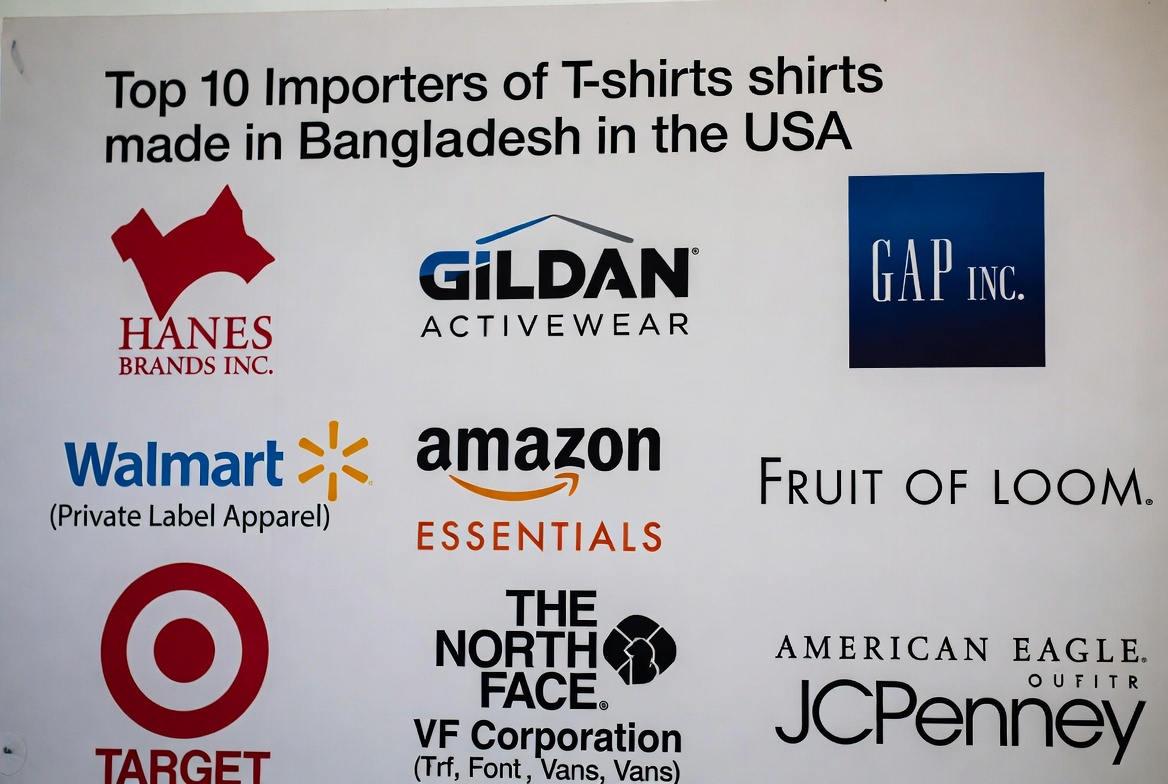
Top 10 Importers of T-shirts Made in Bangladesh in the USA
1. Hanes Brands Inc.
Hanes Brands stands as one of America’s most recognized apparel manufacturers, with a portfolio that includes Hanes, Champion, and Maidenform. The company sources millions of T-shirts from Bangladesh annually, taking advantage of the country’s competitive pricing and production capacity.
Their sourcing strategy focuses on building long-term relationships with reliable manufacturers. Hanes works closely with facilities that can handle large volumes while maintaining consistent quality. The company has implemented strict vendor compliance programs that cover labor practices, environmental impact, and product quality.
Texasia supplies quality T-shirts to major brands including those in the Hanes network, offering both basic and premium options. The manufacturer’s ability to produce various fabric weights, from lightweight summer tees to heavier athletic wear, makes them a valuable partner.
2. Gildan Activewear
Gildan Activewear specializes in basic apparel, particularly T-shirts and fleecewear. While the company operates its own manufacturing facilities, it also sources significant volumes from Bangladesh to meet growing demand. Gildan imports hundreds of thousands of units monthly from South Asian suppliers.
The company’s sourcing model emphasizes vertical integration where possible but recognizes the value of partnering with specialized manufacturers for certain product lines. Bangladesh offers Gildan the flexibility to scale production quickly during peak seasons without major capital investments.
Texasia’s production strengths align well with Gildan’s requirements. Their expertise in T-shirt manufacturing processes ensures products meet the technical specifications that Gildan’s customers expect, from screen printing compatibility to wash durability.
3. Gap Inc.
Gap Inc., which includes Gap, Old Navy, Banana Republic, and Athleta, ranks among the largest apparel importers in the United States. The company sources T-shirts from Bangladesh for multiple brands in its portfolio, particularly for Old Navy’s value-focused product lines.
Gap’s import relationships with Bangladeshi manufacturers span over two decades. The company has invested in supplier development programs that help factories improve their capabilities in areas like digital design integration and sustainable production methods.
Working with suppliers like Texasia allows Gap to offer trendy, affordable T-shirts to American consumers while maintaining acceptable profit margins. The manufacturer’s design team collaborates with brand representatives to create products that match seasonal fashion trends.
4. Walmart (Private Label Apparel)
Walmart, the world’s largest retailer, imports massive volumes of T-shirts for its private label brands like George, Athletic Works, and Time and Tru. The company’s sourcing power makes it one of the top importers of T-shirts made in Bangladesh in the USA.
Walmart’s vendor requirements are extensive, covering everything from product testing to factory audits. Suppliers must demonstrate their ability to handle large orders, maintain strict delivery schedules, and offer competitive pricing. The retailer conducts regular compliance checks to ensure factories meet its ethical sourcing standards.
Texasia’s large-volume capacity makes them suitable for Walmart’s demanding requirements. Their flexible minimum order quantities (MOQs) also accommodate smaller test orders before scaling up to full production, reducing risk for both parties.
5. Amazon Essentials
Amazon Essentials, the e-commerce giant’s private label line, has grown rapidly since its launch. The brand offers basic T-shirts at competitive prices, primarily sourced from manufacturers in Bangladesh and other Asian countries. Amazon’s sophisticated supply chain enables fast restocking based on real-time sales data.
The company’s import strategy differs from traditional retailers. Amazon seeks suppliers who can respond quickly to changing demand patterns and ship directly to fulfillment centers across the United States. This requires strong logistics coordination and quality consistency.
Texasia’s documentation and delivery management expertise makes them a reliable partner for Amazon’s fast-paced business model. Their experience with custom T-shirt printing in Bangladesh also supports Amazon’s growing customization services.
6. Fruit of the Loom
Fruit of the Loom, now owned by Berkshire Hathaway, has been a household name in American underwear and basic apparel for over 160 years. While the company maintains manufacturing facilities in Central America, it also sources T-shirts from Bangladesh to meet demand fluctuations and access specific fabric types.
Their import relationships focus on suppliers who understand the brand’s quality standards and can replicate its signature fit and feel. Fruit of the Loom conducts extensive wear testing and wash testing to ensure products maintain their shape and softness through repeated use.
Texasia’s fabric inspection procedures and commitment to consistency make them a trusted partner for established brands like Fruit of the Loom. Their investment in modern knitting and dyeing equipment ensures color accuracy and fabric stability.
7. Target Corporation
Target, America’s eighth-largest retailer, operates multiple private label clothing brands including Cat & Jack, A New Day, and Goodfellow & Co. The company imports T-shirts from Bangladesh for these brands, focusing on style, quality, and competitive pricing.
Target’s sourcing philosophy emphasizes building strong supplier relationships while maintaining strict compliance standards. The retailer expects partners to embrace sustainable practices and demonstrate continuous improvement in their operations.
Working with ethical sourcing specialists like Texasia allows Target to market its private label products as responsibly made. The manufacturer’s transparent supply chain and fair labor practices align with Target’s corporate values.
8. VF Corporation (The North Face, Vans)
VF Corporation manages a portfolio of iconic brands including The North Face, Vans, Timberland, and Dickies. While many of these brands focus on technical or specialty apparel, they all include basic and graphic T-shirts in their collections. VF sources products from multiple countries, with Bangladesh playing an important role.
The company’s sourcing strategy balances cost considerations with brand positioning. Premium brands within the VF portfolio may use higher-grade materials and more detailed construction, while value brands focus on affordability without sacrificing quality.
Texasia’s technology-driven production enables them to meet the varying requirements of different brands within the VF portfolio. Their ability to work with both standard fabrics and specialty blends gives them versatility in the marketplace.
9. American Eagle Outfitters
American Eagle Outfitters (AEO) targets young adults with casual fashion that balances style and comfort. The company sources T-shirts from Bangladesh for both its American Eagle and Aerie brands, which together generate billions in annual revenue.
AEO’s import strategy emphasizes speed to market and trend responsiveness. The company needs suppliers who can move from design concept to finished product quickly, allowing them to capitalize on emerging fashion trends. Bangladesh’s well-developed textile infrastructure supports these fast turnaround times.
Texasia’s design capabilities and sample development speed make them attractive to fashion-forward retailers like AEO. Their experience producing various T-shirt styles from basic crew necks to trendy crop tops gives brands more options.
10. JCPenney
JCPenney, despite recent challenges, remains a significant player in American retail with hundreds of stores nationwide. The company imports T-shirts from Bangladesh for its private label brands and licensed collections. JCPenney’s focus has shifted toward value-oriented products that appeal to budget-conscious shoppers.
The retailer’s sourcing relationships have evolved to emphasize flexibility and quick response capabilities. Suppliers must be able to adjust production volumes based on changing market conditions while maintaining quality standards.
Texasia’s partnership model for U.S. T-shirt importers includes consultation on market trends, technical support during product development, and reliable export support throughout the process. This comprehensive approach helps partners like JCPenney navigate the complexities of international sourcing.
The Role of Texasia in Supplying U.S. Importers
Texasia has established itself as the best T-shirt manufacturer in Bangladesh, serving numerous American importers across different market segments. The company’s success stems from its comprehensive approach to manufacturing, which covers everything from yarn selection to final packaging.
Key production strengths include:
Fabric variety: Texasia works with 100% cotton, cotton-polyester blends, tri-blends, organic cotton, and specialty performance fabrics. This range allows them to meet diverse customer requirements.
Design support: The company employs experienced designers who can translate brand concepts into production-ready specifications. They stay current with fashion trends and consumer preferences in the American market.
Technology investment: Modern knitting machines, automated cutting systems, and computer-aided quality control ensure consistency and efficiency. The facility processes over 1 million pieces monthly while maintaining high standards.
Compliance certifications: Multiple international certifications demonstrate Texasia’s commitment to quality, safety, and ethical production. These credentials give American importers confidence when partnering with the company.
U.S. importers working with Texasia appreciate the manufacturer’s proactive communication style. The team provides regular updates on production progress, alerts partners to potential delays, and suggests solutions when challenges arise. This transparency builds trust and supports long-term relationships.
How T-Shirt Importers Benefit from Working with Bangladeshi Manufacturers
American companies gain several advantages when sourcing T-shirts from Bangladesh. Pricing remains the primary benefit, with costs typically 20-30% lower than comparable products from other regions. This pricing advantage allows retailers to maintain healthy margins while offering competitive retail prices.
Logistics have improved significantly over the past decade. Bangladesh’s major ports have upgraded their facilities and processes, reducing turnaround times for container loading and customs clearance. Most shipments reach U.S. ports within 25-30 days, which fits well with standard retail planning cycles.
Textile customization options in Bangladesh are extensive. Manufacturers like Texasia can produce small custom orders for specialty brands while also handling massive volumes for major retailers. This flexibility serves businesses at different stages of growth.
Stable supplier relationships have developed over two decades of trade between Bangladesh and the United States. Many American brands maintain the same manufacturing partners for years, building institutional knowledge and streamlining processes. These long-term relationships reduce risk and improve product consistency.
Competitive export pricing from Bangladesh results from economies of scale, government support for the RMG sector, and an efficient manufacturing ecosystem. The concentration of related industries (yarn spinning, fabric knitting, dyeing, printing, and garment manufacturing) in close proximity reduces logistics costs and lead times.
Supply Chain and Logistics Optimization
T-shirts manufactured in Bangladesh typically follow established export routes to reach American consumers. The most common path starts at Chittagong Port, Bangladesh’s main shipping hub, which handles over 90% of the country’s trade. Containers are loaded onto vessels operated by major shipping lines like Maersk, MSC, and Evergreen.
Transit times vary based on the destination port:
- West Coast ports (Los Angeles, Long Beach): 30-35 days
- East Coast ports (New York/New Jersey, Savannah): 25-30 days
- Gulf Coast ports (Houston): 28-32 days
Texasia manages the entire documentation process, including commercial invoices, packing lists, bills of lading, certificates of origin, and compliance documents required by U.S. Customs. Their experienced export team ensures all paperwork is accurate and complete, minimizing the risk of customs delays.
The company also offers consolidated shipping options for smaller importers, allowing multiple buyers to share container space and reduce per-unit shipping costs. This service makes Bangladeshi sourcing accessible to mid-sized and emerging brands that might not have sufficient volume to fill a full container.
Sustainable and Eco-Friendly T-Shirt Production
The shift toward organic cotton and low-impact dyes has accelerated in recent years as American consumers become more environmentally conscious. Studies show that over 60% of young shoppers prefer brands that demonstrate environmental responsibility.
Zero-waste production techniques have become more common in Bangladesh’s leading factories. These methods include:
- Pattern optimization software that maximizes fabric utilization
- Recycling fabric scraps into other products
- Water treatment systems that purify and recycle process water
- Solar panels and other renewable energy sources
Texasia’s eco-friendly practices set them apart in the marketplace. The company holds several environmental certifications and regularly invests in cleaner production technologies. Their water recycling system processes over 80% of water used in dyeing and washing operations, significantly reducing environmental impact.
Beyond environmental sustainability, social responsibility matters to American buyers. Texasia maintains fair labor practices, provides safe working conditions, and offers competitive wages. These practices align with the values of consumers who care about how their clothes are made.
Challenges and Opportunities in U.S.–Bangladesh Apparel Trade
Trade barriers remain a concern for Bangladeshi exporters. Unlike some competitors, Bangladesh does not have duty-free access to the U.S. market. T-shirts imported from Bangladesh face tariffs averaging 16-17%, which impacts pricing competitiveness compared to countries with preferential trade agreements.
Transportation costs have fluctuated significantly in recent years, particularly during global supply chain disruptions. Container rates that normally range from $2,000-3,000 spiked to over $15,000 during peak shortage periods, squeezing margins for both manufacturers and importers.
Competition from other Asian countries intensifies as they invest in their textile industries. Vietnam, Cambodia, and India all compete for market share in the U.S. apparel market. Bangladesh must continue improving productivity and quality to maintain its position.
Potential growth areas for the next five years include:
- Technical and performance fabrics: Growing demand for athletic and activewear creates opportunities for manufacturers who invest in specialty fabric production
- Sustainable products: The eco-conscious consumer segment continues expanding, favoring suppliers with strong environmental credentials
- Quick response manufacturing: Brands want shorter lead times and more flexible order quantities
- Direct-to-consumer partnerships: E-commerce growth creates opportunities for manufacturers to work directly with online brands
- Value-added services: Printing, embroidery, and special finishes allow manufacturers to capture more of the value chain
Future Trends in T-Shirt Imports Between Bangladesh and the USA
Digital manufacturing and traceability technologies will transform the industry over the next decade. Blockchain-based systems can track products from cotton field to retail store, providing transparency that consumers increasingly demand. Leading manufacturers are investing in these technologies to differentiate themselves.
Consumer demand for sustainable imports will continue growing. Younger generations particularly value environmental and social responsibility when making purchasing decisions. Brands that can demonstrate authentic commitment to sustainability will gain market share.
Texasia’s readiness to meet evolving buyer trends positions them well for future success. The company has invested in:
- Digital design tools that enable faster sample development and remote collaboration
- Automated production systems that improve efficiency and consistency
- Sustainability certifications that appeal to eco-conscious brands
- Training programs that develop workforce skills for advanced manufacturing techniques
The rise of near-shoring and reshoring in some segments may shift some production closer to the U.S. market. But for basic and mid-range T-shirts, Bangladesh remains highly competitive due to its established infrastructure and cost advantages.
Why Texasia Is the Preferred Choice for U.S. Importers
Brand credibility, production efficiency, and buyer satisfaction define Texasia’s reputation in the marketplace. The company has built relationships with major importers of T-shirts through consistent performance and responsive service.
Large-volume capacity allows Texasia to serve major retailers while flexible MOQs make them accessible to smaller brands and online sellers. This versatility across customer segments provides stability and growth opportunities.
The direct partnership model eliminates intermediaries, reducing costs and improving communication. American importers can work directly with Texasia’s team, from design consultation through production and shipping. This streamlined approach saves time and reduces the potential for miscommunication.
Additional factors that make Texasia stand out:
- In-house testing lab for quality verification before shipment
- Experienced merchandising team that understands American market preferences
- Regular capacity expansion to meet growing demand
- Financial stability that ensures reliable operations even during economic challenges
- Multilingual staff for seamless international communication
Steps for U.S. T-Shirt Importers to Partner with Texasia
The inquiry process begins with a simple contact through the company’s website or direct communication with their international sales team. Buyers provide basic information about their requirements including:
- Product type and specifications
- Quantity requirements
- Timeline expectations
- Target price range
- Special features or customizations
Sample approval steps typically take 2-3 weeks from initial inquiry. Texasia creates samples based on buyer specifications, ships them for review, and makes any necessary adjustments based on feedback. Most buyers approve samples after 1-2 rounds of revisions.
Bulk order fulfillment begins once samples are approved and purchase orders are issued. Production timelines depend on order quantity and complexity:
- Small orders (1,000-5,000 pieces): 3-4 weeks
- Medium orders (5,000-20,000 pieces): 4-6 weeks
- Large orders (20,000+ pieces): 6-8 weeks
Export support includes handling all documentation, arranging shipping, providing tracking information, and coordinating with freight forwarders. Texasia ensures compliance with U.S. import regulations and helps buyers navigate customs requirements.
The company maintains strict quality control at every stage, from raw material inspection through final packing. This attention to detail minimizes defect rates and ensures buyers receive products that meet their specifications.
Frequently Asked Questions About Top 10 Importers of T-shirts Made in Bangladesh in the USA
What makes Bangladesh competitive for T-shirt manufacturing?
Bangladesh offers a combination of competitive labor costs, established infrastructure, skilled workforce, and government support for the garment industry. These factors enable manufacturers to produce quality products at prices 20-30% lower than many competitors.
How long does it take to ship T-shirts from Bangladesh to the USA?
Standard ocean freight typically takes 25-35 days depending on the destination port. East Coast destinations like New York and Savannah are closer, while West Coast ports like Los Angeles take slightly longer.
What certifications should I look for when choosing a Bangladeshi supplier?
Look for OEKO-TEX Standard 100 for chemical safety, GOTS for organic products, WRAP or BSCI for social compliance, and ISO certifications for quality management systems.
Can small businesses source T-shirts from Bangladesh?
Yes, many manufacturers including Texasia offer flexible minimum order quantities that accommodate smaller brands. Some allow orders as low as 1,000 pieces per style, making international sourcing accessible to emerging businesses.
How do tariffs affect the cost of T-shirts imported from Bangladesh?
T-shirts from Bangladesh face U.S. import duties averaging 16-17%. Importers should factor these costs into their pricing calculations when comparing sourcing options.
What payment terms do Bangladeshi manufacturers typically offer?
Standard terms include 30% deposit upon order confirmation and 70% balance before shipment. Established buyers with good payment history may negotiate more favorable terms after building a relationship.
How can I ensure the quality of T-shirts before placing a bulk order?
Always request samples before committing to large orders. Visit the factory if possible to inspect production processes and quality control systems. Consider hiring third-party inspection services for additional verification.
What is the typical lead time for custom-designed T-shirts?
Custom designs typically require 2-3 weeks for sample development, followed by 4-8 weeks for bulk production depending on order size and complexity.
Are there sustainability benefits to sourcing from Bangladesh?
Many Bangladeshi manufacturers have invested heavily in sustainable practices including water recycling, renewable energy, organic cotton, and fair labor practices. Look for certified suppliers who can document their environmental initiatives.
How do I find reliable manufacturers in Bangladesh?
Research online, attend trade shows, request references from other importers, and verify certifications. Working with established manufacturers like Texasia reduces risk and ensures professional service.
Conclusion
The top 10 importers of T-shirts made in Bangladesh in the USA represent some of the most successful retailers and brands in American fashion. These companies recognize Bangladesh’s strengths in garment manufacturing: competitive pricing, quality production, and reliable delivery.
Bangladesh’s position as the second-largest apparel exporter reflects decades of industry development and investment in manufacturing capabilities. The country’s garment sector continues evolving, embracing sustainability, technology, and improved labor practices.
Texasia stands as a trusted T-shirt supplier to the USA, offering the combination of quality, capacity, and service that American importers need. Whether you represent a major retail chain or an emerging online brand, partnering with experienced manufacturers opens doors to better products at competitive prices.
Ready to explore sourcing opportunities for your business? Connect with Texasia today to discuss your requirements, request samples, and discover how Bangladeshi manufacturing can support your business goals. The team looks forward to building a successful partnership that delivers value for your brand and satisfaction for your customers.

