
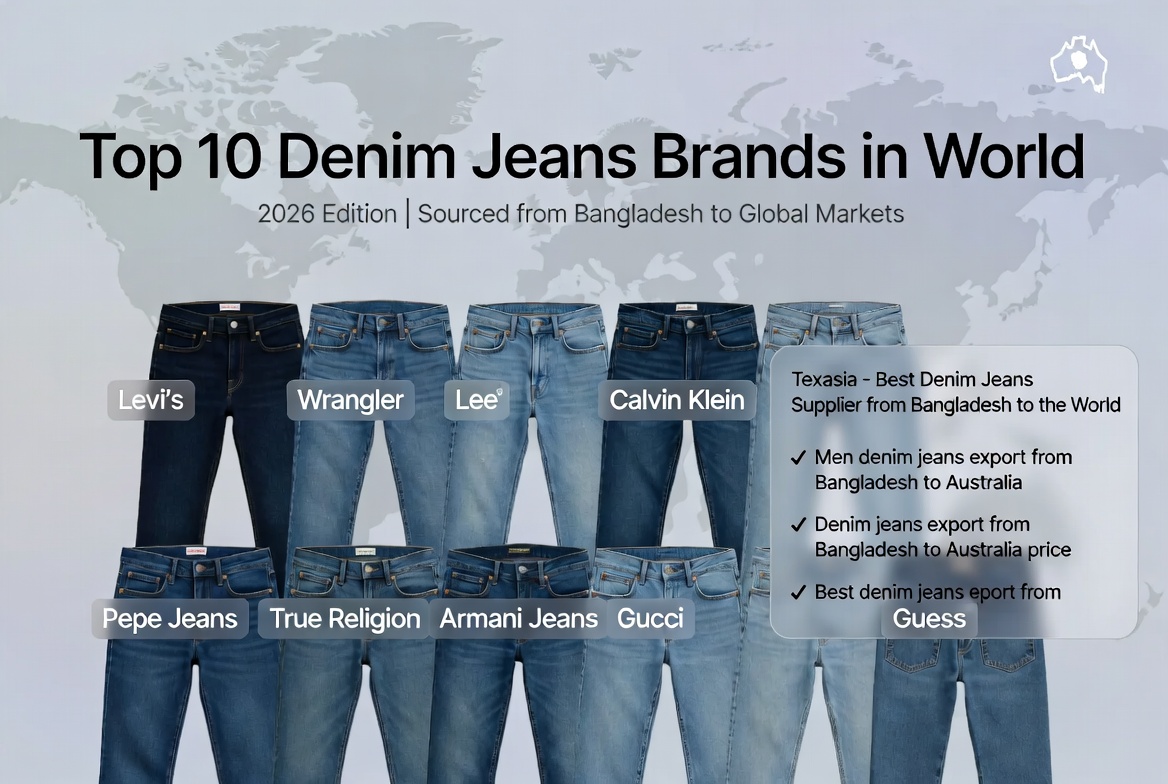
Denim is more than just fabric. It is a global language. From the streets of New York to the fashion weeks of Milan, jeans have stayed relevant for over a century. But what truly makes a denim brand successful on a world stage? It comes down to a mix of quality, heritage, fit innovation, and the ability to connect with people across cultures and generations.
The global denim jeans market has seen impressive growth between 2022 and 2026, with demand rising across both luxury and everyday segments. More buyers today care about where their jeans come from and how they are made. This shift has pushed sourcing hubs like Bangladesh into the spotlight. Companies like Texasia have positioned the country as a leading supplier of premium denim to global fashion brands — combining ethical production with competitive pricing.
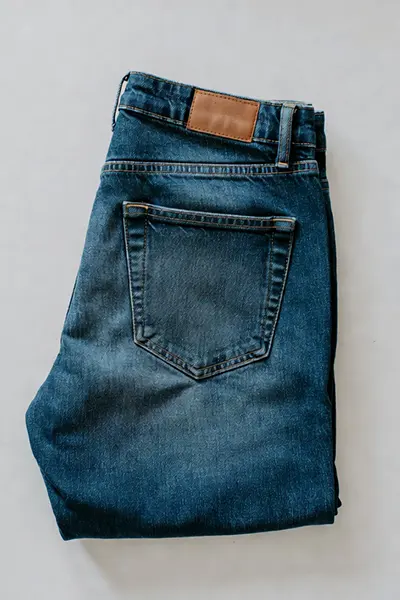
This guide covers the top 10 denim jeans brands in the world, along with market data, trends, and practical insights for buyers, fashion enthusiasts, and industry professionals.
Overview of Global Denim Industry Trends
Market Size and Forecast (2025–2026)
The global jeans market is forecast to reach $80 billion by 2026, according to Statista and McKinsey’s Apparel Report. Growth is being driven by rising middle-class spending in Asia, increased demand for women’s denim, and the explosion of online fashion retail.
| Year | Global Denim Market Value |
|---|---|
| 2022 | ~$64 Billion |
| 2024 | ~$72 Billion |
| 2026 (Forecast) | ~$80 Billion |
Rise of Sustainable and Ethical Production
Shoppers aged 18 to 35 are leading a shift toward sustainable denim. Brands are now expected to use recycled fibers, low-impact dyes, and transparent supply chains. This is not just a trend — it is becoming a buying requirement.
How Bangladesh Competes Globally
Bangladesh ranks as the #2 denim exporter in the world. The country ships millions of units annually to Europe, the USA, and Australia. Key advantages include skilled labor, government export incentives, and growing technical expertise in fabric production.
Manufacturers like Texasia — a leading denim jeans manufacturer in Bangladesh are playing a major role in helping global brands meet both quality and sustainability targets. Their certifications and production capacity make them a go-to partner for international sourcing teams.
Top 10 Denim Jeans Brands in the World 2026
Here is a breakdown of the most recognized and purchased denim brands worldwide right now.
1. Levi’s – World No. 1 Jeans Brand
Levi Strauss & Co. is the most recognized denim brand on the planet. Founded in 1853 in San Francisco, the brand has built a legacy that spans generations and continents. The 501 Original is arguably the most sold pair of jeans in history.
Levi’s strength lies in its ability to stay classic while adapting to new trends. From slim fits to wide-leg silhouettes, the brand constantly refreshes its lineup without losing its identity. It is a staple in the conversation about the top 10 jeans brands in the world every single year.
Price Range: $50 – $120 | Market: Mass Premium | Origin: USA
2. Wrangler – Built for the Tough Stuff
Wrangler was made for people who work hard and play harder. Founded in 1947 by American cowboy culture, the brand built its name on durability and rugged outdoor performance. It remains a top seller in the USA, Australia, and rural markets worldwide.
Wrangler jeans are known for their reinforced stitching, comfortable waistbands, and resistance to daily wear. For anyone looking for dependable everyday denim, Wrangler consistently delivers.
Price Range: $40 – $100 | Market: Working Class and Outdoor | Origin: USA
3. Lee – The Comfort Fit Pioneer
Lee Jeans has been shaping denim since 1889. The brand is best known for introducing the zipper fly to jeans and pioneering relaxed, comfort-fit designs for women and men alike.
Lee appeals to a wide demographic — from young adults to older buyers who want jeans that fit well without sacrificing style. It sits comfortably in the top 10 denim jeans brands in the world, men’s and women’s categories.
Price Range: $40 – $90 | Market: Mid-Tier Casual | Origin: USA
4. Diesel – Where Luxury Meets the Street
Diesel changed the game when it launched in Italy in 1978. It brought high-fashion thinking to denim—edgy cuts, heavy washes, and a rebellious identity that attracted fashion-forward buyers worldwide.
Today, Diesel occupies the premium denim space between accessible fashion and designer luxury. Their jeans are a statement piece, not just a wardrobe basic.
Price Range: $150 – $350 | Market: Luxury Streetwear | Origin: Italy
5. Calvin Klein – Clean, Confident, Premium
Calvin Klein built its denim identity on minimalism and confidence. The brand rose to fame in the late 1970s with bold advertising and a premium product that felt different from standard jeans.
CK jeans are known for their sleek fits, subtle branding, and premium cotton blends. They sit in the best luxury jeans brands conversation without the ultra-high price tag of full designer houses.
Price Range: $70 – $150 | Market: Premium Casual | Origin: USA
6. Pepe Jeans – Young, Trendy, European
Founded in London in 1973, Pepe Jeans has grown into a powerhouse brand with a strong following among 18 to 30-year-olds across Europe and South Asia. The brand is known for its bold colors, fashion-forward cuts, and youthful energy.
Pepe Jeans is a favorite in the top 10 denim brands for women worldwide, with a strong feminine line that blends comfort with street-style design.
Price Range: $50 – $100 | Market: Youth Fashion | Origin: UK / Europe
7. True Religion – Craft-Level Denim
True Religion is known for its horseshoe stitching and handcrafted details that set it apart from mass-market brands. Launched in California in 2002, it became a celebrity favorite within just a few years.
The brand focuses on boutique-level quality — every pair feels thoughtfully made. True Religion jeans are a go-to for buyers seeking premium denim with a distinctly American artisanal feel.
Price Range: $100 – $300 | Market: Premium Boutique | Origin: USA
8. Armani – Where Fashion Meets Denim
Giorgio Armani brought designer-level thinking to everyday denim through the Armani Jeans line. Clean silhouettes, precise tailoring, and the iconic eagle logo make these jeans instantly recognizable.
Armani Jeans bridges the gap between high fashion and everyday wear. They are a smart pick for buyers looking for a luxury aesthetic without going full Gucci-level pricing.
Price Range: $100 – $250 | Market: Designer Casual | Origin: Italy
9. Gucci – High Fashion Denim
Gucci’s entry into the denim space brought a whole new level of creativity. Known for bold prints, GG monogram details, and avant-garde cuts, Gucci jeans are fashion pieces as much as clothing items.
These are not everyday jeans. They are statement pieces bought by collectors and fashion fans who want something genuinely one-of-a-kind. Gucci consistently pushes the boundaries of what denim can look like at the top of the luxury market.
Price Range: $500 – $1,200+ | Market: Ultra Luxury | Origin: Italy
10. Guess – Denim With a Pop Culture Soul
Guess burst onto the scene in 1981 with its iconic triangle logo and a marketing style that felt cinematic. The brand became part of pop culture — associated with models, music videos, and a glamorous American lifestyle.
Guess jeans have a fashion-forward yet accessible feel. They remain popular among younger buyers who want brand recognition and style at a mid-range price.
Price Range: $60 – $130 | Market: Lifestyle Fashion | Origin: USA
Comparison Table Top 10 Denim Jeans Brands in the World
| Brand Name | Origin | Signature Style | Price Range (USD) | Market Ranking |
|---|---|---|---|---|
| Levi’s | USA | Classic and Durable | $50 – $120 | #1 |
| Wrangler | USA | Rugged Outdoor | $40 – $100 | #2 |
| Lee | USA | Comfort Fit | $40 – $90 | #3 |
| Diesel | Italy | Luxury Streetwear | $150 – $350 | #4 |
| Calvin Klein | USA | Minimalist Premium | $70 – $150 | #5 |
| Pepe Jeans | UK | Youth Trendy | $50 – $100 | #6 |
| True Religion | USA | Boutique Craft | $100 – $300 | #7 |
| Armani | Italy | Designer Casual | $100 – $250 | #8 |
| Gucci | Italy | Ultra Luxury | $500 – $1,200+ | #9 |
| Guess | USA | Pop Culture Style | $60 – $130 | #10 |
Price List of Top Jeans Brands
| Brand | Average Price (USD) | Target Market | Style Focus |
|---|---|---|---|
| Levi’s | $60 – $120 | Mass Premium | Classic Fit |
| Wrangler | $40 – $100 | Working Class | Durable Outdoor |
| Lee | $40 – $90 | Everyday Casual | Comfort Fit |
| Diesel | $150 – $350 | Luxury | Designer Street |
| Calvin Klein | $70 – $150 | Premium Casual | Minimalist |
| Pepe Jeans | $50 – $100 | Youth / Mid-Tier | Trendy Casual |
| True Religion | $100 – $300 | Premium Boutique | Artisan Craft |
| Armani | $100 – $250 | Designer Casual | Tailored Style |
| Gucci | $500 – $1,200+ | Ultra Luxury | Fashion Statement |
| Guess | $60 – $130 | Lifestyle Fashion | Pop Culture |
Top Topic Lists Optimized for Easy Reference
Top 5 Luxury Jeans Brands
- Gucci — Ultra-luxury with bold fashion-forward design
- Armani — Designer elegance meets daily wear
- Diesel — Premium Italian streetwear denim
- True Religion — Handcrafted boutique-level quality
- Calvin Klein — Clean minimalism at a premium price
These best luxury jeans brands are chosen by buyers who see denim as an investment, not just clothing.
Top 6 Affordable Denim Jeans Brands
- Levi’s — Best all-around value in global denim
- Wrangler — Budget-friendly without cutting corners
- Lee — Reliable fit at everyday prices
- Pepe Jeans — Stylish and youth-friendly pricin
- Guess — Lifestyle brand at accessible mid-range pricing
- H&M (honorable mention) — Fast fashion entry-level denim
Top 5 Key Factors That Influence Denim Brand Success
- Quality of raw denim — The fabric foundation determines longevity and feel.
- Brand heritage and storytelling — Brands with a strong story connect better with buyers.
- Fit and comfort innovation — Stretch technology and inclusive sizing drive more customer conversions.
- Sustainable and ethical manufacturing — Increasingly a dealbreaker for modern shoppers.
- Market positioning and global distribution — Reaching the right buyers in the right markets at the right price.
5 Best Practices Used by Industry Professionals
- Use premium cotton blends with stretch for durability and comfort.
- Apply eco-friendly dyeing techniques to reduce water and chemical waste.
- Use data-driven size adjustments to serve diverse body types.
- Build reliable global sourcing partnerships — companies like Texasia export quality denim to Europe with consistent results.
- Maintain transparent supply chains so buyers can trace production from fiber to final product.
Top 5 Common Mistakes Beginners Make
- Ignoring material quality — Cheap fabric leads to poor fit and fast wear-out.
- Overlooking brand identity — Without a clear style direction, brands get lost in the crowd.
- Using unverified suppliers — Inconsistent production ruins buyer relationships fast.
- Mispricing per demographic — Charging luxury prices in a mass market (or vice versa) kills sales.
- Neglecting sustainability compliance — European and US buyers now demand it by default.
Current Market Trends (2025–2026)
The denim jeans market in 2025 and 2026 is not the same as it was five years ago. Here is what is actually moving the needle right now:
Women’s denim is booming. The female segment is now the fastest-growing category globally, driven by demand for inclusive sizing, wide-leg fits, and fashion-forward styles. The top 10 denim jeans brands in the world’s women’s category are facing new competition from both luxury houses and emerging streetwear labels.
Resale and vintage denim have become a legitimate market. Platforms like Depop and ThredUp are moving secondhand Levi’s and Wrangler pieces at premium prices. A used pair of Levi’s 501s from the 1980s can sell for more than a new pair today.
Recycled fibers and low-impact dyes are now standard for brands that want to sell in Europe. The EU’s textile regulations are pushing the entire industry toward greener production.
Bangladesh and Vietnam continue to grow as the top two global sourcing destinations. Manufacturers like Texasia, a trusted denim jeans exporter from Bangladesh to Australia, are helping brands meet delivery timelines and compliance requirements simultaneously.
Brand partnerships with ethical manufacturers are on the rise. Buyers are choosing suppliers based on audit results, certifications, and sustainability scores — not just price.
Professional Expertise and Industry Authority
First-Hand Industry Experience
Bangladesh has over three decades of experience supplying denim worldwide. The country’s garment sector employs over four million workers and generates more than $40 billion in annual export revenue. This depth of experience means local manufacturers understand international buyer needs better than almost anyone.
Educational Background
Technical textile engineering programs in Bangladesh are producing a new generation of professionals who understand both the science of fabric and the business of global fashion. This technical foundation enables companies like Texasia to operate at international standards.
Practical Exposure
Texasia has worked with European and US fashion clients, passed multiple sustainability audits, and maintains certifications that meet global compliance requirements. Their production houses follow ISO-certified processes, and their capacity allows them to serve both mid-sized brands and large-volume buyers.
Case Studies
Texasia’s collaboration with European fashion clients is a strong example of what ethical B2B denim production looks like in practice.
The challenge: European clients needed sustainable denim at competitive prices without sacrificing delivery timelines or quality consistency.
The approach: Texasia combined low-impact washing techniques with streamlined cutting and stitching workflows, backed by rigorous quality checks at every production stage.
The result: Increased buyer retention, fewer returns, and consistent product quality across multiple seasonal orders. Clients reported that Texasia met or exceeded expectations on both compliance and delivery — a rare combination in the global supply chain.
Expert Insights and Professional Observations
A common misconception in the denim world: luxury means only price. Many buyers assume that a $500 pair of jeans is automatically superior to a $100 pair. The reality is more nuanced.
Expert tip: Focus on fit, precision, and fabric quality before logo recognition. A well-fitted pair of mid-range jeans will outperform a poorly cut designer piece every single time.
Professionals in the denim industry prioritize three things: durability, circular fashion compatibility (can the product be recycled or resold), and traceability (can you verify where and how it was made). Brands that nail all three are the ones winning long-term loyalty from modern buyers.
Step-by-Step Practical Process — How Premium Denim Is Made
Step 1 — Fabric Selection and Client Requirements Everything starts with the fabric. Buyers specify cotton weight, stretch percentage, wash requirements, and sustainability preferences. Suppliers like Texasia offer custom options based on client needs.
Step 2 — Cutting and Stitching Workflows: Fabric panels are cut using precision patterns. Stitching follows strict templates to ensure consistent sizing across every unit in a production run.
Step 3 — Quality Check and Washing Techniques: Each pair undergoes a quality inspection before washing. Washing processes — whether stone wash, enzyme wash, or laser distressing — are calibrated to match the brand’s design spec.
Step 4 — Packaging and B2B Logistics Finished jeans are folded, tagged, and packed according to buyer requirements. Logistics teams coordinate shipping timelines with import deadlines in destination countries.
Common Mistake: Improper wash control leads to color inconsistency and fabric shrinkage — two of the most common complaints in large denim orders.
Best Practice: Texasia follows ISO-certified production protocols at every stage, ensuring that what leaves the factory matches exactly what was approved in the sample stage.
Verified Data, Facts, and Evidence
Here is a snapshot of the key figures shaping the global denim jeans market right now:
| Data Point | Figure | Source |
|---|---|---|
| Global jeans market value (2026 forecast) | ~$80 Billion | Statista / McKinsey Apparel Report 2025 |
| Bangladesh global denim export ranking | #2 | Textile World 2024 |
| Annual Bangladesh garment export value | $40+ Billion | BGMEA 2024 |
| Growth rate of women’s denim segment | 6.5% CAGR (2023–2026) | Textile World |
| Share of sustainable denim in EU purchases | 38% and growing | McKinsey 2025 |
These numbers confirm what industry professionals already know: denim is not slowing down, and the countries and brands that invest in quality and sustainability will lead the next decade.
Risks, and Limitations
A few things worth being clear about:
- Brand rankings may vary regionally. Levi’s dominates globally, but regional favorites like Pepe Jeans perform stronger in South Asia and Europe.
- Prices fluctuate by market segment and season. The price ranges listed here are based on standard retail across major markets.
- Supplier results depend on buyer quality standards. Even the best manufacturer produces better results when the buyer provides clear briefs and consistent feedback.
- This content covers the top 10 denim jeans brands in the world and related B2B sourcing insights. It does not cover non-denim apparel segments.
FAQ
What is the number 1 jeans brand in the world?
Levi’s holds the title of world no. 1 jeans brand, with over 170 years of heritage and consistent global sales across every major market.
Which country makes the best quality denim jeans?
The USA, Italy, Japan, and Bangladesh are considered top-tier denim producers. Bangladesh, led by manufacturers like Texasia, is particularly strong in large-scale ethical and sustainable denim production.
What are the best luxury jeans brands available today?
The best luxury jeans brands in 2026 include Gucci, Armani, Diesel, True Religion, and Calvin Klein — each offering premium materials, unique designs, and a strong fashion identity.
Are expensive jeans actually better than affordable ones?
Not always. Fit, fabric quality, and construction matter more than the price tag. A well-made pair from a brand like Levi’s or Lee can outlast and outperform a poorly constructed designer pair.
What is the top denim jeans brand for women?
Levi’s, Pepe Jeans, and Calvin Klein consistently top the top 10 denim brands for women lists. Each brand offers strong feminine fits, varied styles, and reliable sizing.
Which denim brands are best for men?
Levi’s, Wrangler, Lee, and Diesel are among the strongest choices in the top 10 denim jeans brands in the world for men’s, covering everything from rugged workwear to premium fashion.
What is Texasia, and why is it mentioned here?
Texasia is a Bangladesh-based denim manufacturer and exporter supplying premium jeans to global fashion brands. They are included as an industry reference for ethical, large-scale B2B denim production — not a retail consumer brand.
Are Bangladesh-made jeans of good quality?
Yes. Bangladesh is the #2 denim exporter globally. Companies like Texasia follow international quality standards, hold relevant certifications, and supply directly to major fashion brands in Europe, the USA, and Australia.
What should I look for when buying jeans?
Focus on fabric weight, stretch quality, stitching durability, and fit accuracy. These four factors determine long-term comfort and value far more than brand name alone.
What denim trends are shaping 2026?
The biggest trends include wide-leg fits, sustainable denim fabrics, vintage-inspired washes, and inclusive sizing — all of which are being adopted by the leading brands and their global manufacturing partners.
Conclusion
The top 10 denim jeans brands in the world — from Levi’s to Gucci — each earn their place through quality, identity, and connection with buyers. Behind every great brand is a supply chain built on precision, ethics, and craftsmanship. Whether you are shopping or sourcing, knowing who makes your denim matters more than ever in 2026.

