
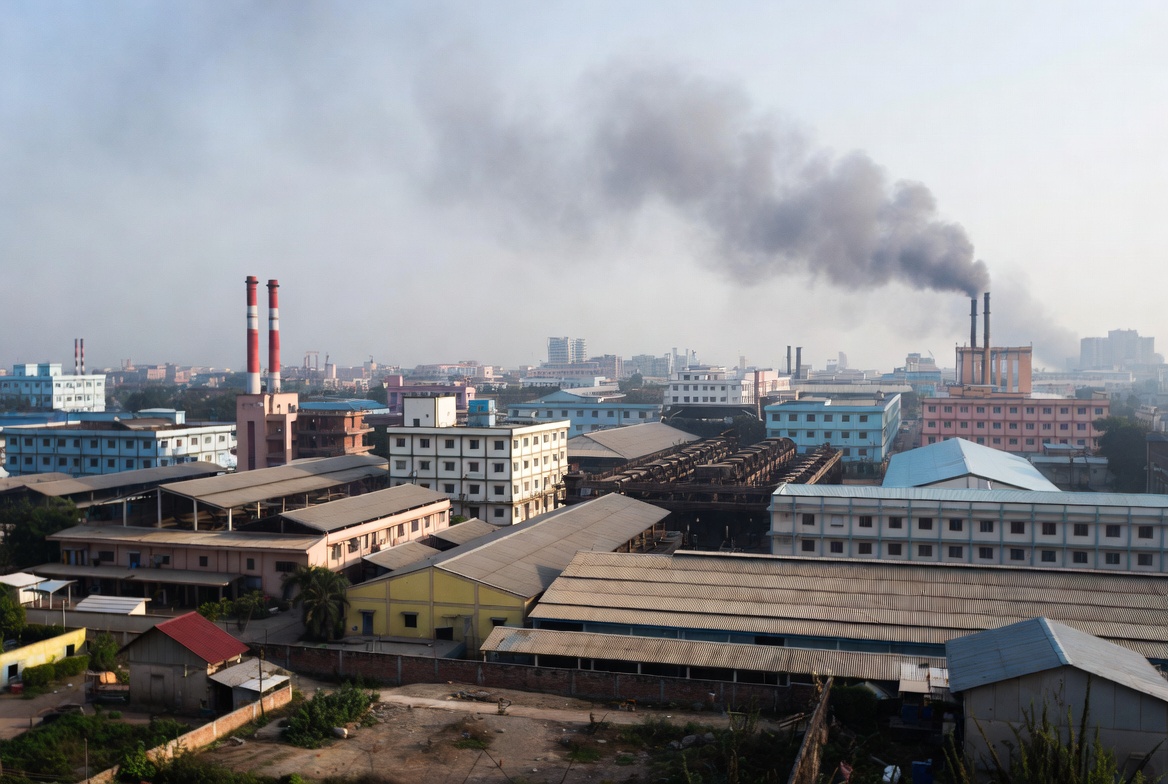
If you are an importer, fashion brand, private label business, or sourcing team trying to figure out where to manufacture your next collection, textile factories in Bangladesh are very likely already on your radar. Bangladesh is one of the most important countries in global apparel supply chains, and for good reason. The country has built a manufacturing base that few others can match in scale, export-readiness, and specialization.
This guide covers everything you need to know, from how the industry works to how to pick the right factory, manage production, check compliance, and avoid common mistakes. Texasia is a leading apparel manufacturer in Bangladesh, serving global brands with quality-focused manufacturing support and industry-aligned production capabilities. Whether you are just starting or scaling an existing sourcing operation, this guide gives you practical, real-world insight.
What Are Textile Factories in Bangladesh and How Does the Industry Work?
Textile factories in Bangladesh are manufacturing facilities that handle one or more stages of fabric and garment production. This includes spinning (converting fiber into yarn), weaving and knitting (creating fabric), dyeing and finishing (adding color and texture), and garmenting (cutting and sewing finished pieces).
It is worth knowing the difference between a textile mill and a garment factory. A textile mill focuses on producing raw or finished fabric. A garment factory takes that fabric and turns it into a finished product. Some facilities do both, which is known as a vertical operation. Non-vertical factories depend on external suppliers for fabric or processing.
Core Segments in the Bangladesh Textile Value Chain
The Bangladesh textile industry operates across several connected stages:
Stage What Happens
Fiber and Yarn Raw material sourced or spun locally
Fabric Production: Knitting or weaving yarn into fabric
Dyeing and Finishing Color treatment, finishing, washing
Cut-Make-Trim (CMT) Cutting, sewing, and assembling garments
Packaging and Export Final QC, labeling, boxing, and shipping
Each stage plays a direct role in the final quality and cost of your product. Understanding where your supplier sits in this chain helps you ask better questions.
Why Global Buyers Search for Textile Factories
Bangladesh has spent decades building a manufacturing ecosystem specifically designed for exports. Scale, specialization, and cost competitiveness are the three things buyers consistently point to. The country also offers strong vendor diversification, meaning you can find factories for basics, mid-tier, and more technical products all within the same sourcing geography.
Global Media Coverage of Texasia
Texasia, Renowned Clothing Manufacturer, Introduces Scalable Production Model… highlights Bangladesh-based Texasia launching an integrated, scalable production system that serves both low-MOQ emerging brands and high-volume apparel clients. The model blends in-house and certified partner factories, ensuring quality, compliance, and flexibility across small-batch and mass market garment production
Bangladesh Textile Manufacturing Companies: Industry Structure and Capabilities
Types of Bangladesh Textile Manufacturing Companies
Bangladesh textile manufacturing companies come in several forms, each suited to different buyer needs:
- Composite factories handle the entire process from fabric to finished garment under one roof
- Specialized knit factories focus on jersey, fleece, rib, and similar knitted constructions
- Woven-focused factories work with structured fabrics like twill, poplin, and canvas
- Textile mills supply fabric to garment exporters rather than producing finished goods
- OEM and private label factories work directly with brands to develop custom products
Knowing which type fits your product category saves a lot of time during supplier shortlisting.
Production Capabilities Buyers Should Evaluate
When reviewing any factory, look at these core capability areas:
MOQ flexibility: Can they work with your order size without compromising quality or priority?
Monthly capacity: Do they have enough production bandwidth to handle your current volume, and will they have enough as you grow?
Fabric types: Are they experienced in the specific fabric your product requires?
Sampling speed: Fast sample turnaround often reflects a factory’s technical readiness.
Lead times: What is a realistic end-to-end lead time, including material sourcing?
Quality control systems: Do they have documented QC processes, or are they just verbal assurances?
Export Readiness and Buyer Support Functions
Strong Bangladesh textile manufacturing companies do more than just produce. They offer merchandising support, technical development, documentation handling, and compliance and audit preparedness. These support functions directly reduce your workload as a buyer and lower sourcing risk.
Garment and Textile Producers in Bangladesh: Key Products and Manufacturing Specializations
Knitwear Manufacturing Strengths
Garment and textile producers in Bangladesh have some of the deepest experience in knitwear globally. Products like t-shirts, polo shirts, hoodies, sweatshirts, and activewear are produced at a massive scale with good consistency. Many knitwear factories also produce knit fabric in-house, which shortens the supply chain and reduces delays.
Woven Product Capabilities
On the woven side, Bangladesh produces strong volumes of shirts, trousers, uniforms, outerwear, and kidswear. Many woven factories also offer finishing and washing options, depending on the facility’s setup. Products like denim jeans and woven categories are well-supported by specialist factories across the country.
Product-Category Specialization by Factory Type
Not every factory is built for every product. Mass production facilities are built for speed and volume on the basics. Premium small-batch factories prioritize detail, consistency, and more complex construction. Some factories handle technically detailed garments, embroidery, multi-panel construction, and specific wash effects, while others are optimized purely for speed on simple styles.
How Buyers Match Product Needs
Some buyers start with the fabric they know, the fabric spec first, and look for factories that can supply or process it. Others start with the garment; they have a tech pack and need a factory experienced in that product category. Both approaches work, but knowing which one you are using helps you filter faster.
Bangladesh Fabric Production Factories: Fabric Sourcing, Processing, and Quality Control
Fabric Production Stages Inside Bangladesh Fabric Production Factories
Bangladesh fabric production factories typically follow this production flow:
- Yarn sourcing: Local or imported, depending on fiber type
- Knitting or weaving, creating the base fabric structure
- Dyeing: Applying color through reactive, pigment, or other methods
- Finishing Softening, anti-shrink, anti-pilling, and other treatments
- Inspection: Pre-shipment fabric quality check before cutting
Common Fabric Categories Produced
Fabric Type Common End Use
Cotton Jersey T-shirts, bodysuits, dresses
Rib Collars, cuffs, fitted garments
Fleece Hoodies, sweatshirts, joggers
Piqué Polo shirts, sportswear
Twill Trousers, jackets, workwear
Poplin Shirts, dresses, lightweight tops
Blended and functional fabrics, such as cotton-polyester blends, modal blends, or moisture-wicking constructions, are available at select facilities.
Fabric Quality Checkpoints Buyers Should Ask About
Before you approve any fabric, ask your supplier about:
- GSM tolerance: Is the weight consistent within acceptable variance?
- Shade consistency: Are dye lots matching across rolls?
- Shrinkage control: Has the fabric been pre-shrunk or tested for shrinkage?
- Colorfastness: Will the color hold after washing per your testing standard?
- Defect inspection methods: Are they using a four-point or ten-point system?
Why Fabric Quality Determines Success When Working with Factories in Bangladesh
Fabric is the foundation. If fabric quality is inconsistent, everything downstream suffers. Rework adds cost and delay. Poor colorfastness creates customer returns. Shrinkage problems affect fit after washing. The brands that source most successfully from Bangladesh are the ones that take fabric approval as seriously as garment approval.
Why Global Brands Choose Factories in Bangladesh
Cost-Efficiency and Scale Advantages
Bangladesh offers a manufacturing cost structure that is genuinely competitive for most mid to high-volume buyers. The supplier network density of yarn suppliers, fabric mills, trim vendors, and testing labs means more of the supply chain sits in one geography, reducing both costs and lead times. Batch production strength is high, particularly in knitwear.
Skilled Workforce and Production Ecosystem
The workforce in Bangladesh has decades of experience in garment manufacturing for exports. Merchandisers, sample coordinators, production managers, and quality teams at established factories understand international buyer expectations — not just local market norms.
Compliance-Driven Manufacturing Growth
Over the past decade, compliance standards across textile factories have risen significantly. Factory safety systems, audit readiness, and traceability practices have improved, driven by both global buyer requirements and industry initiatives.
Suitability for Startups, SMEs, and Large Brands
Bangladesh works for different buyer sizes. Startups can find factories with lower MOQs and private label support. SMEs benefit from mid-tier factories with good communication and flexible development. Large brands can access high-capacity composite factories built for consistent volume. The sourcing ecosystem is genuinely layered.
How to Select the Right Textile Factories for Your Brand
Define Your Sourcing Requirements Before Outreach
Before you contact any factory, get clear on:
- Product type: Exactly what are you making?
- MOQ: What is your realistic minimum order quantity?
- Price target: What is your target FOB cost per piece?
- Delivery window: When does the product need to arrive?
- Quality expectations: What standard are you measuring against?
- Compliance requirements: What audits or certifications do your customers or retailers require?
Defining these upfront lets you filter factories quickly, rather than going back and forth with mismatched suppliers.
Factory Evaluation Checklist
| Evaluation Area | What to Check |
|---|---|
| Capacity | Can they handle your volume without subcontracting? |
| Category experience | Have they made your product type before? |
| Fabric sourcing | Do they source or produce the fabric you need? |
| QC process | Is it documented and consistent? |
| Communication | Do they respond clearly and promptly? |
| Audit status | When was the last audit, and what was the result? |
| Sample quality | Does the first sample reflect technical understanding? |
Questions Buyers Should Ask During Qualification
Strong buyers ask specific, direct questions. Ask about lead times by season, subcontracting policy, how in-line and final inspections are handled, whether testing support is available, and what happens when a defect is found, how it is reported, and corrected.
Red Flags to Avoid
Watch out for unclear ownership or production control, pricing that seems too low to be real, weak technical understanding during development, vague or shifting timelines, and inconsistent sample quality from one round to the next. These are all signs that production execution may be unreliable.
Step by Step Sourcing and Production Workflow
Inquiry and Supplier Shortlisting
Start with a clear RFQ (Request for Quotation) that includes your product specs, tech pack, quantity, quality standard, and target price. Use these to screen factories by capacity match, category fit, and communication quality.
Sampling and Development Stage
Production moves through a defined sample sequence:
- Proto sample: First interpretation of the design
- Fit sample, Corrected version checked for measurements and construction
- Size set Full size range checked for grading accuracy
- Pre-production (PP) sample: Final approved version before bulk production begins
Never skip PP sample approval. It is your last checkpoint before bulk.
Bulk Production and Quality Control
Once PP is approved, a pre-production meeting aligns the factory team on construction, quality requirements, and packing specs. In-line checks catch issues during production. A final inspection happens before goods are packed. Packing verification ensures cartons match documentation.
Logistics, Shipping, and Post-Shipment Follow-Up
Good factories provide documentation, coordination, commercial invoices, packing lists, and certificates. Track delivery against the agreed schedule. Have a clear process for handling claims or quality issues upon shipment arrival.
Compliance, Sustainability, and Ethical Practices
Common Compliance Expectations from International Buyers
Most international buyers require their factories to meet a defined set of standards. These typically cover labor rights (fair wages, working hours, no forced labor), safety systems (fire exits, structural safety, emergency procedures), and documentation readiness (audit reports, corrective action records, worker registers).
Environmental Practices and Sustainability Trends
Leading factories in Bangladesh are increasingly investing in:
- Water management, effluent treatment plants, and water recycling
- Waste reduction, fabric offcut recovery, and reuse programs
- Chemical handling controls ZDHC-aligned chemical management
- Energy efficiency initiatives, Solar installations, and LED lighting upgrades
Compliance Matters
Non-compliant factories create brand risk. Retailers increasingly require audit results before onboarding a supplier. A factory without proper documentation can delay your orders or prevent you from selling to specific channels entirely. Compliance is not optional; it is a commercial requirement.
How to Verify Claims Beyond Marketing Materials
Do not rely on what a factory says about itself. Ask for audit reports from recognized bodies. Request third-party testing results. Speak with other buyers if possible. Ask for a process walkthrough; a factory that genuinely operates well will show you, not just tell you.
Pricing, MOQs, Lead Times, and Commercial Terms
What Affects Price
Your product price is shaped by:
Cost Driver Impact
Fabric type and consumption: Major fabric is 50–70% of the garment cost
Order quantity: Higher volume = lower unit cost
Trims and embellishment: Embroidery, prints, woven labels add cost
Processing complexity: Washes, special finishes, multi-panel construction
Packaging requirements: Polybags, hangtags, carton specs
MOQ Expectations by Product and Factory Type
Standard MOQs at most established factories start at 300–1,200 pieces per style per color for knitwear, and can be higher for woven or heavily processed products. Some factories offer flexible MOQ for development-stage brands, often at a slightly higher unit cost. The trade-off is real: lower MOQ typically means lower production priority and narrower margins.
Lead Time Components Buyers Must Understand
Total lead time is not just production time. It includes:
- Material sourcing: 2–4 weeks
- Sample approval: 1–3 weeks
- Production line booking: 1–2 weeks
- Production: 3–6 weeks
- Finishing, inspection, and packing: 1–2 weeks
- Shipping: 3–5 weeks (sea freight to Europe or North America)
Plan for 12–18 weeks end-to-end for a new style with a new factory.
Commercial Terms and Risk Controls
Common payment terms are 30% deposit, 70% balance against copy documents or inspection report. Agree on quality claim terms before production starts, what defect rate is acceptable, how claims are submitted, and what remedies apply. Delivery tolerance (typically ±5%) and documentation accuracy should be confirmed in writing.
Professional Expertise and Industry Authority
First-Hand Industry Experience
The information in this guide is based on a practical, real-world understanding of how factories operate from initial RFQ through bulk shipment. Sourcing, sampling, production management, and QC are covered from a buyer-facing perspective.
Educational Background and Certifications
The knowledge base behind this content aligns with textile manufacturing processes, quality systems, compliance frameworks, and export operations, all of which are directly relevant to international buyers working with Bangladesh-based suppliers.
Practical Exposure and Field Knowledge
Factory workflow awareness, buyer qualification standards, vendor assessment criteria, and production coordination knowledge used in Bangladesh clothing manufacturing all inform the practical guidance throughout this guide.
Real-World Experience and Case Studies
Practical Case Study Overview
A mid-size European brand was seeking to source knitwear from factories in Bangladesh, specifically hoodies and sweatshirts, for a private-label collection. They had a tech pack, a target price, and a 10-week production window.
Challenges Faced in Real Scenarios
The first factory shortlisted had a shade variation issue in the fleece fabric that was not caught until the fit sample stage. There was also an MOQ mismatch: the factory required twice the quantity the buyer requested per color. Response times were slow, delaying the approval process.
Results, Outcomes, and Key Learnings
By switching to a factory with integrated fabric production and documented QC processes, the brand got fabric shade consistency resolved at the pre-production stage. Early sample alignment, milestone-based approvals, and a clear production calendar helped them ship on time. The lesson: factory selection based on process capability, not price alone, consistently produces better outcomes.
Expert Insights and Professional Observations
Common Misconceptions in This Topic
A common belief is that all textile factories offer the same quality and capacity. They do not. There is a wide range from high-compliance composite factories supplying global retailers to smaller CMT operations with limited QC infrastructure. Another misconception is that the lowest price always produces the best sourcing result. In practice, pricing below market often signals compromises in materials, processes, or the workforce.
Expert Tips Based on Experience
Always verify process controls, not just certifications. A certificate tells you a factory passed an audit on a specific date it does not tell you what daily production looks like. Test communication speed early in the relationship. If responses are slow during the inquiry stage, they will be even slower during production, when decisions need to be made quickly.
What Professionals Do Differently
Experienced sourcing teams use structured vendor scorecards, milestone-based approvals, and documented QC standards rather than informal agreements. They build in buffer time, and pre-agree on defect handling before production starts, not after a problem appears.
Step-by-Step Practical Process
Initial Requirements and Preparation
Start with a complete tech pack, a defined target cost, your MOQ, quality expectations, and your realistic production timeline. The more complete your inputs, the faster a factory can respond accurately.
Execution Process Explained Clearly
Supplier screening → sampling → PP approval → production → QC → shipment
Each stage has a clear deliverable. Do not move to the next stage without sign-off on the previous one.
Common Mistakes to Avoid
The most common sourcing problems stem from incomplete tech specs, last-minute style changes after PP approval, and the lack of an inspection plan. Each of these adds cost, delay, or both.
Best Practices for Better Results
Use written SOPs for your QC requirements. Build in approval gates between stages. Add a 1-week buffer for each stage for new suppliers. Require QC reporting in-line and final in writing, not just a verbal pass.
Verified Data, Facts, and Evidence
Official Data and Trusted Sources
Data on textile factories is available from the Export Promotion Bureau (EPB) of Bangladesh, the Bangladesh Garment Manufacturers and Exporters Association (BGMEA), the Bangladesh Knitwear Manufacturers and Exporters Association (BKMEA), and international trade bodies such as the WTO and ILO.
Industry Statistics and Reports
Indicator Approximate Figure
Bangladesh’s global apparel export rank is the 2nd largest globally
Annual RMG export value USD 47+ billion (FY 2022–23)
Number of export-oriented garment factories: 3,500+ (BGMEA registered)
The workforce in the garment sector is 4+ million workers
Share of total export earnings from RMG: Approximately 84%
Source: BGMEA, EPB Bangladesh. Figures should be verified with current-year reports before publication.
Fact-Checking and Accuracy Notes
All statistics on textile factories should be cross-checked against current-year reports from BGMEA, EPB, or recognized international trade sources before publication, as figures can shift year to year.
Transparency, Risks, and Limitations
Situations Where Results May Vary
Production outcomes depend on many factors, such as product type, order volume, seasonality, raw material availability, and buyer-specific quality standards. A strategy that works well for one brand may not suit another with different product complexity or volume.
Potential Risks and Drawbacks
Real sourcing risks in Bangladesh include production delays (raw material shortages, line changes), quality inconsistency (especially on fabric), documentation errors (wrong HS codes, labeling issues), and communication gaps (slow escalation of production problems).
What This Content Does Not Cover
This guide does not provide factory-specific legal contracts, country-specific import law advice, or real-time quote comparisons. For legal or customs matters, consult a qualified professional in your country.
How Texasia Supports Global Buyers Working
Texas’s Role in Apparel Manufacturing and Sourcing Support
Texasia is a leading apparel manufacturer in Bangladesh, working with international brands across product development, quality-focused production, and export operations. As a trusted Bangladesh-based garment factory, Texasia combines manufacturing capabilities with buyer-facing support to make sourcing more straightforward.
For brands with a wide product range, Texasia covers categories such as tank tops, dresses, rompers, bodysuits, shorts, leggings, joggers, pajamas, and more. Brands looking for scale can also explore Texasia’s wholesale and bulk apparel manufacturing services, as well as baby cloth suppliers’ support for children’s wear programs.
What Buyers Typically Need from a Manufacturing Partner
International buyers consistently need the same things from a manufacturing partner: product development support that keeps pace with their calendar, quality-focused production that reduces inspection failures, clear and responsive communication, and operations that are already aligned with compliance requirements. These are not extras; they are the baseline for sustainable sourcing.
Why This Matters for Long-Term Sourcing Success
Working with the right manufacturing partner reduces risk, improves consistency across seasons, and creates room for growth. Sourcing is not a one-time transaction; the factories you build strong relationships with are the ones that prioritize your orders, flag problems early, and invest in improving alongside your brand. Explore Texasia’s full product range or get in touch to discuss your sourcing needs.
Frequently Asked Questions
What is the difference between textile factories and garment factories in Bangladesh?
Textile factories produce yarn or fabric, while garment factories cut and sew that fabric into finished clothing. Some facilities do both, which is called a composite or vertical setup.
Are textile factories suitable for small brands or startups?
Yes, many factories offer flexible MOQ options for smaller brands, particularly in knitwear, though expect slightly higher unit costs at lower volumes.
What MOQ is common when working?
Most factories start at 300–1,200 pieces per style per color, with variation depending on product type, fabric, and factory scale.
How do I verify quality before placing a bulk order?
Request a pre-production sample, commission a third-party inspection before shipment, and ask for in-line QC reports during production.
Do Bangladesh textile manufacturing companies offer custom and private-label services?
Yes, many Bangladesh textile manufacturing companies offer full private label and OEM services, including custom labeling, packaging, and product development from a tech pack.
How long does production usually take?
From order confirmation to shipment, expect 12–18 weeks end-to-end for a new style, including material sourcing, sampling, production, and logistics.
What compliance checks should international buyers request?
Ask for factory audit reports (SMETA, BSCI, or equivalent), chemical testing records, and fire and structural safety documentation.
Can a single supplier handle both fabric production and garment manufacturing?
Yes, composite factories handle both under one roof, reducing lead time and giving buyers more control over fabric quality.
Conclusion
Textile factories in Bangladesh offer real manufacturing depth for global buyers at every scale. The industry combines competitive costs, strong production capacity, and increasingly stringent compliance standards. Choosing the right factory, one that matches your product type, quality expectations, and communication style, is the most important decision you will make in your sourcing process. Take the time to qualify properly, carefully approve samples, and build partnerships that support long-term growth.

