
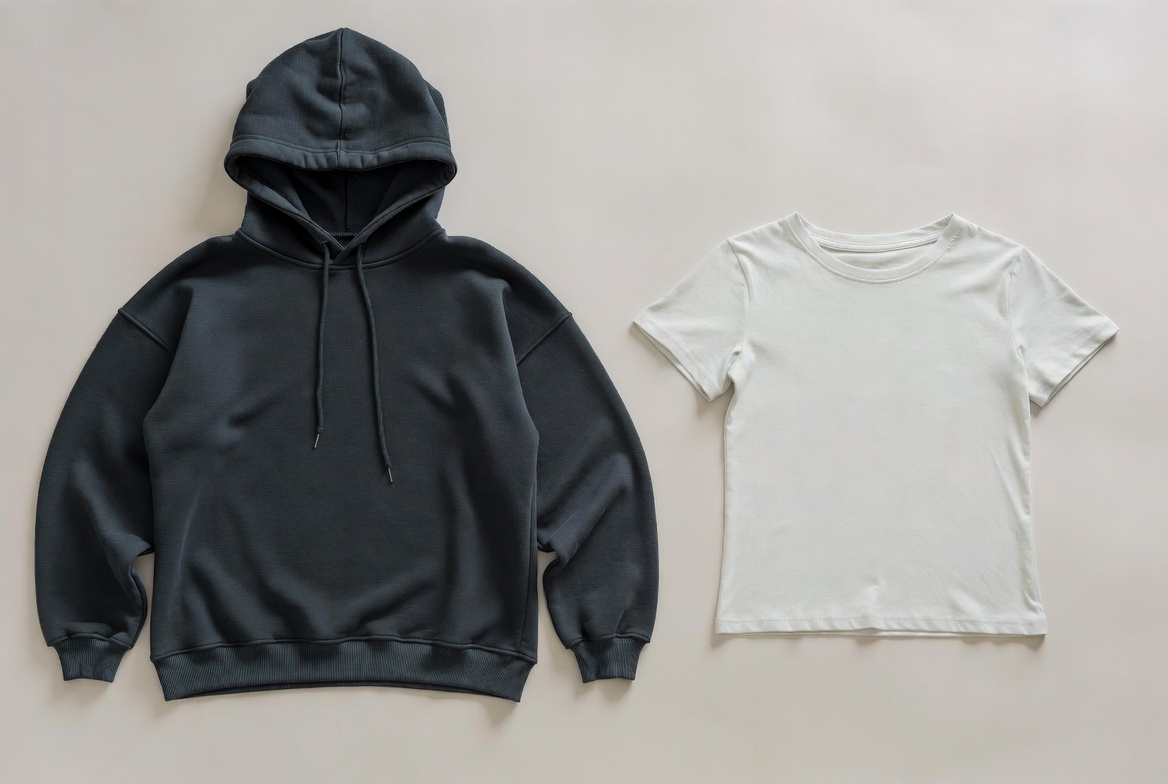
Choosing between a sweatshirt and vs t-shirt can make or break your apparel business strategy. Global buyers and brands need to understand the core differences between these two popular garment types to make wise purchasing decisions. The worldwide demand for both sweatshirts and t-shirts continues to grow as consumers seek versatile, comfortable clothing options. Whether you are sourcing for retail, promotional campaigns, or private label collections, knowing when to choose a sweatshirt over a t-shirt matters.Texasia, a leading manufacturer based in Bangladesh, produces high-quality sweatshirts and t-shirts for buyers worldwide, offering competitive pricing and reliable production timelines.
What Is a T-Shirt?
A t-shirt is a lightweight, short-sleeved garment with a round or V-shaped neckline. The basic structure includes a simple body panel construction with minimal stitching complexity. Common sleeve types range from cap sleeves to short sleeves, while fits range from slim-fit to oversized. T-shirts are wardrobe essentials across all age groups and cultures, making them among the most widely manufactured apparel items globally.
Fabrics Used in T-Shirts ( Material Differences)
Most t-shirts are made of cotton, organic cotton, or polyester blends, offering breathability and comfort. The fabric weight typically ranges from 140 GSM to 220 GSM, with higher GSM values indicating thicker, more durable materials. Ring-spun cotton offers superior softness compared to regular combed cotton. Blended fabrics combine the breathability of cotton with the durability and moisture-wicking properties of synthetic fibers. These material choices directly impact the garment’s feel, longevity, and price point.
Typical Uses of T-Shirts in Selection
T-shirts dominate casual wear markets and serve multiple purposes, including corporate branding, school uniforms, promotional giveaways, and event merchandise. Businesses prefer t-shirts for their large printable surface area and cost-effectiveness—seasonal demand peaks in spring and summer, when consumers seek lightweight, breathable options. The versatility of t-shirts makes them suitable for screen printing, heat transfer printing, and direct-to-garment printing.
What Is a Sweatshirt? (Sweatshirt vs T-Shirt Explained)
A sweatshirt features a long-sleeve design and a thicker fabric construction to provide warmth. Style options include pullover designs with crew necks or zip-up versions with hooded or non-hooded variations. The inner lining often has a soft, brushed finish that traps heat while maintaining comfort. Sweatshirts typically have ribbed cuffs and waistbands that help retain warmth and create a fitted appearance at the extremities.
Sweatshirts primarily use fleece, French terry, or cotton-polyester blends with fabric weights ranging from 240 GSM to 400 GSM. This substantial difference in GSM compared to t-shirts explains why sweatshirts provide superior insulation. Fleece materials trap air between fibers, creating natural warmth without excessive Bulk. French terry offers a smoother exterior with looped pile on the inside, balancing comfort and temperature regulation. Check out Texasia’s sweatshirt collection for various fabric options.
Sweatshirts serve as essential winter wear and athleisure pieces worldwide. Corporate buyers often select sweatshirts for employee uniforms in cooler climates or air-conditioned environments. The garment works well for sports teams, outdoor events, and casual lifestyle branding. Regional climate plays a significant role in determining sweatshirt demand, with colder markets showing consistent year-round interest while tropical regions see limited seasonal purchases.
Key Differences Between a Sweatshirt VS T-Shirt
Material and Construction
| Aspect | T-Shirts | Sweatshirts |
|---|---|---|
| Fabric Weight (GSM) | 140-220 GSM (lightweight) | 240-400 GSM (heavy construction) |
| Breathability | High; excellent air circulation | Medium to low; heat retention-focused |
| Primary Function | Breathability for warm weather and active movement | Insulation with heavier fabrics that trap body heat |
| Climate Suitability | Tropical and summer conditions; prevents overheating in humidity | Air-conditioned spaces and cooler climates; provides necessary warmth |
| Raw Material Cost | $2-4 per kg (cotton and poly-blends) | $4-7 per kg (fleece and French terry); 40-60% higher than t-shirts |
Design and Printing
| Aspect | T-Shirts | Sweatshirts |
|---|---|---|
| Design Aesthetic | Clean, simple silhouettes; casual and semi-formal settings | Sporty, relaxed aesthetics; athleisure and streetwear trends |
| Fashion Versatility | Minimalist looks | Layered, textured appearances |
| Printing Surface | Smooth, flat surface; perfect for detailed graphics and multi-color prints | Textured surface requiring specific techniques; works well for bold designs |
| Printing Methods | Screen printing, DTG, heat transfer, vinyl (easier application) | Screen printing, embroidery, applique (adjusted ink types and pressure needed) |
| Branding Area | Large chest area for logos | Premium embroidered looks; embroidery holds up better on heavy fabric |
Production and Manufacturing
| Aspect | T-Shirts | Sweatshirts |
|---|---|---|
| Production Timeline | 3-4 weeks from order to shipment | 5-7 weeks from order to shipment (2-4 weeks longer) |
| Manufacturing Complexity | Simpler construction; faster sewing | Multiple components; detailed finishing required |
| Labor Cost per Unit | Lower due to simpler construction | Higher; production time is 2-3 times longer |
| Minimum Order Quantity | 500-1000 pieces per style/color | 1000-2000 pieces per style/color (higher due to fabric roll minimums) |
| Bulk Order Planning | Shorter lead times allow flexible reordering | Requires 3-4 months advance planning before season |
Pricing and Market Economics
| Aspect | T-Shirts | Sweatshirts |
|---|---|---|
| Unit Cost Range | $2-6 per piece | $6-15 per piece |
| Retail Price Point | $10-25 ($10-25+ for premium brands) | $25-60 ($25-60+ for premium brands) |
| Profit Margin Potential | Lower retail prices but broader market | Higher retail prices improve margins despite increased production costs |
| Container Capacity | ~50,000 units per 40ft container | ~20,000 units per 40ft container |
Market Demand and Seasonality
| Aspect | T-Shirts | Sweatshirts |
|---|---|---|
| Peak Demand Season | March-August (Spring/Summer); 70% of annual sales | September-February (Fall/Winter); 65% of yearly sales |
| Regional Behavior | Year-round demand in tropical markets (Southeast Asia, Africa, Latin America) | Strong demand in temperate zones (North America, Europe, parts of Asia) |
| Market Growth Rate | 4-5% annual global growth | 6-8% yearly growth driven by athleisure trend |
| Inventory Strategy | Order before warm weather; maintain steady stock in tropical regions | Stock ahead of temperature drops; balanced inventory in temperate zones |
Usage and Consumer Profile
| Aspect | T-Shirts | Sweatshirts |
|---|---|---|
| Primary Use Cases | Casual daily wear, corporate uniforms, promotional giveaways, event merchandise, summer wardrobes | Winter layering, athletic training wear, corporate-branded apparel, college merchandise, athleisure fashion |
| Target Age Demographics | All ages (universal appeal) | Primarily 15-45 (youth and active adults) |
| Consumer Appeal | Broader range of applications across seasons and purposes | Specific seasonal and lifestyle niches with higher perceived value |
Durability and Sustainability
| Aspect | T-Shirts | Sweatshirts |
|---|---|---|
| Product Lifespan | 1-2 years with regular wear; thinner fabrics wear faster | 3-5 years with regular wear; thicker construction withstands washing better |
| Care Requirements | Standard washing and care | Requires proper washing to maintain fleece softness and prevent pilling |
| Environmental Footprint | Lower water and energy use in production; smaller per-unit footprint | Higher resource consumption per unit |
| Sustainable Options | Organic cotton options widely available | Recycled polyester fleece gaining popularity |
Why Choose Bangladesh for Sweatshirt vs T-Shirt Manufacturing
Bangladesh’s Apparel Manufacturing Expertise
Bangladesh ranks among the world’s top garment exporters, with a skilled workforce exceeding 4 million workers trained in modern production techniques. The country maintains strict compliance standards, including WRAP, BSCI, and OEKO-TEX certifications that meet international buyer requirements. Manufacturers like Texasia invest in continuous training programs to maintain consistent production quality across large order volumes. The infrastructure supports both small specialty orders and massive bulk productions.
Cost Efficiency in Production
Competitive pricing makes Bangladesh attractive for budget-conscious buyers without compromising quality. Labor costs remain significantly lower than Western manufacturing hubs while maintaining professional standards. High-volume production capability allows manufacturers to offer better per-unit pricing on large orders. The concentration of textile mills, dyeing facilities, and finishing houses within Bangladesh creates supply chain efficiencies that reduce costs and lead times for both sweatshirt and t-shirt production.
Texasia’s Role in Sweatshirt vs T-Shirt Manufacturing
Texasia manufactures sweatshirts and t-shirts in Bangladesh specifically for global buyers seeking reliable production partners. With years of experience in export-oriented apparel production, the company understands international quality standards and delivery expectations. The facility handles orders from initial sampling through final shipment, providing single-source convenience for busy procurement teams. Client portfolios span multiple continents, demonstrating proven capability in diverse market requirements.
Quality Control and Compliance
Fabric inspection occurs at multiple production stages, catching defects before they reach finished garments. Every batch undergoes color fastness testing, shrinkage analysis, and construction verification to meet buyer specifications. Ethical and sustainable manufacturing practices include safe working conditions, fair wages, and environmental management systems. Third-party audits verify compliance regularly, giving buyers confidence in their sourcing decisions.
Custom Solutions by Texasia
OEM and ODM services allow buyers to launch products under their own brands without managing manufacturing complexities. The design team offers flexible sourcing support, helping clients select appropriate fabrics, trims, and construction methods for their target markets. Whether you need basic blank goods or fully customized designs with special packaging, Texasia adapts production capabilities to match your specifications.
How to Choose Between a Sweatshirt and a T-Shirt for Your Brand
Climate and target market analysis should drive your product selection. Buyers serving tropical markets will emphasize t-shirts with occasional lightweight sweatshirts for air-conditioned environments. Temperate-market buyers need balanced inventories that shift with the seasons. Budget considerations matter too—t-shirts offer lower entry points for new brands or promotional campaigns, while sweatshirts command higher retail prices that can improve profit margins. Brand positioning influences choice as well; athletic brands might lean toward performance sweatshirts, while lifestyle brands could focus on fashion t-shirts. Understanding customer preferences through market research prevents inventory miscalculations.
Partner with Texasia for Your Sweatshirt and T-Shirt Needs
Ready to source quality sweatshirts or t-shirts for your brand? Contact Texasia to discuss your requirements, request samples, and receive detailed quotations. Whether you need small test orders or large-scale production runs, the team provides personalized support throughout the manufacturing process. Start building your apparel collection with a trusted Bangladesh manufacturing partner today.
Frequently Asked Questions
What is the main difference between a sweatshirt and a t-shirt?
The main difference lies in fabric weight and warmth—sweatshirts use heavier materials (240-400 GSM) with long sleeves for cold weather, while t-shirts use lighter materials (140-220 GSM) with short sleeves for warm weather.
Which costs more to manufacture: a sweatshirt or a t-shirt?
Sweatshirts cost more due to higher fabric consumption, heavier materials, more complex construction with ribbed trims, and longer production times than simpler t-shirt manufacturing.
Can I order both sweatshirts and t-shirts from the same manufacturer?
Yes, manufacturers like Texasia specialize in producing both garment types, offering convenience through unified sourcing, consistent quality standards, and streamlined logistics for buyers.
What MOQ should I expect for sweatshirt or t-shirt orders?
T-shirt MOQs typically start at 500-1000 pieces per style, while sweatshirt MOQs generally begin at 1000-2000 pieces due to fabric minimums and production setup requirements.
Which garment offers better branding opportunities?
Both offer excellent branding options—t-shirts provide larger, smooth printing surfaces ideal for detailed graphics, while sweatshirts work well for premium embroidery and offer more visible brand placement due to larger surface area.
How do seasonal trends affect sweatshirt or t-shirt demand?
T-shirts peak in spring and summer, when consumers need lightweight options, while sweatshirts see their highest demand in fall and winter, as temperatures drop and layering becomes necessary.
Are Bangladesh-made sweatshirts and t-shirts of good quality?
Yes, Bangladesh has developed world-class garment manufacturing expertise with strict quality controls, international certifications, and skilled workers producing for major global brands. Check out suppliers of ladies’ plain t-shirts and other options.
What fabrics work best for promotional sweatshirts vs t-shirts?
For promotional t-shirts, cotton-polyester blends (60/40 or 50/50) offer durability and easy care. For promotional sweatshirts, 80/20 cotton-poly fleece provides warmth, comfort, and excellent print retention at a reasonable cost.
Conclusion
Understanding the distinction between sweatshirts and t-shirts helps brands make smarter sourcing decisions that align with market needs, seasonal demand, and budget constraints. Both garments serve essential roles in apparel collections, each offering unique benefits for different use cases. By partnering with experienced manufacturers who produce both categories, buyers gain efficiency, consistency, and flexibility in their product development strategies.
