
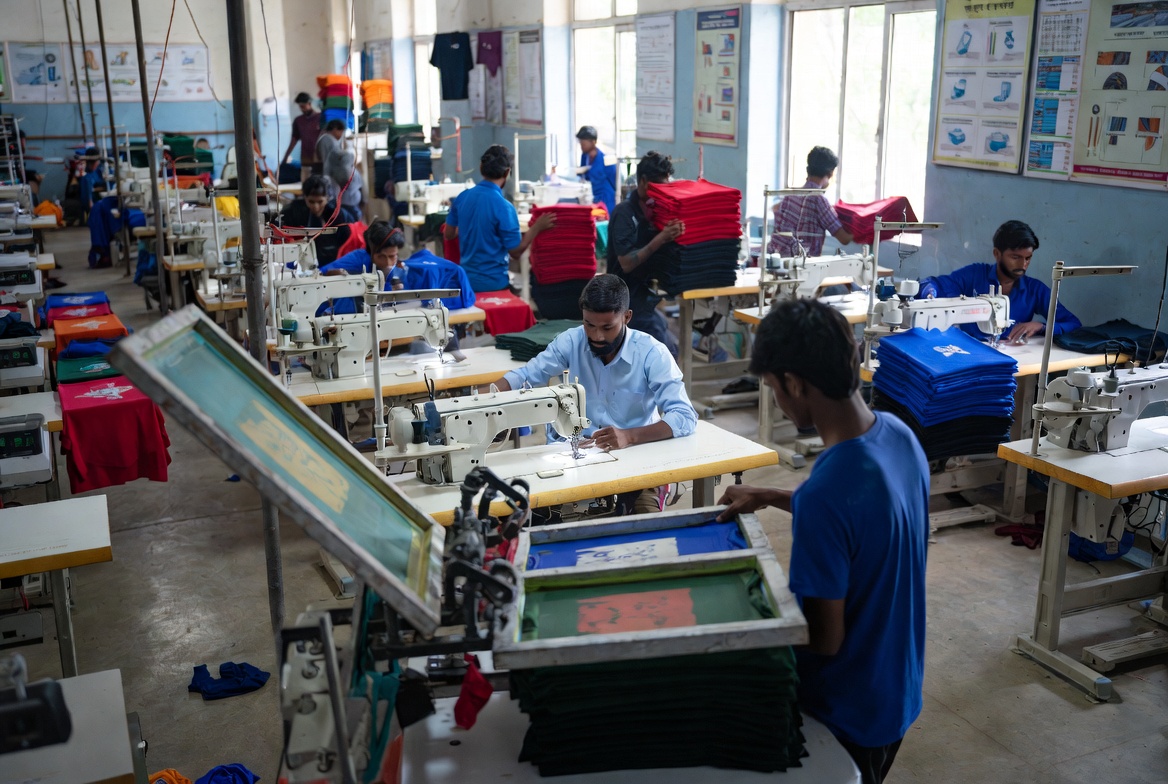
A small order T shirt manufacturer Bangladesh specializes in producing limited quantities of garments without forcing brands to commit to massive bulk orders. When we talk about small orders, we mean low minimum order quantity (MOQ) apparel production typically ranging from 50 to 1,000 pieces per style. Bangladesh has become a global favorite for sourcing low-MOQ T-shirts due to its skilled workforce, affordable production costs, and flexible manufacturing capabilities. Unlike bulk manufacturing, small-batch production lowers entry barriers for new brands by reducing upfront investment, minimizing inventory risk, and offering greater creative flexibility. This approach lets startups test designs, gauge market response, and build their brand identity without burning through capital.
Who Needs a Small Order T Shirt Manufacturer
Startup clothing brands launching their first collections need small runs to validate their designs without excessive financial commitment. New fashion labels testing the market benefit from producing limited quantities before scaling up production. E-commerce sellers on platforms like Shopify, Amazon, and Etsy rely on small orders to maintain lean inventory and quick product rotation. Influencers and creators launching merchandise prefer working with low-MOQ t-shirt manufacturers in Bangladesh who understand their audience-driven production needs. Corporate and promotional merchandise buyers often require custom T-shirts in smaller quantities for specific events, campaigns, or employee programs.
Why Small Order T Shirt Manufacturer Bangladesh Is in High Demand
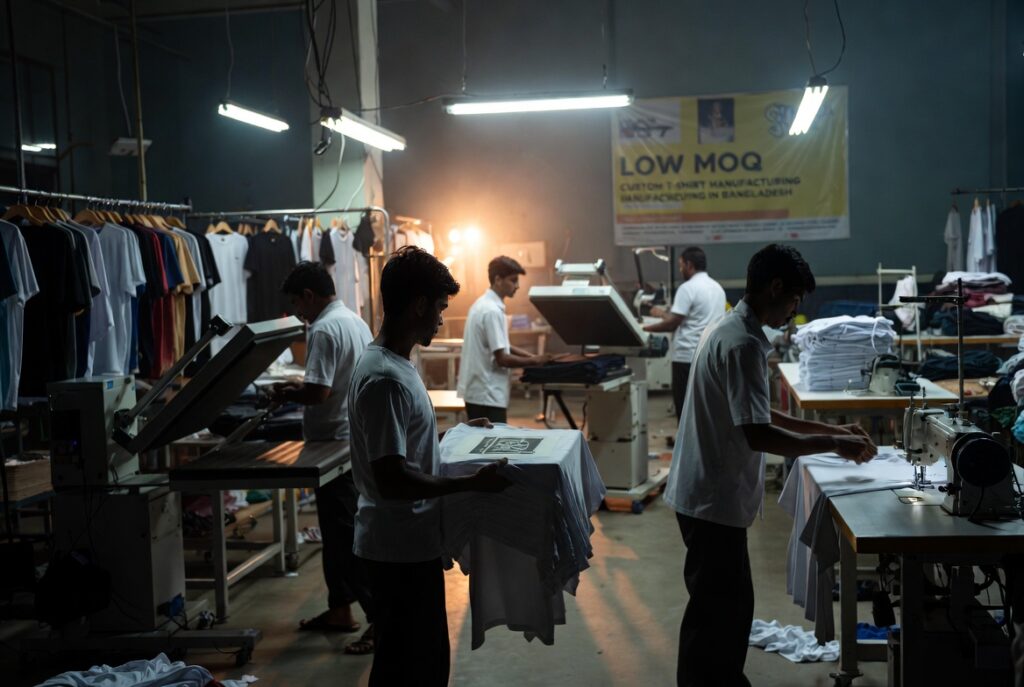
The global shift toward testing products before scaling has made small batch manufacturing essential for brand survival. The growth of direct-to-consumer (D2C) and private-label brands requires production partners who support agile business models. Risks of bulk orders for startups including locked capital in inventory and cash flow problems can cripple young businesses before they gain traction. Small batch production reduces financial exposure by allowing brands to produce only what they can sell or test in real market conditions. Bangladesh fits perfectly into agile brand growth models because manufacturers here have adapted their systems to accommodate smaller runs while maintaining competitive pricing and quality standards.
What Makes Bangladesh a Hub for Small Order T Shirt Manufacturing
Cost Advantages
Labor efficiency in Bangladesh creates significant cost savings even for small production runs. Local sourcing of fabric and trim eliminates import delays and reduces material costs. Bangladeshi factories offer competitive per-unit pricing even when producing just a few hundred pieces. When you compare costs versus China, Turkey, and Western suppliers, Bangladesh consistently delivers better value without compromising on quality. The country has built an entire ecosystem around garment manufacturing that supports both large- and small-quantity t-shirt factory operations in Bangladesh.
Skilled Workforce
Bangladesh has decades of specialization in knitwear and T-shirts, creating a workforce that understands fabric behavior, construction techniques, and finishing standards. Workers here bring experience with export-quality apparel, so your small order receives the same attention to detail as major-brand productions. The established quality-control culture ensures consistency across every piece, regardless of order size.
Fabric Availability
Manufacturers can source cotton in various grades, including combed and ring-spun varieties. Organic cotton and sustainable fabrics are increasingly available for eco-conscious brands. Blended fabrics like cotton-poly and cotton-elastane mixes provide performance characteristics for activewear and fashion T-shirts. Factories offer GSM flexibility for small orders, allowing brands to choose fabric weight based on their specific product vision.
Minimum Order Quantity (MOQ) Explained
In the Bangladesh context, small orders typically mean production runs that traditional bulk manufacturers would reject. Typical MOQs range from 50 to 500 pieces for tiny startups, while some factories set minimums of 500 to 1,000 pieces, depending on the level of customization. MOQs vary by fabric type specialty fabrics require higher minimums. The print method affects the MOQ because screen-printing setup costs make tiny runs less economical. Color and size variations can increase minimum requirements, as each variation requires separate production planning. The sampling process for small orders usually involves producing 1-3 samples before confirming the production run.
Customization Options
Printing Options
Screen printing remains the most cost-effective method for orders of 100 or more pieces per design. DTG (Direct-to-Garment) works perfectly for small runs with complex, multi-color designs. Puff print adds dimensional texture for logos and graphics. Water-based and eco inks provide soft-hand prints that appeal to premium markets and environmentally conscious consumers.
Embroidery Services
Logo embroidery elevates brand perception and adds durability to branded elements. Factories offer chest, sleeve, and back placement options to match your design requirements. Understanding stitch density and durability expectations helps brands specify the right embroidery quality for their price point and target market.
Labeling and Packaging
Private label and branding services let you build brand identity from the first order. Manufacturers provide neck labels and care labels with your brand information and compliance details. Hangtags complete the branded presentation for retail-ready products. Polybags, cartons, and export packing protect your investment during international shipping.
Quality Control Standards in Small Order T-shirts
Fabric inspection catches defects before cutting begins. Stitch consistency checks ensure every garment meets construction standards. Color fastness testing verifies that prints and dyes will withstand washing. Measurement tolerance control maintains accurate sizing throughout the entire production run. The final inspection before shipment serves as a final quality gate before products leave the factory. The challenge is maintaining consistency even in low quantities, which reputable manufacturers achieve through standardized processes and trained quality teams.
Production Timeline for Small Order
The sampling timeline typically runs 5-7 days for basic styles and longer for complex designs. The small-batch production timeline ranges from 15-30 days, depending on order complexity and the factory’s schedule. Printing and finishing stages add 3-7 days to the timeline. Packing and dispatch are usually completed within 2-3 days after the final inspection. Factors affecting lead time include fabric availability, customization requirements, and brand-side approval speed.
Export and Shipping Support
Export documentation handling by experienced manufacturers simplifies international trade compliance. Worldwide shipping to the USA, EU, UK, AU, and Middle East markets happens regularly through established logistics networks. Brands can choose between courier, air, or sea freight based on urgency and budget constraints. Reputable factories support first-time importers by explaining procedures, providing necessary documentation, and recommending reliable shipping partners.
Pricing Structure
The price breakdown includes fabric costs (usually 40-50% of total), printing or embroidery (15-25%), labor (20-30%), and packaging (5-10%). Understanding why per-unit cost is higher than bulk but safer helps brands make informed decisions about their production strategy. Practical ways to reduce costs on small orders include minimizing color variations, choosing standard fabrics, simplifying print designs, and being flexible with delivery timelines.
Common Challenges
Fake factories and sourcing agents pose serious risks to brands working with Bangladesh for the first time. Trading companies versus real manufacturers creates confusion traders add markup without adding value. Inconsistent quality in small batches happens when factories treat small orders as secondary priorities. Poor communication and delays frustrate brands trying to launch on schedule. Learning how to verify a legitimate manufacturer protects your investment and timeline request factory photos, check references, video call during production, and start with samples.
How to Choose the Right Small Order
Factory transparency about their capabilities, limitations, and processes indicates trustworthy partners. Sample quality demonstrates what you can expect in bulk production. Communication speed and clarity predict how smoothly your entire project will run. Export experience ensures your manufacturer understands international standards and shipping requirements. Customization capability determines whether they can accurately execute your vision. Reviews and long-term clients provide social proof of reliability and quality consistency.
Why Texasia Is One of the Best Small Order T-shirt Manufacturers in Bangladesh
Texasia brings over a decade of experience in knitwear and T-shirt manufacturing, serving international brands across multiple markets. The company provides dedicated support for startups and small brands, recognizing that today’s 500-piece order could become tomorrow’s 10,000-piece relationship. Their flexible MOQ policy accommodates brands at every growth stage. Consistent quality control processes ensure the 50th piece matches the first piece in every production run. Ethical and compliant production practices protect brand reputation and meet international labor standards. Global brands trust Texasia because they deliver on promises, maintain communication, and treat every order regardless of size as important to their reputation.
Who Should Work with a Small Order T Shirt Manufacturer Like Texasia
Startup clothing brands building their first collections need manufacturing partners who understand their resource constraints and growth ambitions. Shopify and Amazon sellers require reliable quality and reasonable MOQs to test products before investing heavily. Influencers launching merch need quick turnarounds and flexible customization for audience-specific designs. Streetwear and lifestyle labels benefit from working with custom t-shirt low MOQ Bangladesh factories that understand fashion timing and trend cycles. Corporate merchandise buyers appreciate the ability to order specific quantities for events without wasteful overproduction.
Future Trend
On-demand manufacturing technology will continue to reduce MOQs as digital printing advances. Sustainable and organic fabrics will become standard rather than premium options. Blockchain verification may provide transparency for ethical production claims. AI-powered design tools could integrate directly with manufacturing systems for faster sampling. Nearshoring considerations might shift some production, but startup t-shirt supplier in Bangladesh will remain competitive through quality and price advantages.
Real Case Study About Texasia Is the Best Small Order T Shirt Manufacturer in Bangladesh
A Los Angeles-based streetwear brand approached Texasia with a 300-piece first order across 3 designs. The brand had limited capital and needed to test its market before committing to a larger inventory. Texasia provided samples within 6 days, adjusted the fit based on feedback, and delivered the full production in 22 days. The quality matched the samples exactly, and the packaging presentation exceeded expectations. Six months later, that same brand placed a 2,500-piece order because their initial products sold out within three weeks. The founder credited Texasia’s flexible small-order policy with making their brand launch possible without taking on debt or investors.
FAQ
What is the minimum order quantity?
Most small-order T-shirt manufacturers in Bangladesh accept orders starting at 50-100 pieces per style, though some may require 500 pieces depending on customization.
Can I get samples before bulk production?
Yes, reputable manufacturers provide 1-3 samples for approval before starting full production, typically within 5-7 days.
Do small orders cost more than bulk orders?
Per-unit costs are higher for small orders due to setup costs, but the total investment and financial risk remain much lower.
How long does production take?
Small batch production typically takes 15-30 days from order confirmation to shipment, depending on complexity and customization requirements.
Can Bangladeshi manufacturers ship internationally?
Yes, established factories regularly handle export documentation and worldwide shipping to the USA, Europe, Australia, and other global markets.
Conclusion
Working with a small-order T-shirt manufacturer in Bangladesh gives emerging brands the flexibility to launch, test, and grow without excessive financial risk. The combination of skilled labor, competitive pricing, and manufacturing expertise makes Bangladesh the wise choice for startups and small brands building their future.

