
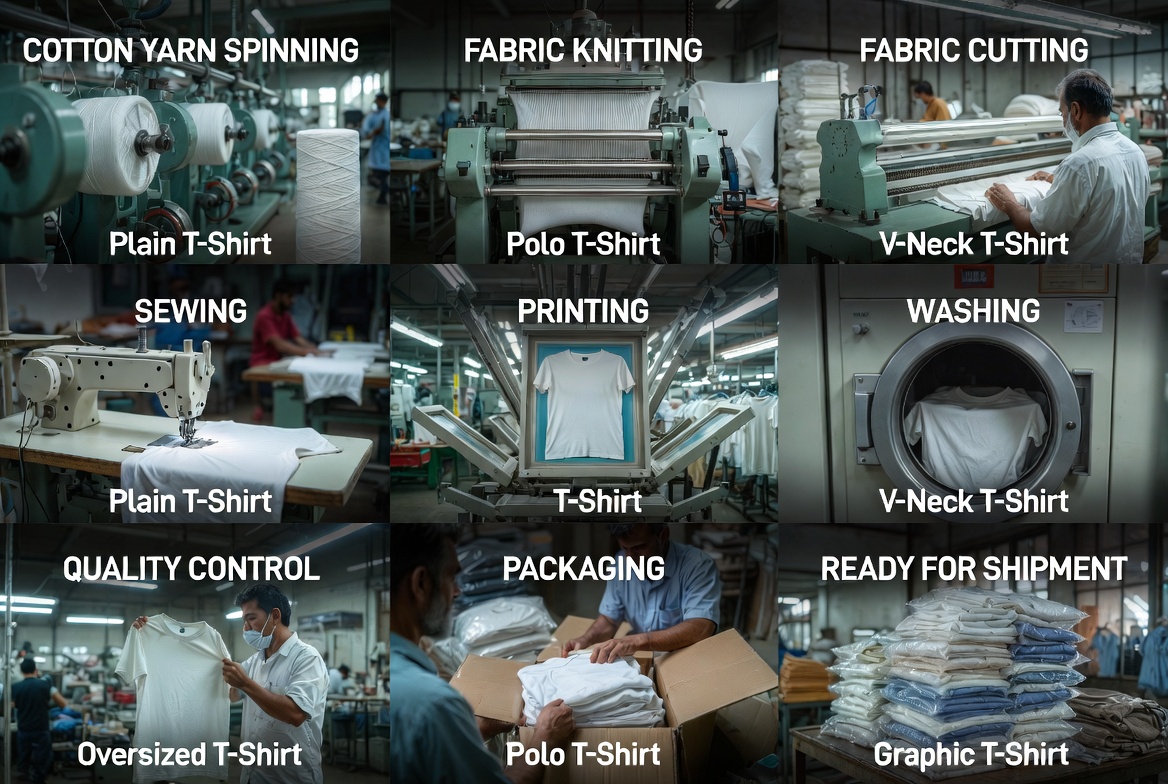
Bangladesh stands as the second-largest apparel exporter in the world, producing billions of garments annually. The country plays a critical role in global textile supply chains, with T-shirts among its top export products. This industry generates over $40 billion in annual revenue and employs more than 4 million workers, making it the backbone of the national economy. From cotton sourcing to final packaging, T-shirt manufacturing in Bangladesh involves multiple specialised stages that combine traditional craftsmanship with modern technology. Texasia is one of the best custom T-shirt manufacturers in Bangladesh, offering end-to-end production services with a focus on quality and timely delivery.


Bangladesh Garment Production Process in Modern Factories
The Bangladesh garment production process begins with raw material procurement and ends with finished products ready for international markets. Modern factories integrate vertical operations to control quality at every step. These facilities are equipped with automated machinery, a trained workforce, and compliance systems that meet global standards.
Raw Material Sourcing in the Bangladesh Garment Production Process
Cotton is the primary raw material for T-shirt production. Bangladesh imports high-quality cotton from countries like the USA, India, and Australia. Some factories source locally grown cotton, but most rely on imports to meet volume and quality requirements. Fabric mills maintain direct relationships with cotton suppliers to ensure consistent quality and pricing.
Yarn Spinning in the Bangladesh Garment Production Process
Imported cotton bales are cleaned, carded, and spun into yarn using ring-spinning or open-end spinning machines. The yarn count varies based on the final product specifications—finer counts for premium T-shirts and coarser counts for basic workwear. Spinning mills in Bangladesh produce millions of kilograms of yarn daily, supplying both domestic and export markets.
Fabric Knitting in the Bangladesh Garment Production Process
Yarn is fed into circular knitting machines to create tubular fabric. Single jersey, pique, and rib knits are the most common constructions for T-shirts. Knitting speed, tension, and loop formation are carefully monitored to avoid defects. The fabric is then inspected for holes, oil stains, and uneven textures before moving to the next stage.
Cotton T-shirt Production in Bangladesh – Fabric Development Stage
After knitting, the cotton T-shirt production in Bangladesh moves into fabric processing. This stage transforms raw greige fabric into dyed, finished material ready for cutting and sewing.
Dyeing and Washing in Cotton T-shirt Production in Bangladesh
Greige fabric undergoes pre-treatment to remove impurities, then enters dyeing machines where colour is applied using reactive or pigment dyes. Temperature, pH levels, and dye concentration are strictly controlled to achieve uniform shades. After dyeing, fabric is washed multiple times to remove excess dye and improve softness. Some orders require enzyme or stone washing for vintage effects.
Fabric Inspection in Cotton T-shirt Production in Bangladesh
Trained inspectors examine every meter of dyed fabric under bright lighting conditions. They check for shade variation, pilling, holes, and stains. Defective sections are marked and either repaired or rejected. Only fabric that meets buyer specifications proceeds to the cutting floor. This quality gate prevents defective materials from reaching production lines.
T-shirt Manufacturing Steps in Bangladesh – From Fabric to Finished Product
The T-shirt manufacturing steps in Bangladesh include pattern making, cutting, sewing, and finishing. Each step requires specialised skills and machinery to produce garments that meet international quality standards.
Pattern Making in T-shirt Manufacturing Steps in Bangladesh
Pattern makers create templates based on technical specifications provided by buyers. They use CAD software to design patterns in sizes small, medium, large, and extra-large. Grading ensures that proportions remain consistent across all sizes. Paper patterns are printed and used to create marker layouts that minimise fabric waste.
Cutting Process in T-shirt Manufacturing Steps in Bangladesh
Fabric rolls are spread in multiple layers on cutting tables. Marker plans are placed on top, showing the exact placement of pattern pieces. Automated cutting machines or manual cutters slice through the fabric stack, producing identical pieces for sleeves, body panels, and collars. Cut parts are bundled by size and colour, then sent to the sewing floor.
Sewing Process in T-shirt Manufacturing Steps in Bangladesh
Sewing operators use lockstitch, overlock, and coverstitch machines to assemble T-shirt components. The production line follows a modular system where each operator completes a specific task—attaching sleeves, hemming bottoms, or setting collars. Quality checkers inspect garments at various points to catch stitching errors early. A typical production line can produce 1,500 to 2,000 pieces per day.
Finishing Process in T-shirt Manufacturing Steps in Bangladesh
Finished garments undergo final inspection, thread trimming, and steam pressing. Stickers, hang tags, and labels are attached according to buyer requirements. Some orders require screen printing, embroidery, or heat transfer applications before packing. Pressed garments are folded neatly and placed into polybags, ready for carton packing.
Knitwear Factory Operations in Bangladesh – Industrial Workflow
Knitwear factory operations in Bangladesh involve planning, execution, and monitoring to meet production targets while maintaining quality. Factories operate on tight schedules, balancing multiple orders from different buyers.
Production Planning in Knitwear Factory Operations in Bangladesh
Planning teams create production timelines based on order quantity, delivery dates, and factory capacity. They coordinate with procurement, dyeing, and sewing departments to ensure materials arrive on time. Daily production meetings track progress and address bottlenecks. ERP systems help factories manage orders, inventory, and shipments digitally.
Quality Control in Knitwear Factory Operations in Bangladesh
Quality assurance teams conduct inline inspections, final inspections, and pre-shipment audits. They follow AQL (Acceptable Quality Level) standards to determine defect rates. Measurements are checked against tech packs to ensure size accuracy. Rejected garments are reworked or discarded based on defect severity.
Compliance & Certifications in Knitwear Factory Operations in Bangladesh
Most factories hold certifications like WRAP, BSCI, SEDEX, and Oeko-Tex. These certifications demonstrate compliance with labour laws, environmental standards, and social accountability standards. Buyers conduct regular audits to verify working conditions, fire safety, and chemical usage. Factories invest in training programs and infrastructure upgrades to maintain certification status.
Apparel Manufacturing Industry in Bangladesh – Global Position and Strength
The apparel manufacturing industry in Bangladesh ranks among the top three garment producers globally. The country supplies major retail chains including H&M, Zara, Walmart, and Uniqlo.
Export Markets of the Apparel Manufacturing Industry in Bangladesh
The European Union accounts for nearly 60% of Bangladesh’s garment exports, with Germany, France, and the UK as the top destinations. The United States imports around 20%, while Canada, Australia, and Japan make up the remaining share. Bangladesh has duty-free access to many markets under trade agreements, making its products highly competitive.
Why the Apparel Manufacturing Industry in Bangladesh Is Competitive
Low labour costs, a large workforce, and government support make Bangladesh a preferred sourcing destination. Factory infrastructure has improved significantly over the past decade, with many facilities achieving LEED certification. Vertical integration allows manufacturers to control the entire supply chain, reducing lead times and costs. Political stability and improved port facilities further strengthen the country’s position.
Sustainability
Sustainability is becoming central to how T shirts are manufactured in Bangladesh. Factories adopt green technologies to reduce environmental impact and meet buyer demands for ethical production.
Green factories are designed with energy-efficient lighting, natural ventilation, and rainwater harvesting systems. Many facilities have achieved LEED Gold or Platinum certification, proving their commitment to sustainable operations.
Water recycling systems treat and reuse wastewater from dyeing and washing processes. Effluent Treatment plants (ETPs) ensure that discharged water meets environmental standards, protecting nearby rivers and communities.
Renewable energy sources like solar panels and biogas plants reduce reliance on fossil fuels. Some factories generate a significant portion of their electricity from renewable sources, lowering carbon emissions.
Ethical labour compliance includes fair wages, safe working conditions, and policies against child labour. Factories provide healthcare, daycare, and educational support to workers, improving their quality of life and productivity.
Custom T-shirt Manufacturer In Bangladesh – Why Texasia Stands Out
Finding a reliable custom T-shirt manufacturer in Bangladesh is essential for brands seeking quality and consistency. Texasia has built a reputation for excellence in T-shirt manufacturing.
Texasia’s Production Excellence
Texasia operates state-of-the-art facilities with modern knitting, dyeing, and sewing equipment. The company maintains strict quality control at every stage, from yarn inspection to final packing. Their team includes experienced patternmakers, skilled operators, and dedicated quality inspectors who ensure that every garment meets specifications. Fast turnaround times and flexible MOQs make Texasia a preferred partner for startups and established brands alike. Visit their products page to explore the full range of offerings.
Why Texasia Is One of the Best Custom T-shirt Manufacturers in Bangladesh
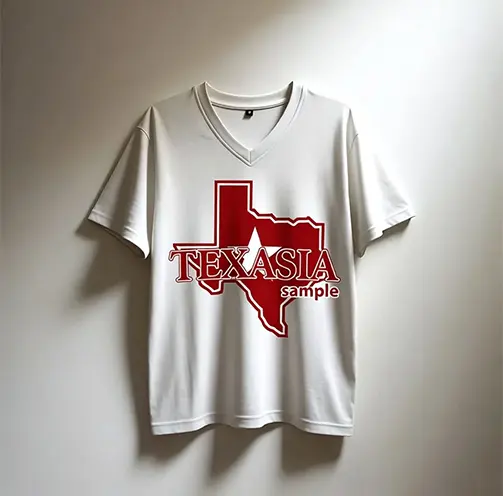
Texasia offers customisation options including screen printing, embroidery, heat transfer, and garment dyeing. They work closely with clients to develop samples, refine designs, and finalise production plans. Transparent communication and on-time delivery have earned them long-term partnerships with international buyers. Whether you need bulk T-shirt supply or low MOQ orders, Texasia delivers consistent quality and competitive pricing. Their commitment to sustainability and compliance makes them a responsible choice for brands focused on ethical sourcing.
Quality Assurance
Quality assurance is a critical component . Factories implement multiple checkpoints to prevent defects and ensure buyer satisfaction.
Fabric testing includes checking GSM (grams per square meter), width, and colour fastness—lab tests samples for tensile strength, tear resistance, and pilling tendency. Only approved fabric enters production.
Shrinkage control is managed through compacting machines and pre-shrinking treatments. Garments are washed and measured to ensure dimensional stability after consumer use.
Colour fastness tests measure how well dyes resist fading during washing, rubbing, and exposure to light. Garments must meet minimum colourfastness standards to avoid returns.
An AQL (Acceptable Quality Level) inspection determines the acceptable defect rate for a production batch. Inspectors randomly select samples and check for measurement deviations, stitching flaws, and fabric defects. Shipments are approved only if they meet the agreed AQL levels.
Packaging and Export Process
Once garments pass final inspection, they move to the packaging and export process, which is how T shirts are manufactured in Bangladesh. Proper packing ensures products reach buyers in perfect condition.
Folding and packing involves folding garments to standard dimensions, inserting size stickers and care labels, and sealing in polybags. Operators use folding templates to maintain uniformity.
Carton labelling includes printing buyer names, purchase order numbers, style codes, and size breakdowns on master cartons. Barcodes are applied for easy scanning and tracking.
Shipping documentation includes commercial invoices, packing lists, bills of lading, and certificates of origin. Customs brokers handle paperwork to ensure smooth clearance at destination ports.
FOB / CIF explanation: FOB (Free on Board) means the buyer pays for shipping after goods are loaded onto the vessel. CIF (Cost, Insurance, and Freight) means the seller covers shipping and insurance to the destination port. Most buyers prefer FOB terms to control logistics.
Challenges
Despite its strengths, the T-shirt manufacturing industry in Bangladesh faces several challenges that affect its competitiveness.
Raw material volatility affects production costs. Cotton prices fluctuate based on global supply and demand, creating budget uncertainty for manufacturers. Import duties and currency exchange rates add further complexity.
Global competition from countries like Vietnam, India, and China puts pressure on pricing. These countries offer similar labour costs and are investing heavily in automation and infrastructure.
Lead time pressure forces factories to compress production schedules. Buyers demand faster delivery without compromising quality, requiring factories to optimise workflows and increase capacity.
Future
The future of T-shirt manufacturing in Bangladesh will be shaped by the adoption of technology and the implementation of sustainable practices.
Automation is gradually replacing manual tasks in cutting, sewing, and finishing. Automated spreading machines, robotic arms, and AI-powered quality inspection systems improve speed and accuracy.
Industry 4.0 integrates IoT sensors, data analytics, and cloud computing into factory operations. Real-time monitoring of machines, energy consumption, and production output helps managers make informed decisions.
Smart factories use connected systems to track orders from the arrival of raw materials to the final shipment. Digital dashboards provide visibility into every stage, enabling proactive problem-solving.
Sustainable innovation includes developing biodegradable packaging, zero-waste cutting techniques, and waterless dyeing methods. Factories investing in these technologies will attract environmentally conscious buyers and gain a competitive edge.
Real Case Study: Texasia is the Best T-shirt Manufacturer in Bangladesh
A European fashion brand approached Texasia to produce 50,000 organic cotton T-shirts with custom embroidery. The brand required GOTS-certified fabric, sustainable dyeing, and strict compliance with EU standards. Texasia sourced organic cotton from certified suppliers, used low-impact dyes, and completed production within the agreed timeline. The shipment passed third-party inspection with zero major defects, earning repeat orders worth $500,000 annually. This case demonstrates why Texasia is recognised as a reliable T-shirt manufacturer that delivers on quality, sustainability, and customer expectations. For brands seeking wholesale T-shirts or private label manufacturing, Texasia provides end-to-end solutions.
Frequently Asked Questions
What is the minimum order quantity for T-shirt manufacturing in Bangladesh?
Most factories require 500 to 1,000 pieces per style and colour, but some manufacturers, like Texasia, accept smaller orders for new brands.
How long does it take to manufacture T-shirts in Bangladesh?
Production lead time ranges from 30 to 60 days, depending on order quantity, fabric availability, and customisation requirements.
Are Bangladesh T-shirt manufacturers compliant with international standards?
Yes, most factories hold certifications such as WRAP, BSCI, SEDEX, and Oeko-Tex to ensure compliance with labour and environmental regulations.
Can I get custom designs and prints on T-shirts manufactured in Bangladesh?
Factories offer screen printing, embroidery, heat transfer, and sublimation services for custom branding and designs.
What are the payment terms for T-shirt manufacturing in Bangladesh?
Common payment terms include 30% advance and 70% before shipment, though terms vary by buyer relationship and order value.
Conclusion
Understanding how T shirts are manufactured in Bangladesh reveals a complex, well-organised industry that powers global fashion supply chains. From cotton sourcing to final export, every step involves skilled workers, modern machinery, and strict quality control. Contact Texasia today to start your T-shirt production journey with a trusted factory that prioritises quality and sustainability.

