
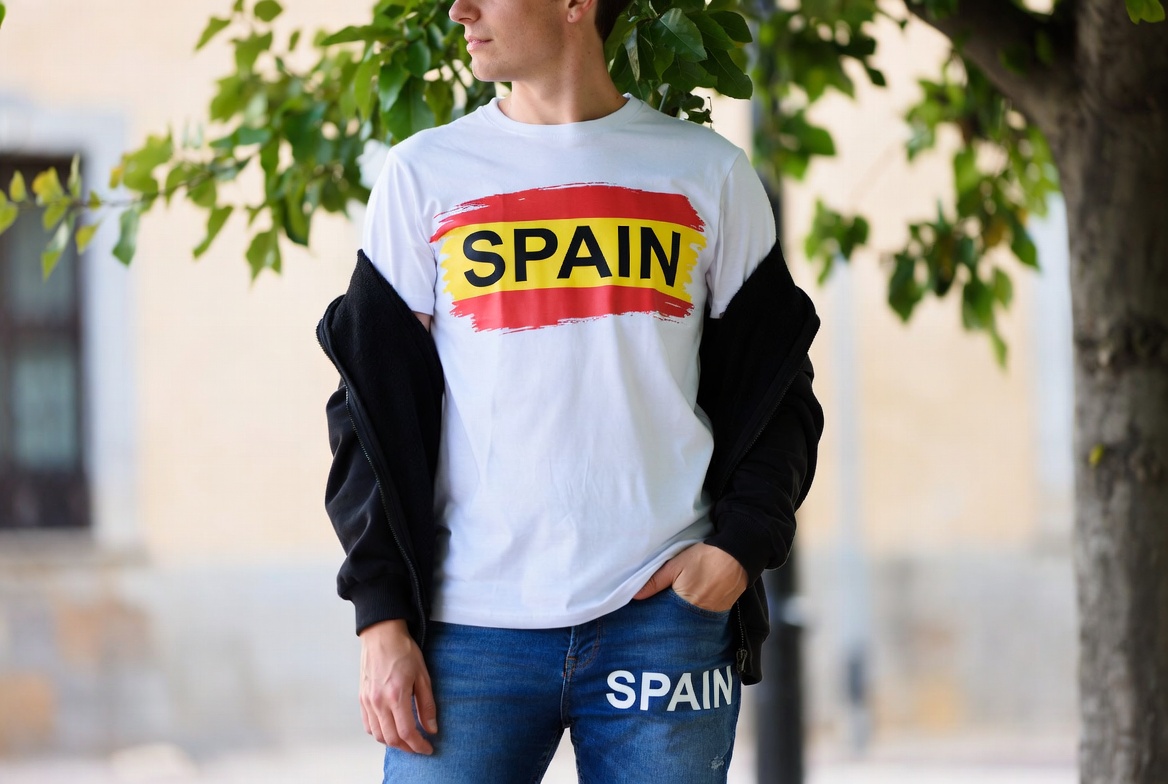
Finding the right custom clothing manufacturer for Spain can feel overwhelming when you’re launching a brand or scaling production. Whether you run a startup, manage an e-commerce store, or lead a corporate team needing branded gear, partnering with a trustworthy manufacturer makes all the difference. This guide walks you through everything you need to know about working with a custom clothing manufacturer for Spain—from initial design to final shipment. You’ll learn how to choose a partner, understand production timelines, manage costs, and ensure quality at every step. By the end, you’ll have the knowledge to make confident decisions and build a strong manufacturing relationship.
A custom clothing manufacturer for Spain handles your entire production journey. You provide designs, specifications, and fabrics—the manufacturer manages sampling, bulk production, quality checks, and shipment. Think of them as your production team working remotely.
Here’s what matters most when partnering
- MOQ (Minimum Order Quantity): Usually between 100–500 units per style, depending on complexity
- Lead Time: Samples take 7–21 days; bulk production runs 25–60 days
- Sampling Process: Multiple rounds to perfect fit, sizing, and finish
- Quality Control: Fabric inspection, inline checks, and final audits
- EU Compliance: Fiber labeling, care instructions, and social standards
- Shipping Options: FOB, CIF, or DDP to Spanish and EU ports
- Costing: Unit price + packaging + freight breakdown
Who Should Use ?
Streetwear brands launching capsule collections benefit from fast sampling and small batch runs. Boutique labels focused on unique designs need partners who understand tech packs and custom finishes. E-commerce sellers scaling product lines value manufacturers offering multiple categories. Corporate teams sourcing uniforms or promotional apparel need reliable capacity and consistent quality. Influencer brands building exclusive drops rely on speed-to-market and design flexibility. The choice between local Spain manufacturers and overseas partners depends on your priorities—choose Spain or EU-based producers for speed and easier communication, or look overseas for cost savings on larger volumes.
This guide covers minimum order quantities and realistic lead times. You’ll understand sampling cycles and how quality control actually works. We explain EU labeling requirements and shipping options to Spain. You’ll see how to compare quotes fairly and spot red flags early. By the end, you’ll know exactly what documents to prepare and what questions to ask before placing your first order.
Private Label Clothing Manufacturer Spain: Private Label vs. CMT vs. Full Package
Choosing your manufacturing model shapes your entire business model and profit margins.
Private label means the manufacturer sources materials, produces garments, and ships finished products under your brand name. You own the design and brand; the factory handles everything else. This works well for brands wanting turnkey solutions without managing fabric suppliers separately.
CMT (Cut-Make-Trim) puts more responsibility on you. You provide fabric and trims; the manufacturer cuts, sews, and finishes. CMT costs less per unit but requires you to manage material quality and timing. This model suits brands with existing fabric suppliers or those wanting tighter control over materials.
Full-package manufacturing bundles design consultation, material sourcing, sampling, production, and logistics. A private-label clothing manufacturer in Spain offers full-package support, handling everything—ideal for startups lacking production experience.
ODM (Original Design Manufacturing) means the factory provides design options from its library. You customize existing styles rather than starting from scratch. This speeds up production but limits uniqueness.
Private Label Workflow
Your journey starts with a tech pack—detailed specifications showing measurements, stitch types, fabric requirements, and color codes. Next comes fabric selection, where you and the manufacturer choose materials matching your brand aesthetic and budget. The factory then creates your first sample, which you review for fit, quality, and finish. If adjustments are needed, they create revised samples. Once you approve the design, they build a size set—samples across all your sizes—to confirm fit consistency. After approval, bulk production begins. The manufacturer conducts inline inspections throughout production to detect defects. Finally, the quality inspection and packing take place before shipment to Spain or your designated EU location.
Best-Fit Private Label Models for Spain-Based Brands
Capsule drops of 200–500 pieces work perfectly with private label manufacturers, offering fast sampling. Seasonal collections requiring 1,000–3,000 units benefit from full-package support, including material sourcing. Influencer brands launching exclusive styles value manufacturers with quick turnaround and design flexibility. Amazon and other EU marketplace sellers need reliable bulk production and proper documentation for cross-border sales. Small businesses testing market demand appreciate lower MOQs and reasonable sampling fees.
Custom Apparel Supplier Spain: Product Categories and Best Sellers
What a custom apparel supplier in Spain can produce shapes your options and profitability.
Knit products include t-shirts, polos, hoodies, sweatshirts, and joggers. These remain bestsellers across Spain and the EU markets. Woven items cover denim, trousers, and shirts—popular for workwear and premium casual lines. Activewear and sportswear demand specialized fabrics and machines but command higher prices. Workwear and uniforms need durability and functional design for corporate clients. Kidswear requires safety compliance and accurate sizing.
The best custom apparel supplier in Spain matches factory capabilities to product strength. Some specialize in knit production with advanced machines for flatlock seams and coverstitch hems. Others excel at woven garments with precision pressing and topstitching. Performance wear manufacturers own fabric-bonding and seam-sealing equipment. Understanding your manufacturer’s strength prevents quality compromises.
How to Match Category to Factory Strength
Ask your supplier about the machine capacity for your chosen category. Knit factories need quality sewing machines, hemming equipment, and, if needed, flatlock machines for athletic wear. Woven specialists require industrial pressing equipment and pattern grading software. Performance fabric producers need heat-sealing and waterproofing capability. Specialty finishes like enzyme washes, stone washing, or tie-dye need dedicated departments or external partners.
Fabric Choices Popular in Spain for Custom Apparel Supplier Spain Buyers
Spanish and EU buyers lean toward sustainable materials. Organic cotton appeals to eco-conscious brands. Recycled polyester works well for activewear. Viscose brings softness and drape for premium basics. Linen blends suit spring and summer collections. Understanding GSM (grams per square meter) matters—hoodies typically run 320–350 GSM for weight and durability, while t-shirts range from 160–200 GSM depending on the season. Spring and summer demand lighter fabrics; autumn and winter call for heavier weights and blends offering warmth.
OEM Garment Manufacturer for Spain: OEM, Branding, and IP Protection
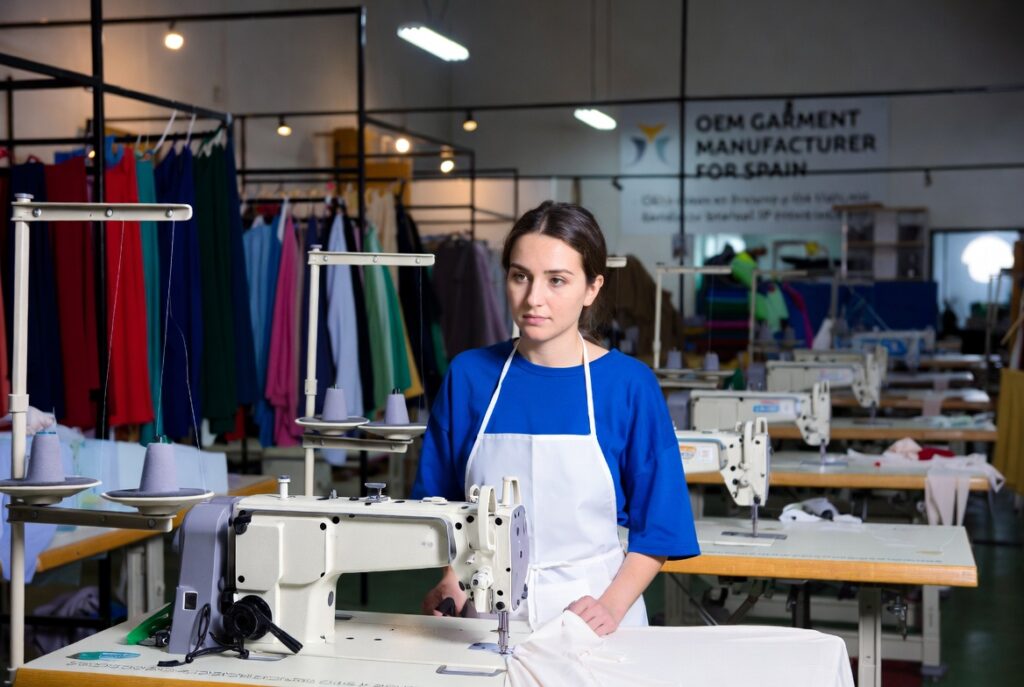
OEM (Original Equipment Manufacturer) means the factory produces goods to your exact specifications while you maintain full ownership and control.
When working with an OEM garment manufacturer for Spain, you own all patterns, grading, artwork, logos, and custom trims. The factory manufactures according to your tech pack, but doesn’t own the design. This protects your intellectual property and keeps your brand unique.
OEM Documentation Checklist for Spain Buyers
Protect yourself with proper documentation. Sign an NDA (Non-Disclosure Agreement) before sharing designs. Create clear PO (Purchase Order) terms outlining quantity, price, delivery, and quality standards. Include a quality agreement specifying acceptable defect rates and inspection protocols. Maintain an approved trim list listing authorized suppliers for labels, zippers, and buttons—this prevents substitutions that compromise quality. Your tech pack should detail measurement points with tolerances (usually ±1–1.5 cm), stitch type specifications, thread color codes, and seam stitch count per inch (SPI).
IP Safety Practices When Working with an OEM Garment Manufacturer for Spain
Use unique custom labels and hangtags that only you control. Limit artwork access by sharing files only with production teams who need them. Track samples carefully—number them and maintain a sample archive. Control barcode and SKU assignments to prevent unauthorized production. Request that the manufacturer destroy artwork and patterns after your contract ends. Include these protections in your contract to ensure compliance.
Bulk Custom Clothing Production Spain: MOQ, Pricing, and Scaling
Understanding minimums and costs removes confusion and helps you price products competitively.
Typical MOQs vary by product. T-shirts usually start at 100–200 units per color and size. Hoodies and sweatshirts require a minimum of 150–300 units. Denim and trousers begin at 200–400 units. Activewear starts at 200 pieces. Kidswear typically requires 100–250 units. These ranges reflect standard machine setups and fabric minimums.
Several factors drive unit costs. Fabric type and yield matter significantly—premium organic cotton costs more than standard blends. Print and embroidery complexity affect pricing—a simple chest print costs less than an all-over design. Washes and finishes like stone washing, enzyme Treatment, or special dyeing add cost. Trims and packaging, including labels, zippers, hang tags, and branded boxes, increase per-unit expense. Size ratio affects fabric waste—if you order only XL sizes, waste decreases compared to a full-size range. Color count matters too—producing 500 pieces in one color costs less than 250 pieces each in two colors due to machine setup time.
MOQ Strategies for Bulk Custom Clothing Production in Spain
Start with core colors in limited sizes to reduce minimums while testing the market. Use a preorder model where customers commit before bulk production begins—this justifies lower minimums to your manufacturer. Choose shared fabrics across multiple styles to meet minimums more easily. Simplify trims and finishes your first run, adding complexity as volumes grow. This approach lowers costs without sacrificing quality.
Bulk Production Timeline Map
Plan realistically. Sampling takes 7–21 days, depending on complexity and the number of revision rounds. Bulk production runs 25–60 days, depending on order size and factory capacity. Add freight and customs planning for Spain and EU delivery—typically 7–14 days by sea, 3–5 days by air. Building in buffer time prevents launch delays. Order 4–6 weeks before your target sale date.
Quality Control and Testing
Building trust requires transparent quality systems, not vague promises.
Quality control happens at multiple stages. Fabric inspection checks materials before production for color consistency, defects, and compliance with specifications. Inline checks occur during sewing—inspectors verify measurements, stitch quality, and construction every few garments. The final random inspection uses AQL (Acceptable Quality Level) standards, typically AQL 1.0 or 2.5, meaning that 1–2.5% defective pieces are acceptable, depending on defect severity.
Common defects to prevent include shrinkage from improper washing or low-quality fabrics, twisting in finished garments from tension issues during production, shade variation where dye lots don’t match, and print cracking from low-quality ink or improper curing.
Quality Standards to Request
Request specific measurement tolerances—typically ±1 cm — for critical dimensions such as chest width or inseam. Define shade bands showing acceptable color variation between pieces. Require wash test results confirming shrinkage stays under 3%. Ask for lab tests covering colorfastness (color doesn’t bleed), pilling resistance (fabric doesn’t ball up), seam strength (stitching won’t tear), and shrinkage verification. These tests provide proof that your garments meet standards.
Packaging QC for Spain Shipments
Pay attention to shipping details. Check the carton strength—boxes must withstand ocean freight without crushing the contents. Verify that the polybag labeling accurately shows the style number, size, color, and quantity. Confirm barcode placement matches your system. Check that size stickers are placed consistently on each garment. Review packing list accuracy—quantity per carton, total units, and weights must be correct to avoid customs delays.
EU Compliance and Sustainability Signals
Spain operates under EU regulations—compliance is required for every shipment.
Fiber composition labeling must meet EU standards and list all materials by percentage. Care labeling in Spanish or English guides proper washing and maintenance. These requirements are non-negotiable. Social compliance expectations require the factory to maintain safe working conditions, reasonable hours, and fair wages. Many Spanish and EU buyers request audit readiness or third-party certifications. Traceability documents show where materials came from and what processes were applied—useful for sustainability claims.
Sustainability Options
Factories increasingly offer organic certified fabrics, reducing pesticide use. Recycled polyester from post-consumer bottles appeals to eco-conscious brands. Low-impact dyes use less water and chemicals than conventional methods. Reduced packaging through minimal plastic and reusable boxes cuts waste. Maintain lot-tracking documents for every production batch, enabling recalls if needed. Supplier declarations confirm the source of materials and certifications. These options cost slightly more but resonate with modern consumers.
How to Validate Claims Without Greenwashing
Avoid empty sustainability promises. Request test reports and certifications—look for OEKO-TEX, GOTS, or similar standards. Request consistent paperwork demonstrating the same practices across batches. Demand repeatable proof rather than one-time claims. Verify certifications independently when possible. This protects your brand reputation and keeps customers trusting your values.
Design, Trends, and Speed-to-Market
EU fashion moves fast—your manufacturer needs to keep pace.
The EU fashion cycle runs at a rapid pace. Brands drop smaller collections more frequently than two big seasons a year. This means your manufacturer must handle quick reorders, small batch runs, and rapid sampling. Faster feedback loops beat perfection delays.
A quality supports speed through standard blocks—pre-approved basic designs you can customize quickly. A fit library shows how previous styles fit different body types, speeding approval rounds. An approved fabric book with pre-tested materials eliminates sourcing delays. Repeatable trims from trusted suppliers ensure consistent quality without testing new vendors.
Building a Fast Sampling System with Custom Fashion Manufacturer Europe (Spain)
Work with factories, maintaining sample rooms with basic equipment. Clear communication reduces revision rounds—provide detailed tech packs to prevent misunderstandings. Establish approval timelines upfront so the factory plans accordingly. Request photo and video updates on samples before they ship to enable faster feedback. This systematic approach cuts weeks from your development cycle.
Spain Market Fit Considerations
Spanish buyers prefer quality basics over trendy pieces—invest in fit and fabric. Sizing standards in Spain differ slightly from US sizes; confirm the measurement specifications match local expectations. Labeling language should include Spanish, especially for local retailers. Seasonal demand peaks in spring/summer for lighter fabrics and autumn/winter for heavier weights. Understanding these details helps your manufacturer produce styles that resonate locally.
How to Choose the Right Partner
Evaluating manufacturers prevents costly mistakes and poor relationships.
Shortlist Criteria
Look for category expertise—manufacturers specializing in your product type deliver better quality. Verify transparent MOQ and pricing—no hidden fees or vague quotes. Confirm sampling capability—they should handle multiple revision rounds. Review their QC process with documented standards and inspection photos. Test their communication—responsive, clear emails show professionalism. Request documentation examples showing their standard tech packs and reports.
Questions to Ask
What are your exact minimums per style, and can they be flexible for first-time orders? What lead times should you expect for samples and bulk? What is their current production capacity—are they too busy to prioritize your orders? What payment terms do they offer—deposit upfront or terms available? How do they source fabrics—from approved suppliers or your recommendations? What happens when defects occur—do they remake pieces or offer credit? What is their policy on shade or measurement issues—how do they handle corrections?
Red Flags to Avoid When Selecting
Avoid factories with no clear tech pack process—they won’t understand your specifications. Skip manufacturers with vague or unclear QC explanations—quality concerns will follow. Be wary of inconsistent communication—late replies signal management problems. Watch for unrealistic timelines or pricing—if it sounds too good to be true, it probably is. Avoid factories that won’t discuss payment terms or contracts—reputable partners document everything.
Custom Clothing Manufacturer for Spain: Why Texasia is a Top Option
Texasia stands out as one of the best custom clothing manufacturers for Spain, offering options for brands serious about quality and reliability.
Texasia offers full-package support—from design review through final shipment —they handle your entire journey. They support both private label and OEM/ODM models, giving you flexibility in how you work. Their scalable bulk production capacity handles everything from 200-unit test runs to 10,000+ piece orders. They maintain structured QC with detailed reporting, including inspection photos and measurements that prove compliance with quality standards. They bring export experience and readiness with EU documentation, ensuring your shipments clear customs smoothly and comply with Spanish and European regulations.
Texasia Process Roadmap for a Custom Clothing Manufacturer for Spanish Buyers
The journey starts with discovery, where you explain your brand, product vision, and budget. Next comes the tech pack review, where their team ensures your specifications are complete and realistic. Sampling follows—you get revised samples until fit and finish are perfect. Once you approve designs, they confirm bulk production capacity and timeline. During production, you receive QC reports with photos showing quality checks. The final inspection occurs before shipment, with the option to visit the factory or use a third-party inspector. Finally, they manage shipping logistics to Spain or your EU location, handling documentation and customs.
What Makes Texasia Dependable for Spanish Brands
Communication happens on predictable schedules—you know when to expect updates. They provide photo and video documentation showing production progress. They offer inspection options, including virtual checks or in-person visits from third parties. They confirm all pre-production details before bulk begins, preventing surprises. This reliability builds the confidence you need for long-term partnerships.
Learn more about Texasia’s capabilities by visiting their textile supplier services for European brands or exploring their full range of products to see their production strengths.
Ordering Process Step-by-Step
Knowing what comes next removes uncertainty and prevents avoidable delays.
Step 1: Send Design, Reference, and Target Price – Provide your design sketches, reference images showing the style you want, fabric swatches, and your target unit price. This starting point helps the manufacturer understand your vision and budget.
Step 2: Tech Pack Creation or Validation – Work with the manufacturer to create detailed specifications or review their tech pack. This document includes all measurements, fabric specs, stitching details, and finishing requirements.
Step 3: Fabric and Trims Approval – Review and approve the exact materials the factory will use. Request swatches of the final fabric and trim colors to ensure they match your expectations.
Step 4: Sample Iterations for Fit and Size Set – Receive your first sample and request revisions as needed. Once fit is approved, the factory creates a complete size set showing all your sizes.
Step 5: Bulk Production – After final sample approval, production begins. You receive updates on progress, with inline quality checks ongoing throughout.
Step 6: Final Inspection and Shipment – Quality inspectors conduct a final inspection in accordance with AQL standards. Garments are packed according to your specifications and shipped to Spain or your EU destination.
Documents You Must Prepare for a Custom Clothing Manufacturer in Spain
Prepare brand label files showing your logo, care symbols, and fiber content information in digital format (AI or PDF files work best). Create a size-labelsize-label matrix with exact measurements for each size you produce—document care-label requirements and washing instructions in the appropriate languages. Provide packaging dielines showing how your brand boxes should be designed and printed. Having these ready prevents production delays.
How to Avoid Delays (Spain-Focused Shipping Planning)
Approve samples and trims promptly—delays compound quickly. Use consolidated trims from single suppliers rather than multiple vendors. Build in realistic buffers before your launch date—never order with zero flexibility. Confirm shipping options and timelines before production starts. Request that your manufacturer consolidate shipments to reduce logistics costs and complexity.
Costs, Payments, and Incoterms
Understanding pricing structures and payment options builds confidence in your investment.
Your total cost is broken down into several parts. Sample fees typically range from €50 to €200 per style, depending on complexity. Unit cost covers fabric, labor, and overhead—this is your main expense multiplied by quantity. Packaging costs include labels, hang tags, boxes, and tissue paper. Freight charges cover shipping from the factory to Spain—by sea or air. Payment structures often follow a 50% deposit upfront and 50% balance before shipment model, though terms vary by manufacturer. Some accept LC (Letter of Credit) or TT (Telegraphic Transfer) payment methods for larger orders.
Incoterms define who pays for shipping and insurance:
- EXW (Ex Works): You pay for everything from the factory onward—lowest factory price, but your logistics responsibility
- FOB (Free on Board): Factory pays to get goods to the port; you pay from there—common for air shipments
- CIF (Cost, Insurance, Freight): Factory includes shipping and basic insurance to your port
- DDP (Delivered Duty Paid): Factory handles everything, including customs and final delivery—the highest factory price but simplest for you
How to Compare Quotes
Never compare quotes in isolation. Confirm all manufacturers are offering the same fabric with identical GSM and fiber content. Verify the same print or embroidery method—digital vs. screen print changes costs dramatically. Check if packaging includes labels, boxes, or tissue. Confirm QC level—AQL standards determine the required inspection level. Ask about freight included or separate. When all variables match, unit prices become comparable.
Budgeting Template Costs
Calculate your landed cost carefully. Unit cost from factory (your negotiated price per piece) multiplied by quantity. Add packaging costs (labels, boxes, tags per piece). Add freight costs (total shipping divided by quantity). Add duties and taxes if applicable (check EU regulations; intra-EU shipments typically avoid tariffs). Reserve warehousing costs if goods don’t go directly to customers. Include an allowance for returns or defects (typically 1–2% of order value). Total these to understand your true per-piece cost before marking up for retail.
FAQ
What does MOQ mean ?
MOQ is the minimum order quantity—the smallest number of pieces a factory will produce in one style. Most Spanish manufacturers require a minimum of 100–300 pieces per color and size to make production economical.
How long does sampling take with a custom apparel supplier Spain?
Sampling typically takes 7–21 days, depending on the design complexity and the number of revision rounds. Simpler styles like basic t-shirts sample faster; complex designs with multiple finishes take longer.
Can I order smaller quantities from a custom clothing exporter for Spain?
Some manufacturers offer reduced MOQs for first orders or grant flexibility if you commit to repeat business. Discuss your situation upfront—many factories work with new brands on terms.
What is a tech pack, and why do I need one?
A tech pack is a detailed document showing all specifications—measurements, fabrics, stitching details, color codes, and finishes. It prevents misunderstandings between you and the factory, ensuring consistent quality.
Do custom clothing manufacturers for Spain handle EU compliance?
Quality manufacturers understand EU labeling, fiber content requirements, and social compliance standards. Confirm your chosen factory is experienced with these regulations before ordering.
How do I protect my design from being copied?
Use NDAs and contracts specifying that you own all patterns and designs. Request that the factory destroy the artwork after production. Use unique labels and trims that only you control. These steps protect your intellectual property.
Can a custom fashion manufacturer Europe (Spain) produce multiple product categories?
Some factories specialize in one category (knits or wovens); others offer full ranges. Verify their strength in your specific product before committing to orders.
What happens if my order has quality issues?
Reputable manufacturers offer remakes or credits for defective pieces. Define your defect policy in writing before production to avoid disputes.
Are sustainable fabrics more expensive from a custom apparel supplier Spain?
Organic and recycled materials typically cost 10–20% more than conventional fabrics. The price difference shrinks as you order larger quantities.
How do I know if a manufacturer’s quality control is real?
Request inspection photos and measurement reports for past orders. Request that they document every quality check stage. Real QC leaves a paper trail.
Can I visit the factory before ordering?
Many manufacturers welcome visits, especially for larger orders. Factory visits build confidence and strengthen relationships. Virtual tours are also possible if travel isn’t feasible.
Conclusion
Partnering with the right custom clothing manufacturer for Spain transforms your brand from an idea into reality. You now understand the complete production journey—from design specifications to final shipment. You know how to evaluate manufacturers, compare quotes fairly, and protect your intellectual property. Quality, communication, and transparency separate great partnerships from problematic ones. Start with smaller orders to build trust, then scale as your relationship strengthens. The investment in finding the right partner pays dividends through consistent quality, reliable timelines, and genuine support for your brand growth.
