
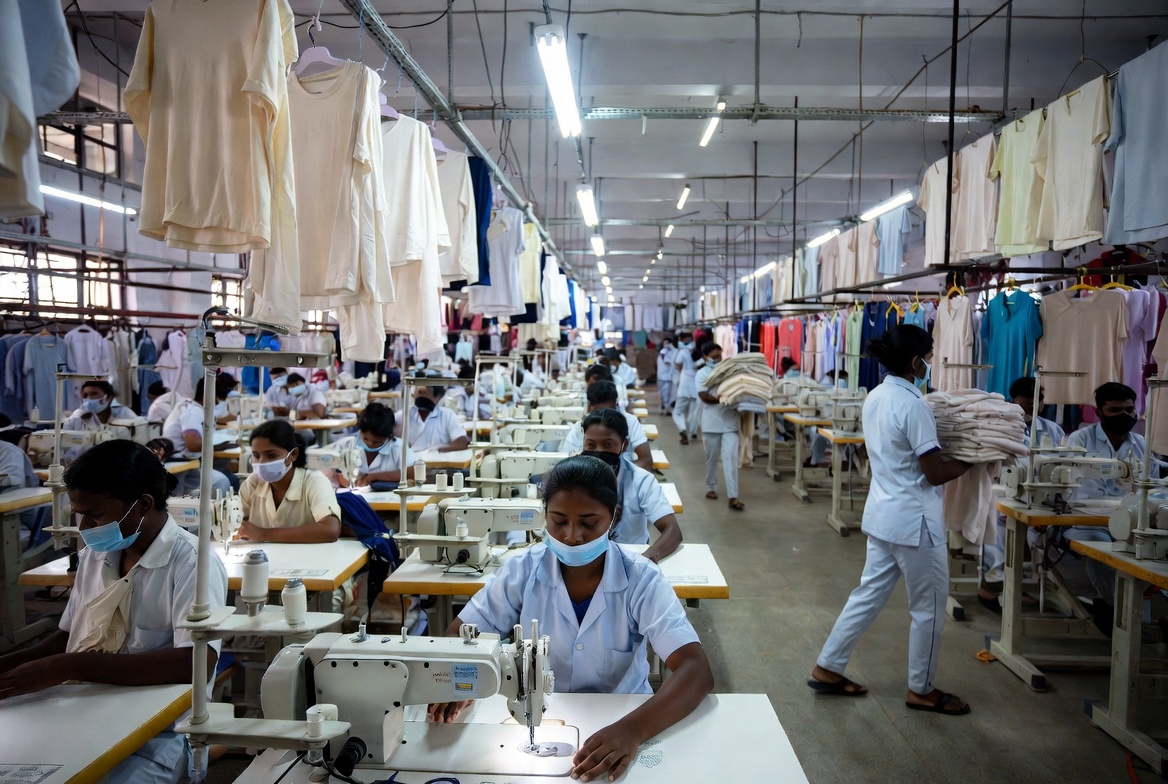
The Bangladesh cotton garment manufacturing industry stands as one of the largest textile sectors in the world. With over 4,000 factories operating nationwide, this sector employs approximately 4.4 million workers. The industry contributes roughly 13% to the national GDP and ranks as the second-largest garment exporter globally, following only China. Major export destinations include the USA, the European Union, and Canada, which together account for over 80% of total shipments. Cotton dominates the apparel segment due to its breathability, affordability, and year-round demand worldwide.
Why Cotton T-Shirt Production in Bangladesh Is Globally Competitive
Cost advantage remains the primary reason brands choose Bangladesh. Labour costs are significantly lower than in Western countries and even neighbouring Asian nations. The country has a skilled workforce trained specifically in garment production, with workers gaining expertise through years of hands-on experience.
Large-scale factories with modern infrastructure can handle orders ranging from 50,000 to 500,000 pieces per month. Backwards-linkage industries such as fabric mills, dyeing units, and accessory suppliers operate within the country, reducing reliance on imports and shortening lead times.
Government export incentives, including tax breaks, cash subsidies, and duty-free access to raw materials, make Cotton T-shirt production in Bangladesh even more cost-effective for international buyers.
Cotton T-Shirt Factory Production Process in Bangladesh
Raw Cotton Sourcing for Cotton T-Shirt Production
Most factories source cotton yarn rather than raw cotton. While Bangladesh produces minimal cotton domestically, Cotton yarn imports come primarily from India, Pakistan, and Uzbekistan. Imported yarn meets international quality benchmarks and arrives ready for knitting.
Fabric knitting is performed in specialised mills using circular knitting machines. Single jersey, pique, and rib fabrics are the most common constructions for t-shirts. Knitting parameters, such as stitch density and loop length, are carefully controlled to achieve the desired fabric weight and texture.
Fabric Processing & Dyeing
After knitting, fabric undergoes scouring, bleaching, and dyeing. Reactive dyeing is the standard method for cotton and offers excellent colourfastness. Dye houses maintain strict temperature and pH controls during the dyeing process.
Colourfastness standards ensure colours do not fade after washing. Factories test samples against international benchmarks, such as ISO 105. Shrinkage control involves compacting the fabric using specialised machines to keep shrinkage below 3%, as per buyer requirements.
Cutting and Stitching
Pattern makers create CAD marker layouts to minimise fabric waste. Computer-aided design software optimises how pattern pieces fit together on fabric rolls.
Automatic cutting machines slice through multiple fabric layers simultaneously, ensuring precision. Spreading tables stretch fabrics smoothly before cutting begins.
Industrial sewing lines operate with workers specialising in specific tasks, such as shoulder joining, sleeve attaching, or hemming. This assembly-line approach increases speed without compromising quality.
Quality Inspection
Inline inspection happens during production. Quality controllers check stitching, measurements, and fabric defects at various stages. This early detection prevents defective garments from moving forward.
Final audit occurs after production completion. Random samples from each carton undergo thorough checks for colour matching, size accuracy, and artistry.
AQL (Acceptable Quality Limit) standards define defect-tolerance levels. Most buyers follow AQL 2.5, meaning only 2.5% of garments can have minor defects.
Finishing and Packaging
Finished garments are moved to the ironing section, where steam presses remove wrinkles. Workers fold each piece according to buyer specifications—some require tissue paper between folds.
Barcode tagging happens at this stage. Each garment receives a unique barcode for inventory tracking. Garments are then placed in polybags and packed into export cartons with shipping labels attached.
Bangladesh Apparel Export Quality Cotton T-Shirts Standards
OEKO-TEX certification guarantees that fabrics contain no harmful chemicals. This certification is mandatory for exports to Europe and North America.
BSCI compliance (Business Social Compliance Initiative) ensures factories maintain ethical working conditions. Regular audits verify fair wages, safe environments, and reasonable working hours.
WRAP certification (Worldwide Responsible Accredited Production) focuses on labour rights and factory safety. Certified factories demonstrate commitment to social responsibility.
ISO standards, such as ISO 9001 for quality management systems, are common among established factories. Garment factory compliance also includes fire safety, structural integrity, and environmental management.
Buyer compliance audits occur annually or biannually. Third-party auditors inspect facilities, review documents, and interview workers to ensure ongoing adherence to standards.
Fabric Quality Standards
GSM control (grams per square meter) determines fabric weight. Standard t-shirt fabrics range from 140 to 200 GSM. Buyers specify GSM based on the intended market and season.
Combed vs carded cotton differs in softness and durability. Combed cotton undergoes additional processing to remove short fibres, resulting in a smoother, stronger fabric. Most premium t-shirts use combed cotton.
Compact cotton involves treating yarn to reduce hairiness and improve dimensional stability. This results in fabrics that pill less and maintain their shape longer.
Organic cotton options cater to eco-conscious brands. Organic cotton is grown without synthetic pesticides or fertilisers. Factories source certified organic yarn and maintain separate production lines.
Shrinkage tolerance typically remains below 5% for standard cotton and below 3% for pre-shrunk or compacted fabrics. Testing occurs before bulk production begins.
Cost Structure
Raw Material Cost
Fabric accounts for 40-50% of the total production cost. Cotton prices fluctuate based on global supply and demand. Single jersey fabric costs range from $2.50 to $4.00 per kilogram, depending on quality grade and yarn count.
Trims like labels, hangtags, and polybags add $0.10 to $0.30 per piece. Thread and other consumables contribute minimally to overall costs but require careful budgeting for large orders.
Labor Cost
Sewing operators earn approximately $120-$150 per month. With each operator producing 100-150 pieces daily, labour cost per garment ranges from $0.30 to $0.50.
Cutting room workers, quality inspectors, and finishing staff add another $0.15 to $0.25 per piece. Supervisory and administrative salaries are distributed across production volume.
Factory Overhead
Electricity, water, and gas consumption cost approximately $0.20 per piece in facilities with efficient operations. Factory rent, maintenance, and depreciation contribute $0.15 to $0.25 per garment.
Management overhead, including office staff, compliance audits, and insurance coverage, adds $0.10 to $0.15 per piece to the final cost structure.
Export & Logistics Cost
FOB pricing structure (Free on Board) includes all costs until goods are loaded onto the vessel. FOB prices for basic cotton t-shirts range from $2.50 to $4.50, depending on fabric quality, print complexity, and order quantity.
MOQ discussions typically start at 1,000 pieces per colour and style for new buyers. Established clients often place orders exceeding 10,000 pieces per style.
Bulk pricing advantages become apparent at higher volumes. Orders above 20,000 pieces can achieve 10-15% cost reduction through economies of scale in fabric procurement and production planning.
Freight charges depend on destination and shipping method. Sea freight to the USA costs approximately $0.30-$0.50 per piece for full container loads.
MOQ and Lead Time
Typical MOQ range varies by factory size and buyer relationship. New buyers face MOQs of 1,000-3,000 pieces per colour. Repeat clients with established relationships can sometimes negotiate lower minimums.
The sampling timeline is 7-10 days for basic styles. Complex designs with special prints or embroidery may require 15-20 days. Buyers review samples and request modifications before approving bulk production.
Bulk production timeline spans 30-45 days from order confirmation to shipment. This includes fabric procurement (7-10 days), cutting and sewing (15-20 days), and quality inspection plus packing (5-7 days).
Peak season impacts lead times from August through November, when factories operate at full capacity for holiday orders. During peak periods, lead times can extend to 60-75 days.
Why Texasia Is a Trusted Name in Cotton T-Shirt Production in Bangladesh
Texasia operates as one of the best cotton garment manufacturers in Bangladesh, with a monthly production capacity exceeding 300,000 pieces. Their facility spans 80,000 square feet and houses over 400 skilled workers.
Production capacity includes 12 production lines equipped with computerised sewing machines and automated cutting systems. This infrastructure enables simultaneous handling of multiple buyer orders without compromising delivery schedules.
A quality assurance system involves a three-tier inspection. In-process checks occur during sewing, pre-final inspection happens before finishing, and final audit takes place before packing. This rigorous approach maintains defect rates below 1%.
Export experience covers 15+ years of working with brands across North America, Europe, and Australia. The team understands diverse buyer requirements and regulatory standards across different markets.
Client satisfaction stems from on-time delivery rates above 95% and transparent communication throughout the production cycle. Buyers appreciate real-time updates and quick responses to concerns. Explore their product range to see the variety of cotton garments available.
Sustainability
Organic cotton usage has grown by 40% in the past three years. Factories partner with certified organic cotton suppliers and maintain separate production lines to prevent contamination.
Water-saving dyeing technologies reduce water consumption by up to 50%. Some facilities have installed water recycling systems that treat and reuse process water.
Waste recycling programs collect fabric scraps for conversion into industrial wipes or recycled yarn. Responsible factories partner with recycling companies to ensure zero waste ends up in landfills.
Ethical labour practices include fair wages above minimum standards, safe working conditions, and respect for worker rights. Factories with strong sustainability commitments provide healthcare facilities and skill development programs.
Green factory initiatives focus on solar power installation, energy-efficient lighting, and rainwater harvesting. Several factories have achieved LEED certification for their environmental efforts.
Cotton T-Shirt Production in Bangladesh vs Other Countries
When comparing the Bangladesh and China garment industries, labour costs in Bangladesh remain 30-40% lower. While China offers advanced automation and faster turnaround times, Bangladesh provides better value for cost-conscious brands.
Bangladesh vs Vietnam presents a closer comparison. Vietnam has slightly lower lead times due to better logistics infrastructure. But Bangladesh offers superior backward linkages, with more fabric mills and local dyeing facilities. This reduces dependency on imported fabrics.
Cost vs quality analysis shows Bangladesh maintaining competitive pricing without sacrificing quality. Strict compliance requirements from international buyers have pushed factories to upgrade equipment and training programs. Today, quality levels match those of more expensive manufacturing hubs.
Compliance advantages favour Bangladesh for buyers prioritising ethical sourcing. The country has made significant progress in factory safety following the Rana Plaza tragedy. Building codes, fire safety measures, and worker welfare programs now exceed minimum international standards.
Vietnam struggles with an inconsistent power supply, which disrupts production. Bangladesh has improved electricity availability with fewer outages affecting manufacturing schedules.
Future of Cotton T-Shirt Production
Automation will reshape the industry over the next decade. Factories are investing in automatic spreading machines, laser cutting systems, and programmable sewing machines. While full automation remains distant, semi-automated production lines are becoming standard.
Sustainable transformation drives investment in eco-friendly processes. More factories are pursuing certifications such as the Global Organic Textile Standard (GOTS) and implementing circular economy principles. Buyers increasingly demand transparency about environmental impact.
Value-added product shift means moving beyond basic t-shirts. Factories are developing capabilities for performance fabrics, moisture-wicking treatments, and anti-microbial finishes. This diversification helps secure higher-margin orders.
Direct-to-brand manufacturing is growing as factories bypass traditional buying houses and agents. Digital platforms connect manufacturers directly with emerging brands seeking transparent partnerships. This model benefits both parties by improving margins and enabling clearer communication.
The Bangladesh knitwear industry continues evolving with younger entrepreneurs bringing fresh perspectives. Investment in research and development helps factories stay competitive as global dynamics shift.
Real Case Study: Texasia Delivering Excellence for European Markets
A mid-sized European fashion brand approached Texasia in early 2024 seeking a reliable t-shirt manufacturer in Bangladesh for their summer collection. They required 25,000 pieces across five colours with custom neck labels and chest prints.
Texasia provided pre-production samples within 8 days. After minor colour adjustments, bulk production began. The team maintained daily communication and shared progress photos at each production stage.
The order was completed in 38 days—7 days ahead of schedule. All shipments met AQL 2.5 standards with zero major defects. The fabric quality exceeded expectations, with shrinkage testing showing only 2% dimensional change.
The European client praised Texasia for transparency, quality consistency, and ethical factory practices. They have since placed three additional orders and referred Texasia to other brands in their network. This partnership demonstrates why Texasia ranks among the best t-shirt factories in Bangladesh for international buyers.
Frequently Asked Questions
What is the minimum order quantity for Cotton T-shirt production ?
Most factories require 1,000 to 3,000 pieces per colour for new buyers, though some offer low MOQ t-shirt manufacturer Bangladesh options starting at 500 pieces.
How long does bulk production take?
Standard production timeline ranges from 30 to 45 days from order confirmation, with peak season extending timelines to 60-75 days.
What certifications should I look for?
OEKO-TEX, BSCI, WRAP, and ISO certifications ensure compliance with quality standards and ethical practices for exports.
Can I get organic cotton t-shirts from Bangladesh?
Yes, many factories offer certified organic cotton options with separate production lines maintaining organic integrity throughout the process.
What is the typical FOB price range?
FOB prices for basic cotton t-shirts range from $2.50 to $4.50, depending on fabric quality, construction complexity, and order volume.
How does Bangladesh compare with China in terms of t-shirt production?
Bangladesh offers 30-40% lower labour costs while maintaining comparable quality standards, making it ideal for budget-conscious brands.
What is the lead time for samples?
Sample production takes 7-10 days for basic styles and 15-20 days for complex designs with special treatments.
Do factories handle printing and embroidery?
Most established factories offer in-house printing and embroidery services, eliminating the need for external vendors.
What payment terms are common?
Standard payment terms include 30% advance and 70% before shipment, though terms vary based on buyer relationship and order size.
How can I verify factory compliance?
Request recent audit reports, visit facilities personally, or hire third-party inspection services to verify working conditions and safety standards.
Conclusion
Cotton T-shirt production in Bangladesh offers unmatched value through competitive pricing, skilled labour, and improved sustainability practices. With established compliance standards and growing capabilities, the industry serves global brands seeking quality products at reasonable costs. Contact Texasia to start your next order.

