

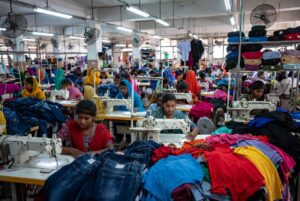
Clothing factory in Bangladesh represents a network of production facilities that manufacture ready-made garments for global markets. Bangladesh stands as the second-largest apparel exporter worldwide, shipping over $39.5 billion worth of garments annually to Europe, North America, and Asia. The sector employs more than 4 million workers directly and impacts over 20 million lives when families are included. These factories have transformed from basic assembly units into sophisticated manufacturing centers that handle everything from t-shirts to premium denim. The industry contributes 81.5% of the country’s total export earnings and over 10% to the national GDP.
History of Clothing Factory in Bangladesh
The journey began in the late 1970s when entrepreneurial pioneers established small garment units in Dhaka. Trade agreements like the Multi-Fiber Arrangement opened doors to international markets, allowing Bangladeshi manufacturers to compete globally. What started with basic t-shirts and simple woven shirts evolved into a diverse production ecosystem covering premium apparel, technical garments, and fashion-forward pieces. Local business leaders took risks, invested in machinery, and trained workers who had no prior experience in garment production. The establishment of Export Processing Zones (EPZs) with tax incentives and infrastructure support accelerated growth throughout the 1990s and 2000s.
Top 10 Clothing Factory in Bangladesh
Texasia
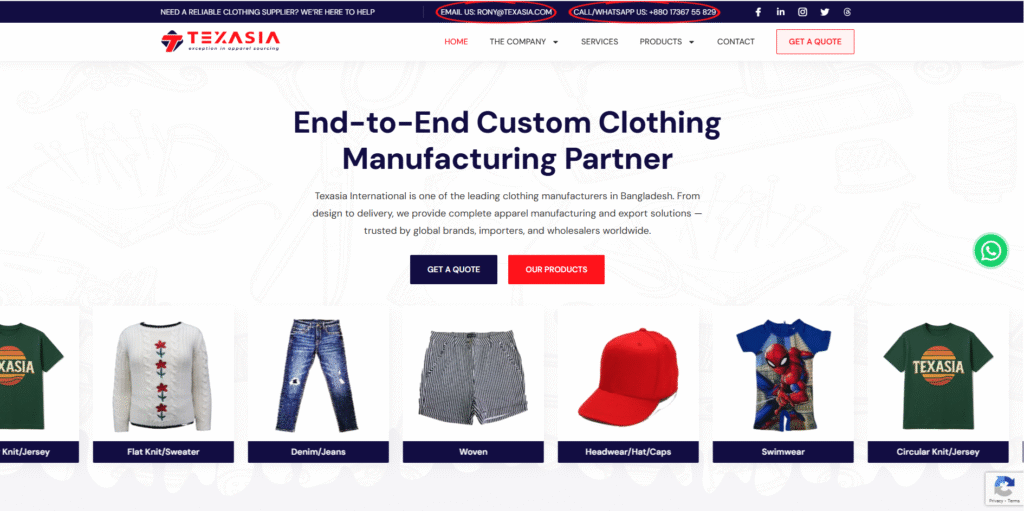
Texasia is a BSCI and SEDEX certified garment manufacturer and exporter based in Dhaka, specializing in OEM, ODM, and private-label solutions. Established in 2010, the company operates a LEED Gold certified facility that produces 2 million pieces monthly across t-shirts, polo shirts, hoodies, shirts, and trousers. With over 1,500 employees and 12 years of export experience, Texasia serves major international brands including H&M. The factory maintains a production capacity of 90,000 dozen annually using 38 specialized machines. Texasia offers low minimum order quantities (MOQs) and fast turnaround times, making them suitable for both large retailers and emerging brands. Their end-to-end manufacturing approach covers design development, material sourcing, production management, and on-time delivery.
Ha-Meem Group

Ha-Meem Group operates 26 garment factories across Dhaka and Gazipur, exporting over $700 million annually to Walmart, ZARA, and GAP. Founded by MA Azad over 30 years ago, the group employs approximately 50,000 workers and specializes in knit, woven, denim, and sweater production. Their sweater facilities in Ashulia and Zirani house 400 Jacquard machines with a monthly capacity of 400,000 pieces for brands like GAP, Aeon, Mango, and H&M. The company maintains vertical integration from fabric production to finished garments, giving them control over quality and lead times.
Beximco Apparels (Beximco Group)
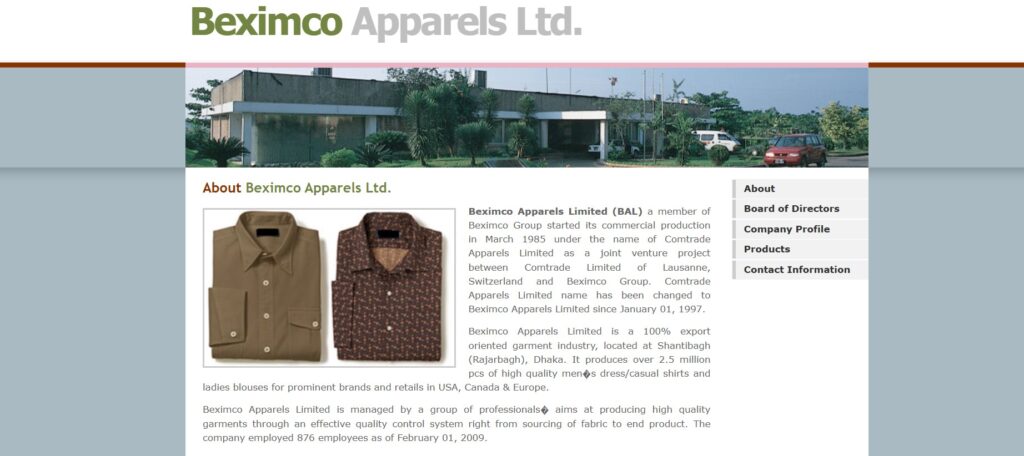
Beximco Textiles stands as a leading exporter of woven fabrics and garments known for sustainability practices and production capacity. The company operates multiple units producing shirts, trousers, jackets, and technical apparel for international buyers. Beximco has invested in eco-friendly dyeing and finishing technologies, reducing water consumption and chemical usage. Their compliance certifications include BSCI, SEDEX, and ISO standards, meeting the strict requirements of European and North American retailers.
Square Fashions Ltd.
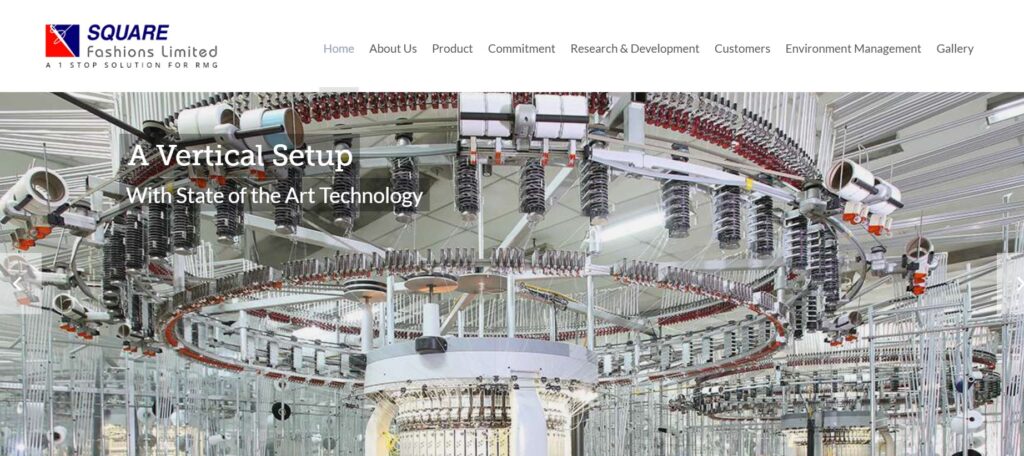
Square Fashions operates as part of the diversified Square Group, bringing pharmaceutical-level quality control systems to garment manufacturing. The company focuses on woven and knit garments with particular strength in formal wear and business casual clothing. Square Fashions emphasizes worker welfare programs, providing health insurance, childcare facilities, and skills training. Their production planning systems track each order from cutting to shipment, ensuring on-time delivery rates above 95%.
DBL Group
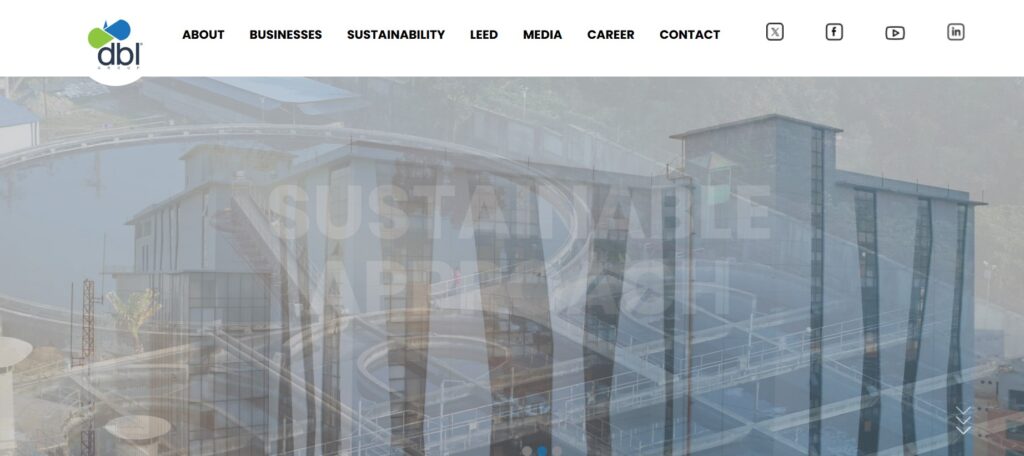
DBL Group exports $461.7 million annually and partners with UNICEF and ILO on ethical manufacturing initiatives. Their factories in Kashimpur and Gazipur employ over 40,000 workers producing knit, woven, and denim garments. DBL has achieved LEED Platinum certification for multiple facilities, making them among the greenest factories globally. The company operates its own fabric dyeing and finishing units, reducing dependency on external suppliers.
Epyllion Group
Epyllion Group maintains vertical integration from yarn spinning to garment finishing, giving them competitive advantages in quality and pricing. The company operates multiple specialized units for knit, woven, and denim production across Bangladesh. Epyllion invests heavily in automation, including computerized cutting systems and automated sewing lines that improve efficiency. Their compliance record includes WRAP, BSCI, and SEDEX certifications recognized by global buyers.
Opex & Sinha Textiles Group
Opex & Sinha Textiles focuses on premium woven garments including dress shirts, chinos, and formal trousers for mid-to-high-end brands. The company operates state-of-the-art cutting rooms using CAD technology and automated spreading machines. Sinha Textiles maintains strong relationships with European buyers, particularly in Germany and Scandinavia. Their quality control teams conduct inline inspections at every production stage, maintaining defect rates below 2%.
Envoy Group
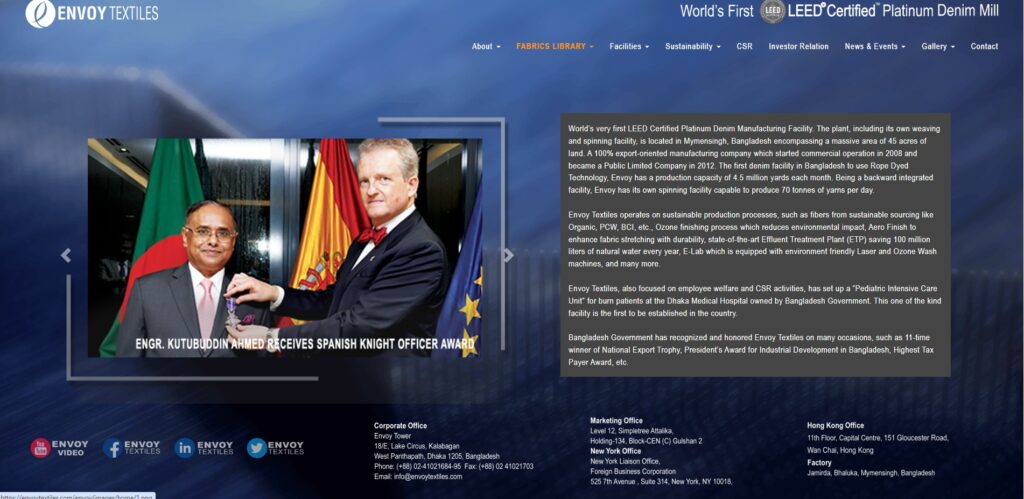
Envoy Group specializes in technical and performance garments including sportswear, activewear, and outdoor clothing. The company operates factories equipped with specialized machinery for bonding, seam sealing, and technical finishing. Envoy has developed expertise in moisture-wicking fabrics, stretch materials, and functional garments for athletic brands. Their R&D team works closely with buyers to develop new constructions and innovative designs.
Ananta Group
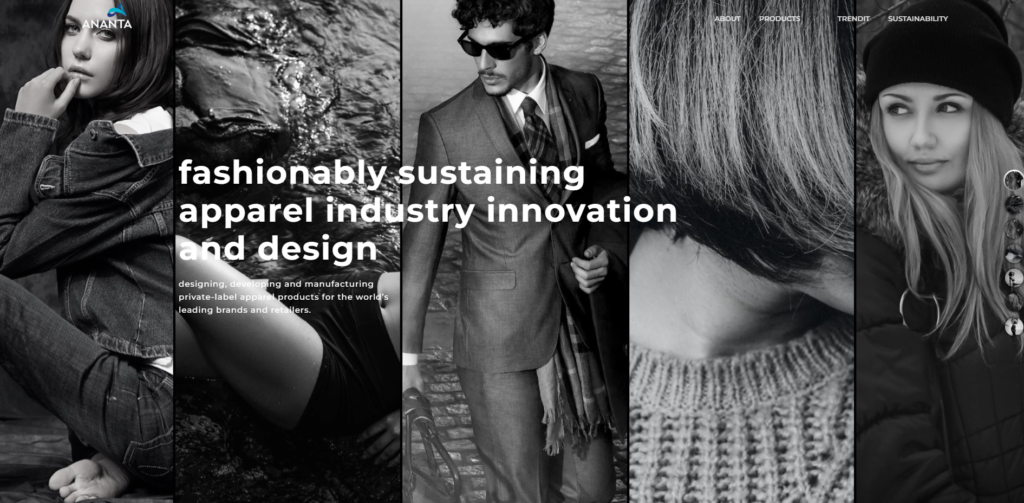
Ananta Group exports $465.7 million annually with strong emphasis on sustainability and corporate social responsibility. Based in Narayanganj, the company operates multiple factories producing denim, knit, and woven garments. Ananta has invested in solar power generation, rainwater harvesting, and effluent treatment plants across their facilities. The company offers comprehensive worker benefits including education scholarships for employees’ children.
Orchid Group
Orchid Group operates modern facilities producing knit and woven garments for European and North American markets. The company maintains flexible production systems that can handle both large orders and smaller specialty runs. Orchid has achieved multiple compliance certifications including GOTS for organic production and Fair Trade certification. Their sampling department can produce proto samples within 5-7 days, helping buyers make quick decisions.
Texasia as a Leading Clothing Factory in Bangladesh
Texasia International Fashion Co., Ltd. is a BSCI and SEDEX certified apparel sourcing and manufacturing company based in Dhaka, Bangladesh, specializing in high-quality readymade garments for global brands and importers. Established with a vision to revolutionize Bangladesh’s garment industry, the company has grown from a small operation into a leading player through continuous enhancement of production capabilities and commitment to international standards. Texasia exports to over 50 countries worldwide, serving markets across the USA, Europe, Australia, and Nordic regions with comprehensive end-to-end solutions from design to delivery.
The company manufactures a diverse range of products including T-shirts, polo shirts, hoodies, sweatshirts, denim, woven garments, sportswear, workwear, outerwear, uniforms, and custom apparel with production capacity reaching up to 500,000 pieces per month. Texasia holds multiple international certifications including ISO 9001, WRAP, BSCI, GOTS, and OEKO-TEX, demonstrating its adherence to strict quality control, environmental compliance, and ethical labor practices. The factory’s unique hybrid production model combines shared ownership in certified facilities with a strong vendor network of compliant factories, enabling both low minimum order quantities (MOQs) and scalable volume production for diverse client needs.
Why Global Brands Trust a Clothing Factory in Bangladesh Like Texasia
- ISO-certified production and strict quality control
- Use of premium, certified materials (100% cotton, GOTS, OEKO-TEX)
- Reliable on-time delivery and strong logistics handling
- Verified ethical standards (BSCI, SEDEX, fair wages, safe workplace)
- Environmentally responsible practices (energy-efficient systems, water recycling, compliance)
- Full OEM, ODM, and private-label service support
- Wide customization options: screen print, embroidery, digital print, sublimation
- Flexible capacity: low MOQs to large-volume production
- Proven exports to 50+ countries with agile supply chain
- Advantage of Bangladesh: many LEED-certified green factories and duty-free EU access
Types of Clothing Factory in Bangladesh
Knit Clothing Factory in Bangladesh
Knit factories produce t-shirts, polo shirts, underwear, and casual wear using circular knitting machines. Bangladesh has achieved 85% vertical integration in the knit segment, with local fabric suppliers meeting most demand. These facilities house dyeing units that process fabrics in various colors and finishes before cutting and sewing. Knit factories typically maintain faster production cycles than woven units, completing orders in 30-45 days. The country excels in single jersey, pique, and rib knit constructions used for everyday casual wear.
Woven Clothing Factory in Bangladesh
Woven factories manufacture shirts, trousers, jackets, and formal wear through pattern making, cutting, and sewing workflows. Bangladesh generates over $18 billion in woven-specific exports annually, though the sector maintains only 40% self-sufficiency in woven fabrics. Most woven factories import fabrics from China, India, and Pakistan before cutting and assembling them locally. The production process involves marker planning using CAD systems, precision cutting, and skilled sewing operations. Wholesale clothing manufacturing companies often focus on woven categories due to higher margins and premium positioning.
Denim Clothing Factory in Bangladesh
Denim factories specialize in jeans, denim jackets, and denim wear with sophisticated washing and finishing capabilities. These facilities operate industrial washing machines that create stone wash, acid wash, enzyme wash, and other effects. Pacific Jeans exports over $405 million annually as a premium denim specialist serving global brands. Bangladesh denim factories have invested in laser technology and ozone finishing to reduce water and chemical usage. Compliance requirements are particularly strict for denim due to chemical handling in washing processes.
Sweater Clothing Factory in Bangladesh
Sweater factories produce flat knit and jacquard sweaters using computerized knitting machines from Germany, Italy, and Japan. Production peaks during July-December to meet seasonal demand for winter wear in Western markets. Ha-Meem Group operates 400 Jacquard machines capable of producing intricate patterns and designs. Sweater factories require skilled technicians who can program machines and handle delicate yarns. The segment faces challenges with higher lead times (60-90 days) compared to other garment categories.
Manufacturing Process in a Clothing Factory in Bangladesh
Fabric Sourcing in Clothing Factory in Bangladesh
Factories source fabrics from local textile mills and imported suppliers depending on the construction and buyer requirements. Bangladesh produces approximately 3.27 million tons of yarn and fabric capacity annually, though utilization remains around 50%. Knit fabrics primarily come from domestic circular knitting mills concentrated in Gazipur and Narayanganj. Woven fabrics require imports from China, India, and Pakistan to meet the 60% supply gap. The yarn and textile ecosystem includes spinning mills, weaving units, and dyeing facilities that support garment production.
Cutting and Sewing in Clothing Factory in Bangladesh
CAD systems create marker plans that minimize fabric waste during cutting, typically achieving 85-90% efficiency. Automated spreading machines lay fabric layers before computerized cutters slice patterns with precision. Skilled sewing operators handle specialized machines including single needle, overlock, flatlock, and bartack machines. Production lines organize workers in assembly sequences where each operator completes specific tasks. Quality supervisors monitor stitch quality, seam strength, and measurement accuracy during production.
Quality Control in Clothing Factory in Bangladesh
Inline inspection teams check garments at various production stages, catching defects before they multiply. Final audit systems measure garments, test color fastness, and verify packaging against buyer specifications. Leading factories maintain defect rates below 2% through systematic quality control procedures. AQL (Acceptable Quality Level) inspections occur before shipment, with independent agencies verifying compliance. Digital quality systems enable real-time reporting to buyers, providing transparency throughout production.
Packing and Shipment in Clothing Factory in Bangladesh
Export packing follows buyer-specific requirements including polybag specifications, carton dimensions, and labeling standards. Garments receive barcodes, hang tags, price stickers, and care labels before individual and master carton packing. Factories coordinate with freight forwarders to arrange container booking and port handling. Chittagong and Dhaka ports handle the majority of garment exports, though congestion can cause delays. Leading manufacturers maintain dedicated logistics teams to track shipments and resolve customs issues.
Compliance Standards
Social Compliance in Clothing Factory in Bangladesh
Worker safety protocols include fire exits, emergency lighting, and regular safety drills meeting local and international standards. Fair wage systems ensure workers receive at least minimum wage plus overtime compensation for extra hours. Ethical workplace practices prohibit child labor, forced labor, and discrimination based on gender or religion. Factories provide health insurance, maternity leave, and childcare facilities as part of worker welfare programs. Working hours are limited to 10 hours per day and 60 hours per week according to Bangladesh labor laws.
Environmental Compliance in Clothing Factory in Bangladesh
Waste management systems segregate fabric scraps, chemical waste, and general waste for proper disposal or recycling. Water treatment plants process dyeing and washing effluent before discharge, meeting environmental standards. Energy efficiency measures include solar panels, LED lighting, and efficient machinery that reduce carbon footprint. Leading factories have achieved LEED certification through green building practices and sustainable operations.
International Certifications for Clothing Factory in Bangladesh
BSCI (Business Social Compliance Initiative) certification verifies ethical production for European buyers. SEDEX (Supplier Ethical Data Exchange) membership enables factories to share audit reports with multiple buyers. WRAP (Worldwide Responsible Accredited Production) certification demonstrates compliance for US customers. ISO standards covering quality management (ISO 9001) and environmental management (ISO 14001) add credibility. Additional certifications like GOTS, OEKO-TEX, and Fair Trade appeal to sustainability-focused brands.
Export Markets
Europe receives the largest share of Bangladesh garment exports, with Germany, UK, France, and Spain as top destinations. North America continues growing as US buyers seek alternatives to Chinese manufacturing. Middle Eastern and Asian markets including Japan, Australia, and UAE purchase technical garments and modest wear. Private label sourcing from clothing factory in Bangladesh has increased as retailers develop their own brands. Trade preferences like GSP (Generalized System of Preferences) provide duty-free access to many markets.
Advantages of Choosing a Clothing Factory in Bangladesh
The country offers a skilled workforce of over 4 million garment workers trained through on-the-job experience and technical programs. Competitive production costs remain 20-30% lower than China and other Asian competitors. Large-scale capacity enables factories to handle orders from 5,000 pieces to 500,000 pieces within competitive timeframes. Trade benefits including duty-free access to EU markets and preferential rates to other regions reduce landed costs for buyers. Long-term sourcing stability from clothing factory in Bangladesh comes from established infrastructure and government support for the sector.
Challenges Facing Clothing Factory in Bangladesh
Lead time management proves difficult when raw material delays or production issues compress schedules. Raw material dependency on imported woven fabrics and specialized trims creates supply chain vulnerabilities. Buyer compliance pressure continuously increases requirements for audits, certifications, and ethical standards. Logistics and port handling face congestion issues that can delay shipments during peak seasons. Top clothing factory in Bangladesh overcome challenges through vertical integration, inventory planning, and proactive communication with buyers.
Technology Used in Modern Clothing Factory in Bangladesh
Automation in Clothing Factory in Bangladesh
Automated cutting machines use computer-guided blades to cut fabric layers with precision and minimal waste. Production planning systems track orders, schedule production lines, and monitor efficiency in real-time. Computerized knitting machines produce seamless garments and complex patterns without manual intervention. Barcode systems trace each garment through production stages, enabling quick identification of bottlenecks.
Digital Quality Systems in Clothing Factory in Bangladesh
Real-time reporting platforms allow buyers to view production progress, quality metrics, and shipment status remotely. Traceability systems document each production step with timestamps and operator identification for accountability. Mobile inspection apps enable quality teams to photograph defects and upload reports instantly. Cloud-based systems store inspection data and generate analytics that identify recurring quality issues.
Sustainability Practices in Clothing Factory in Bangladesh
Factories adopt eco-friendly production methods including waterless dyeing, digital printing, and chemical reduction programs. Sustainable fabric usage encompasses organic cotton, recycled polyester, and Tencel materials preferred by conscious consumers. Reduced carbon footprint initiatives install solar panels, upgrade to energy-efficient machinery, and optimize transportation. Responsible sourcing by clothing factory in Bangladesh extends to ethical fiber procurement and transparent supply chains. Custom clothing manufacturing for Italy and European markets increasingly demands sustainability credentials.
How to Choose the Right Clothing Factory in Bangladesh
Production capacity evaluation confirms the factory can handle your order volume without overextending resources. Compliance verification checks active certifications like BSCI, SEDEX, and WRAP through independent databases. Sampling and MOQ assessment determines if the factory meets your quantity requirements and quality expectations. Communication and transparency separate professional manufacturers from less organized operations. Long-term partnership value with clothing factory in Bangladesh depends on consistent quality, reliable delivery, and fair pricing. Bulk apparel manufacturers often provide better pricing and service for committed buyers.texasia+1
Future of Clothing Factory in Bangladesh
Industry growth forecasts predict Bangladesh textile manufacturing will reach $55.39 billion by 2031, growing at 5.81% CAGR. Shift toward value-added garments moves beyond basic t-shirts to technical wear, performance fabrics, and fashion-forward designs. Sustainability focus will dominate as buyers demand carbon-neutral production and circular fashion practices. Digital transformation in clothing factory in Bangladesh brings AI-powered planning, IoT-enabled quality control, and blockchain supply chain tracking. New industrial zones like Bangabandhu Sheikh Mujib Shilpa Nagar offer tax holidays and infrastructure that attract investment.
Frequently Asked Questions
What products are made in a Clothing factory in Bangladesh?
Factories produce knit items like t-shirts and polo shirts, woven garments including shirts and trousers, denim jeans and jackets, plus sweaters and technical wear for global brands.
Is a Clothing factory in Bangladesh suitable for small brands?
Many factories offer MOQ flexibility starting from 500-1,000 pieces and provide private label support with design assistance for emerging brands.
Are Clothing factory in Bangladesh facilities compliant?
Reputable factories maintain BSCI, SEDEX, WRAP, and ISO certifications that meet international compliance standards for social and environmental responsibility.
Why choose Texasia as a Clothing factory in Bangladesh?
Texasia brings 12 years of export experience, BSCI and SEDEX certification, low MOQs, and proven quality serving global brands like H&M with ethical production practices.
Conclusion
Clothing factory in Bangladesh combines skilled workforce, competitive pricing, and growing sustainability practices to serve global fashion brands. The sector continues evolving toward premium products, digital systems, and ethical manufacturing that meet international standards. Textile suppliers for European brands and garment exporters offer reliable partnerships for long-term sourcing success.

