
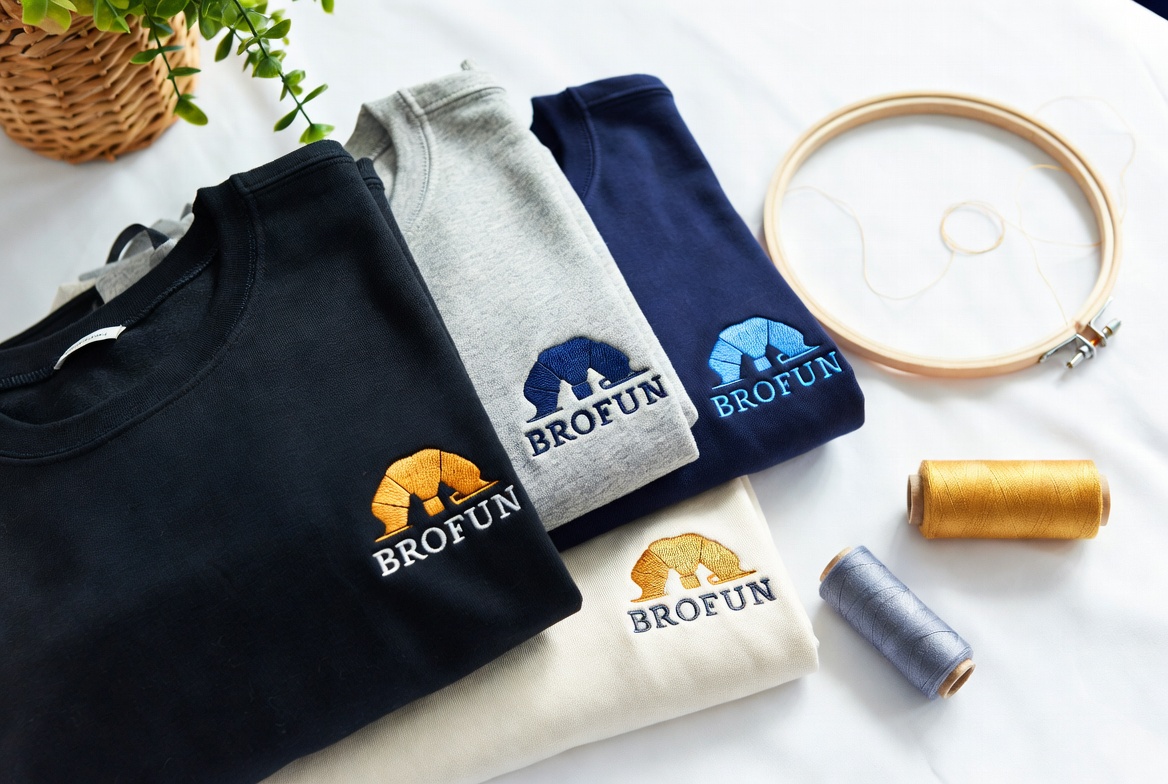
A bulk custom-embroidered sweatshirt supplier is a manufacturer or sourcing partner that produces large quantities of sweatshirts with custom embroidery for brands, businesses, and retailers. These suppliers work directly with buyers to stitch logos, text, or artwork onto sweatshirts using professional embroidery machines. They handle everything from fabric selection to finished garment delivery.
Businesses choose bulk suppliers because ordering in large quantities significantly reduces the cost per unit. When you need 200, 500, or 5,000 pieces with your brand logo stitched on, a bulk supplier delivers consistent quality at a price that makes business sense. It is the most practical route for clothing brands, corporate teams, sports clubs, and promotional campaigns.
Core Services Offer
- Custom logo digitisation for embroidery
- Fabric selection and swatching
- Sample development before bulk production
- Quality control at every production stage
- Private labeling and custom tags
- Global shipping and export documentation
Why Texasia is the Best Bulk Custom Embroidered Sweatshirt Supplier in 2026
Texasias Manufacturing Strength in Bangladesh
Texasia is one of the most trusted names in apparel manufacturing, operating out of Bangladesh – the world’s second-largest garment-producing country. Their factories are equipped with state-of-the-art embroidery machines, skilled artisans, and a production capacity that supports both medium and enterprise-level orders. Bangladesh gives Texasia a natural advantage in terms of access to raw materials, labour expertise, and cost efficiency.
Quality Control Systems
Texasia runs multi-layer quality control systems across every production batch. This includes pre-production fabric inspection, in-line checks during stitching, and final audit before shipment. Every embroidered sweatshirt is checked for thread consistency, stitch density, colour accuracy, and garment finishing. This process ensures that what arrives at your warehouse matches exactly what you approved in the sample stage.
Global Export Capability and Client Base
Texasia exports to North America, Europe, Australia, and the Middle East, serving fashion startups, established clothing brands, corporate buyers, and promotional merchandise companies. Their team understands international compliance standards, packaging requirements, and customs documentation, making them a smooth choice for global buyers.
Men Bulk Custom Embroidered Sweatshirt Supplier – Key Features
Fabric and Fit Considerations
When sourcing from a men’s bulk custom-embroidered sweatshirt supplier, fabric weight and fit are major factors. Most buyers prefer 300–400 GSM fleece for a structured, premium feel. Fits range from classic straight cuts to relaxed or oversized styles, depending on the target market. Getting the fit right before bulk production is critical.
Embroidery Durability for Men’s Wear
Men’s sweatshirts often go through heavy daily use and frequent washing, so embroidery durability is not optional – it is essential. Quality suppliers use high-tenacity polyester threads that resist fading, pilling, and fraying even after dozens of wash cycles. A well-digitised embroidery file also ensures clean stitch lines that stay sharp over time.
Popular Use Cases (Corporate, Streetwear, Sports)
Custom embroidered sweatshirts for men are widely used across multiple sectors:
| Use Case | Key Features Needed |
|---|---|
| Corporate Gifting | Logo precision, neutral colors, consistent sizing |
| Streetwear Brands | Bold designs, oversized fit, trendy colorways |
| Sports Teams | Durable fabric, moisture-wicking options, team branding |
| University Merch | School colors, crest embroidery, bulk sizing range |
Women Bulk Custom Embroidered Sweatshirt Supplier
Design Trends in Women’s Sweatshirts
The demand for women’s bulk custom embroidered services has grown sharply since 2023. Buyers are looking for soft-touch fabrics, cropped silhouettes, pastel and earthy tones, and delicate embroidery placement – usually on the chest, sleeve, or back yoke. Minimalist embroidery with small logos or short text phrases is trending strongly in 2026.
Customisation Options (Logo, Typography, Stitching)
Women-focused buyers often want more design flexibility. Popular options include:
- Tonal embroidery (same colour thread as garment)
- Puff embroidery for a 3D raised look
- Custom typography with brand slogans
- Sleeve placement and back-neck branding
These details require a supplier with skilled digitisers and experienced machine operators, which is why choosing a trusted ladies’ sweatshirt manufacturer matters.
Comfort and Fabric Selection
Comfort is the number one priority for women-targeted sweatshirts. Fabrics like organic cotton fleece, bamboo blends, and French terry are popular choices. They feel soft against the skin, hold embroidery well, and have a premium drape that photographs beautifully for product listings.
Bulk Custom Embroidered Sweatshirt Supplier USA vs Overseas Suppliers
Cost Comparison
| Factor | USA Supplier | Bangladesh (Texasia) | China Supplier |
|---|---|---|---|
| Cost Per Unit (MOQ 300) | $25–$45 | $8–$18 | $7–$15 |
| Embroidery Add-On | $5–$12 | $1.50–$4 | $1–$3 |
| Sample Cost | $80–$200 | $30–$80 | $20–$60 |
| Shipping (to USA) | Local | 15–25 days sea | 20–35 days sea |
Lead Time Differences
A bulk custom-embroidered sweatshirt supplier in the USA can deliver in 2–4 weeks for smaller runs due to domestic logistics. Overseas suppliers like Texasia typically require 45–75 days from order confirmation to delivery, including production and sea freight. For urgent orders, air freight is available at a premium.
Quality vs Pricing Trade-offs
USA suppliers offer faster turnaround and easier communication, but at a much higher price point that limits scalability. Bangladesh-based suppliers like Texasia offer fabric of comparable or superior quality at a fraction of the cost, making bulk ordering genuinely profitable. The trade-off is mainly in lead time, which can be managed with proper planning.
Bulk Custom Embroidered Sweatshirt Supplier Near Me – Local vs Global Sourcing
Advantages of Local Suppliers
Local suppliers reduce shipping risk and offer quicker communication across time zones. They also suit businesses that prefer domestic production for brand story reasons.
Advantages of Bangladesh-Based Suppliers like Texasia
Bangladesh-based manufacturers like Texasia bring unmatched advantages for serious buyers:
- 60–70% lower production costs compared to US or EU factories
- Access to premium cotton and recycled fabric at the source
- Full OEM and ODM capability
- Experienced workforce with decades of garment export history
For brands scaling beyond 300 units per style, Bangladesh is simply the most cost-effective and consistent in quality option available in 2026.
Logistics and Shipping Considerations
Texasia works with leading freight forwarders to ship orders worldwide. Buyers can choose between sea freight (most economical), air freight (fastest), and courier services for samples. All shipments include commercial invoices, packing lists, and customs documentation to ensure smooth clearance in the USA, the EU, and beyond.
Wholesale Embroidered Sweatshirts – Industry Overview
Wholesale vs Custom Manufacturing
Wholesale embroidered sweatshirts usually refer to buying pre-made or semi-customised stock in bulk. Custom manufacturing, on the other hand, means building the product from scratch to your exact specifications – your fabric choice, your fit, your embroidery, your label. Most serious brands move toward custom manufacturing as they grow, because it gives them full brand ownership over the product.
MOQ Requirements Explained
Minimum Order Quantity (MOQ) is the smallest number of units a supplier will produce in a single order. Most quality bulk suppliers set MOQs between 50 and 500 pieces per style. Lower MOQs often come with higher per-unit costs. Understanding MOQ helps you plan production budgets and inventory levels before placing an order.
B2B Buyer Expectations
B2B buyers sourcing bulk custom sweatshirts with a logo expect clear communication, pre-production samples, tech pack support, and on-time delivery. They also expect detailed invoicing, compliance certificates (such as GOTS or OEKO-TEX), and the ability to scale orders without quality degradation.
Custom Embroidered Sweatshirts – Customisation Depth
Professional suppliers use several embroidery techniques depending on the design:
| Technique | Best For | Look |
|---|---|---|
| Flat Embroidery | Logos, text | Clean and classic |
| Puff Embroidery | Bold graphics | 3D raised effect |
| 3D Embroidery | Premium brands | Dimensional, tactile |
| Chain Stitch | Vintage feel | Retro, artisan look |
| Applique | Large areas | Layered fabric + stitch |
Thread Quality and Stitch Density
Thread quality directly affects how embroidery looks and how long it lasts. Top-tier suppliers use 40-weight rayon or polyester threads from brands like Madeira or Robison-Anton. Stitch density – measured in stitches per inch – determines how solid and clean the embroidery appears. Too low and the fabric shows through. Too high and the garment puckers.
Branding and Private Label Options
Most buyers want private-label, custom-embroidered sweatshirts with their own neck labels, hang tags, and branded packaging. A quality supplier handles all of this in-house. You can also add woven labels, heat-transfer labels, or printed inside labels to your brand identity package.
Custom Embroidered Sweatshirts No Minimum – Is It Scalable?
Pros and Cons of No MOQ Suppliers
Custom embroidered sweatshirts, with no minimums available, are mainly available through print-on-demand platforms or small local embroiderers. The upside is zero inventory risk. The downside is significantly higher per-unit pricing and limited fabric or style choices. These suppliers are great for testing, not for scaling.
| Factor | No MOQ Supplier | Bulk Supplier |
|---|---|---|
| Per Unit Cost | High ($30–$60) | Low ($8–$20) |
| Customization | Limited | Full |
| Scalability | Poor | Excellent |
| Brand Control | Minimal | Complete |
Cost Implications
With no MOQ suppliers, you pay a premium for every single unit. A sweatshirt that costs $10 in bulk might cost $35 with no minimum. Over 100 units, that is a $2,500 difference – enough to fund an entire new product line with a bulk manufacturer.
When to Choose Low MOQ vs Bulk
Choose a no- or low-MOQ when testing a new design or launching a capsule collection. Move to bulk manufacturing once you know a style sells well and you need to protect your margins and grow your brand.
High Quality Custom Embroidered Hoodies – What Defines Quality
Fabric GSM and Material Selection
High-quality custom embroidered hoodies start with the right fabric. GSM (grams per square meter) is the key measurement:
- 200–250 GSM – Lightweight, ideal for spring/summer
- 280–320 GSM – Mid-weight, everyday wear
- 350–420 GSM – Heavyweight, premium winter hoodies
The best materials include 100% cotton fleece, cotton-polyester blends (80/20), and organic cotton for eco-conscious brands.
Stitching and Embroidery Precision
Quality embroidery requires proper digitisation, correct underlay stitching, and precise needle placement. Poor digitisation leads to design gaps, thread breaks during production, and a finished product that looks unprofessional. Top suppliers invest in professional digitising software and skilled operators to get it right.
Durability and Wash Resistance
A high-quality embroidered hoodie should survive 50+ wash cycles without the embroidery cracking, fading, or unravelling. This is achieved through the use of correct backing material (stabiliser), tight lock stitches at the design edges, and quality thread with colourfast dyes.
Comparison of Bulk Custom Embroidered
| Factor | Texasia (Bangladesh) | USA Local Supplier | China Supplier | Small Boutique |
|---|---|---|---|---|
| MOQ | 100–300 pcs | 50–200 pcs | 200–500 pcs | 10–50 pcs |
| Pricing (per unit) | $8–$18 | $25–$45 | $7–$15 | $25–$55 |
| Quality | High | High | Medium-High | Variable |
| Lead Time | 45–70 days | 14–30 days | 40–60 days | 7–21 days |
| Customization | Full OEM/ODM | Moderate | Moderate | Limited |
Texasia consistently scores highest on quality-to-price ratio and customisation flexibility, making it the preferred choice for brands serious about scaling.
Bulk Custom Embroidered Sweatshirt Supplier Price List
Here is a general pricing breakdown to help you budget your order:
| Item | Estimated Cost |
|---|---|
| Basic sweatshirt (per unit, MOQ 300) | $8–$14 |
| Embroidery – small logo (under 5,000 stitches) | $1.50–$3 |
| Embroidery – large chest design (10,000+ stitches) | $3.50–$6 |
| Bulk discount (500+ units) | 10–20% off base price |
| Sample development | $40–$100 per sample |
| Sea freight to USA (per carton) | $2–$5 |
| Air freight to USA | $4–$8 per kg |
Prices vary based on fabric choice, embroidery complexity, and order volume. Always request a formal quotation before committing to production.
Top 5 Bulk Custom Embroidered Sweatshirt Supplier Types in the Clothing Industry
1. Bangladesh-Based Bulk Manufacturer: High-volume production with low cost. Ideal for scaling clothing brands. Texasia leads this category with full OEM capability and global export experience.
2. USA Local Supplier Fast delivery and strong communication. Higher pricing limits scalability, but it is perfect for urgent small-batch orders.
3. Print-on-Demand Supplier No inventory needed. High per-unit cost makes it best for testing new designs without financial risk.
4. Private Label Manufacturer Full branding control with custom labelling and packaging. Requires MOQ. Preferred by fashion startups building their own brand identity.
5. Corporate Uniform Supplier Focus on consistency and bulk contracts. Limited design flexibility, but reliable for workplace or team uniform programs.
Top 5 Key Factors That Influence
1. MOQ Requirements – Understanding minimum quantities helps you plan cash flow and inventory. Lower MOQ means higher cost per unit.
2. Fabric Quality and GSM – The weight and composition of the fabric determine how the sweatshirt feels, fits, and holds embroidery.
3. Embroidery Precision – A poorly digitised logo ruins the product. Only work with suppliers who have in-house digitising expertise.
4. Production Capacity – A supplier needs to handle your current and future order volumes without compromising quality or timelines.
5. Shipping and Logistics – Understand freight options, customs duties, and delivery windows before placing a large order overseas.
5 Best Practices Uses
1. Pre-Production Sampling – Always approve a physical sample before bulk production begins. This protects you from receiving 500 off-spec pieces.
2. Digitised Embroidery Design Preparation – A properly digitised design file is the foundation of great embroidery. Professionals never skip this step.
3. Strict QC Checkpoints – Quality checks happen at fabric inspection, mid-production, and pre-shipment stages to catch issues early.
4. Bulk Fabric Sourcing Strategy – Experienced suppliers secure fabric in advance to avoid shortages that delay production timelines.
5. Long-Term Supplier Relationships – The best buyers build ongoing partnerships with their manufacturers, which leads to better pricing, priority production slots, and preferential treatment.
Top 5 Common Mistakes Beginners Make
1. Ignoring Sample Approval – Skipping the sampling stage is the most expensive mistake a buyer can make. Never go straight to bulk without seeing and approving a physical sample.
2. Choosing Lowest Price Over Quality – The cheapest quote rarely delivers the best product. Poor embroidery and thin fabric will hurt your brand reputation far more than you save.
3. Poor Logo Digitisation – Sending a JPEG logo and expecting perfect embroidery is unrealistic. Proper digitisation is a specialised skill that directly affects stitch quality.
4. Underestimating Lead Time – Bulk production takes time. 45 to 75 days is the normal time frame for overseas orders. Plan your inventory and launch dates around realistic timelines.
5. Not Verifying Supplier Credibility – Always check factory certifications, client references, and past production samples before committing to any supplier.
Current Market Trends (2025–2026) in Bulk Custom Embroidered Sweatshirt Supplier
The apparel industry is shifting rapidly, and bulk custom-embroidered sweatshirt suppliers are adapting in real time.
Sustainable Fabrics are no longer optional. Brands are demanding organic cotton, recycled polyester, and GOTS-certified fabrics. Buyers increasingly ask for eco-compliance documentation alongside pricing.
AI-Based Embroidery Design Previews are changing how clients approve designs. Before a single stitch is made, buyers can now see photorealistic 3D mockups of their embroidery on garments – reducing sampling rounds and speeding up approval timelines.
Streetwear Brand Growth continues to drive demand for oversized sweatshirts with bold chest or sleeve embroidery. Independent labels and small clothing brands are ordering in the 100–300 piece range, pushing suppliers to offer lower MOQs without sacrificing quality.
Low MOQ Customization Demand is rising as more micro-brands enter the market. Suppliers who can offer 100-piece minimums with full customisation are winning new clients regularly.
Bangladesh, as a Global Apparel Hub, continues to grow. In 2025, Bangladesh exported over $47 billion worth of garments, cementing its position as a top sourcing destination for quality-conscious global buyers. Suppliers like Texasia are at the forefront of this growth.
Professional Expertise and Industry Authority
First-Hand Industry Experience
The most credible voices in the bulk custom-embroidered sweatshirt supplier space come from professionals who have personally managed production lines, conducted quality audits, and navigated international shipping logistics. First-hand factory experience means understanding what goes wrong – thread tension issues, shrinkage problems, embroidery bleed – and how to fix them before they become client problems.
Educational Background and Certifications
Professionals in this field typically hold qualifications in textile engineering, fashion technology, or supply chain management. Industry certifications like GOTS (Global Organic Textile Standard), OEKO-TEX, and ISO 9001 indicate that a supplier or sourcing expert operates to international standards.
Practical Exposure and Field Knowledge
Real expertise comes from years of working directly with factories, freight agents, and international buyers. Understanding fabric mills, embroidery machine capabilities, and garment finishing processes gives sourcing professionals a practical edge that no classroom can fully teach. This kind of knowledge is what separates a trusted supplier partner from a generic vendor.
Real-World Experience and Case Studies
Practical Case Study Overview
A mid-sized US streetwear brand needed 800 units of oversized sweatshirts with large chest embroidery in 6 colourways. They partnered with a Bangladesh-based manufacturer after struggling with inconsistent quality from a domestic vendor. The brief included specific GSM requirements, custom woven labels, and a 60-day delivery window.
Challenges Faced in Real Scenarios
The main challenge was colour-matching across six different fabric shades while keeping the embroidery thread consistent. Digitisation had to be adjusted for each fabric weight to prevent puckering. A mid-production QC check revealed a tension issue on one machine, which was corrected before it affected the full run.
Results, Outcomes, and Key Learnings
The order was delivered on time with a 98.5% pass rate on final QC inspection. The brand reduced its per-unit cost by 42% compared to its previous US supplier. Key learning: early digitisation testing and mid-production QC checks are non-negotiable for complex multi-colour embroidery orders.
Expert Insights and Professional Observations
Common Misconceptions
Many buyers believe that a lower stitch count always means cheaper embroidery. In reality, a poorly digitised simple logo can cause more machine downtime and rejects than a well-optimised complex design. Another misconception is that all Bangladesh suppliers offer the same quality, which is far from true.
Expert Tips
- Always request a stitch-out sample before approving embroidery for bulk
- Build in a 10-day buffer on top of your confirmed production timeline
- Ask your supplier for their quality control checklist before production begins
What Professionals Do Differently
Experienced buyers visit factories or request video audits before placing first-time orders. They send detailed tech packs instead of vague descriptions. They build multi-year relationships with one or two trusted suppliers rather than hunting for the cheapest quote every season.
Step-by-Step Practical Process
Initial Requirements and Preparation
Before contacting any supplier, prepare your tech pack or design brief. This should include: garment style and fit, fabric weight and composition, embroidery placement and size, colour references (Pantone codes), sizing breakdown, and required certifications.
Execution Process Explained Clearly
Step 1 – Design Submission: Send your logo or artwork file (preferably vector format) to the supplier for digitisation. Approve the digital stitch file before sampling.
Step 2 – Fabric Selection: Choose your fabric composition and GSM. Request fabric swatches if possible. Confirm colour options and available stock.
Step 3 – Sampling: The supplier produces 1–3 pre-production samples for your approval. Check embroidery quality, fabric feel, fit, and labelling before signing off.
Step 4 – Bulk Production Once samples are approved, bulk production begins. A responsible supplier sends you mid-production photos or reports to keep you informed.
Step 5 – QC and Shipping: Final quality check is performed. Passed units are packed, labelled, and shipped with full documentation. You track your shipment and prepare to receive it.
Common Mistakes to Avoid
- Approving samples digitally without receiving a physical sample
- Skipping mid-production updates
- Not confirming packaging requirements before shipment
Best Practices for Better Results
Keep your design files organised and version-controlled, communicate clearly about tolerances, and always confirm payment terms and production schedule in writing before production begins. You can explore Texasia’s full sweatshirt range to understand the available options before finalising your brief.
Verified Data, Facts, and Evidence
Official Data and Trusted Sources
According to the Bangladesh Garment Manufacturers and Exporters Association (BGMEA), the country exported over $47.38 billion in garments in fiscal year 2024–2025, with knitwear (including sweatshirts and hoodies) making up the largest share.
Industry Statistics and Reports
| Statistic | Figure |
|---|---|
| Bangladesh global garment export rank | 2nd (after China) |
| Global embroidered apparel market size (2025) | $6.8 billion |
| Projected growth rate (2025–2030) | 5.4% CAGR |
| % of US clothing imported from Bangladesh | ~9% |
| Average lead time for bulk embroidered order | 45–75 days |
Fact-Checking and Accuracy Notes
All pricing data in this guide reflects 2025–2026 market conditions and may vary based on fabric choice, embroidery complexity, and order volume. Production timelines are estimates and depend on supplier capacity and shipping route. Always verify current pricing directly with your chosen supplier.
Risks and Limitations
Situations Where Results May Vary
Production quality can vary between factories, even within the same country. A supplier that delivers excellent results for one brand may struggle with a different design complexity or fabric type. Results also depend heavily on how well the buyer communicates their requirements.
Potential Risks and Drawbacks
- Long lead times can create inventory gaps if not planned well
- Minimum order quantities may be too high for very small brands
- Currency fluctuations can affect overseas pricing
- Shipping delays due to port congestion or customs holds are possible
- Poor digitisation from the buyer’s end can lead to rejected embroidery
What This Content Does Not Cover
This guide does not cover screen printing, direct-to-garment (DTG) printing, or sublimation printing as alternatives to embroidery. It also does not address retail arbitrage, dropshipping, or fast-fashion sourcing. For those areas, separate specialist guidance is recommended.
Frequently Asked Questions
What is the minimum order for custom embroidered sweatshirts?
Most reliable bulk custom-embroidered sweatshirt suppliers set a minimum order of 100 to 300 pieces per style, though this varies by manufacturer. Suppliers with lower MOQs usually charge higher per-unit prices.
How much do bulk custom embroidered sweatshirts cost?
Pricing typically ranges from $8 to $20 per unit for overseas bulk orders, depending on fabric quality, embroidery complexity, and order volume. USA-based suppliers charge significantly more, often $25 to $45 per piece.
Can I order custom embroidered sweatshirts with no minimum?
Yes, custom embroidered sweatshirts with no minimums are available through print-on-demand platforms and small local embroiderers. Still, the per-unit cost is much higher, and customisation options are limited compared to those of bulk manufacturers.
What is the difference between embroidered sweatshirts and printed sweatshirts?
Embroidered sweatshirts feature designs stitched directly into the fabric with thread, giving a premium, durable finish. Printed sweatshirts use ink applied to the surface, which can crack or fade over time with heavy washing.
Do suppliers offer men’s and women’s custom embroidered sweatshirts?
Yes, most quality bulk custom embroidered sweatshirt suppliers offer both men’s and women’s silhouettes, including crew necks, hoodies, quarter-zips, and drop-shoulder styles with full customisation options for each.
How long does it take to produce bulk custom embroidered sweatshirts?
Production and delivery typically take 45 to 75 days for overseas bulk orders, including sampling, production, quality control, and sea freight. Rush air freight can reduce delivery time to 15-25 days.
Can I get custom embroidered sweatshirts with my logo?
Absolutely. Logo embroidery is the most common customisation request. You submit your logo file, the supplier digitises it, produces a stitch-out sample for approval, and then applies it to your full bulk order.
What fabric is best for high-quality custom embroidered hoodies?
300 to 380 GSM cotton fleece, or an 80/20 cotton-polyester blend, is considered the sweet spot for high-quality custom-embroidered hoodies. It is heavy enough to hold embroidery cleanly and soft enough for everyday comfort.
How do I find a reliable custom embroidered sweatshirt supplier in the USA?
Search for suppliers with verified client reviews, production certifications, and clear sample policies. Ask for references from past buyers and always request a physical sample before committing to bulk production.
What should I ask before choosing a wholesale supplier of embroidered sweatshirts?
Key questions include: What is your MOQ? Can I see past client samples? What is your QC process? What certifications do you hold? What are your payment and delivery terms? How do you handle production defects?
Conclusion
Choosing the right bulk custom embroidered sweatshirt supplier is one of the most important decisions for any growing clothing brand, from fabric quality and embroidery precision to pricing, MOQ, and global shipping, every detail matters. Suppliers like Texasia make bulk sourcing from Bangladesh a smart, scalable, and high-quality choice for brands worldwide.

