
Why Choosing the Best Fabric for Hoodies Matters
The fabric of your hoodie directly impacts how it feels against your skin, how well it stretches, how warm it keeps you, and how long it lasts. Lighter materials work great for summer evenings, while thicker fabrics are your go-to for winter cold. Textile experts agree that understanding fabric types helps you make smarter choices that match your lifestyle and climate. The right material means you will actually want to wear your hoodie season after season, not just toss it in the back of your closet after a few washes.
5 Best Fabric for Hoodies – Find the Perfect Material for Comfort and Durability
1. Cotton – The Most Comfortable and Classic Best Fabric for Hoodies
Why Cotton Is the Best Fabric for Hoodies
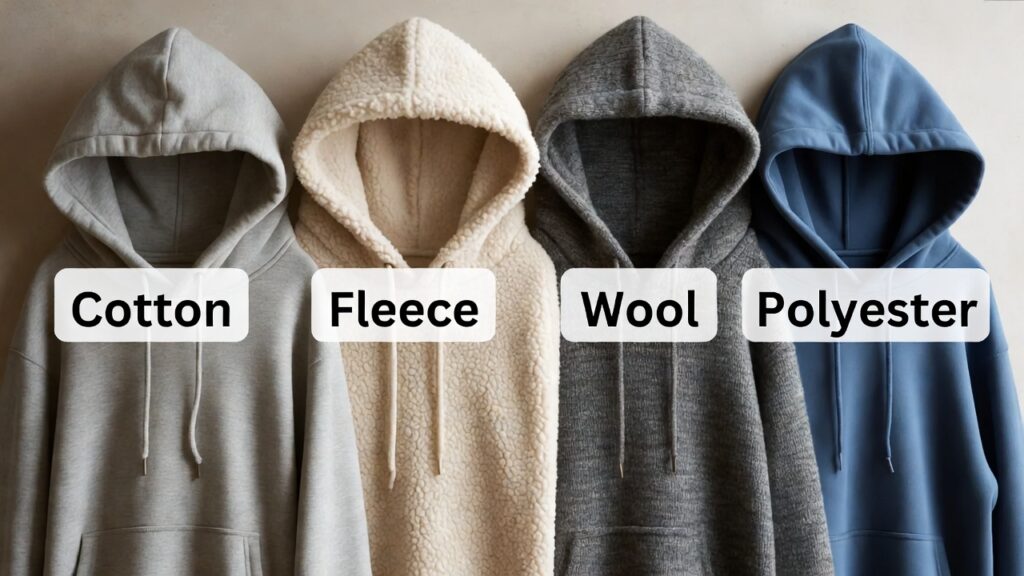
Cotton stands as a 100% natural fiber loved for its breathability and super soft feel. It allows air to flow through the fabric, keeping you comfortable without feeling stuffy. Perfect for everyday wear, cotton hoodies work especially well if you have sensitive skin since there are no synthetic chemicals irritating you. When you want that classic, relaxed hoodie vibe, cotton delivers every time.
Pros and Cons of Cotton Hoodies
Pros: Incredible comfort, natural softness, and great at absorbing moisture when you sweat.
Cons: Can shrink in hot water and takes longer to dry compared to synthetic options.
Best use: Casual hangouts, indoor wear, or when comfort is your main priority.
2. Fleece – The Warm and Cozy Best Fabric for Hoodies
What Makes Fleece a Top Hoodie Fabric
Fleece is a synthetic material, usually made from polyester, that creates a plush, warm layer perfect for cold weather. It traps heat close to your body while staying surprisingly lightweight. If you live somewhere with harsh winters or just love outdoor activities in cooler months, fleece hoodies become your best friend.
Pros and Cons of Fleece Hoodies
Pros: Lightweight warmth, excellent insulation, and dries super fast after washing.
Cons: Not as breathable as natural fibers, which might make you feel a bit warm indoors.
Best use: Winter outings, outdoor activities, or layering under jackets.
3. Polyester – The Durable and Functional Best Fabric for Hoodies
Why Polyester Is Among the Best Fabric for Hoodies
Polyester brings serious durability to the table. This synthetic fiber shows up in most gym hoodies and athletic wear because it resists wrinkles, holds color well, and keeps its shape even after tons of washes. If you need a hoodie that can handle regular wear without falling apart, polyester has your back.
Pros and Cons of Polyester Hoodies
Pros: Extremely durable, dries quickly, and requires minimal maintenance.
Cons: Feels less soft than cotton and can trap body heat during intense activities.
Best use: Workouts, sports, or when you need something that lasts.
4. French Terry – The Lightweight and Stylish Best Fabric for Hoodies
What Is French Terry Fabric?
French Terry is a knitted fabric with a smooth outer surface and soft looped texture inside. It strikes a perfect balance between comfort and style, making it ideal for spring and fall when the weather cannot make up its mind. This fabric gives you that put-together look without sacrificing comfort.
Benefits of French Terry Hoodies
Pros: Breathable, stylish appearance, and absorbs moisture nicely during light activities.
Cons: Does not provide heavy warmth like fleece, so it is not great for freezing temperatures.
Best use: Casual streetwear, transitional seasons, or fashion-forward looks.
5. Bamboo Fabric – The Eco-Friendly Best Fabric for Hoodies
Why Bamboo Is Becoming a Popular Hoodie Fabric
Bamboo fabric comes from a sustainable, renewable resource that grows incredibly fast without pesticides. This material is naturally hypoallergenic and has thermoregulating properties, meaning it keeps you cool when it is warm and warm when it is cool. For those who care about the environment and want premium comfort, bamboo checks both boxes.
Pros and Cons of Bamboo Hoodies
Pros: Silky soft, pulls moisture away from skin, and naturally resists odors.
Cons: Usually costs more than traditional cotton or synthetic options.
Best use: Eco-conscious shoppers and anyone prioritizing ultimate comfort.
How to Choose Among the 5 Best Fabric for Hoodies
Match your fabric choice to your actual needs. Think about your local climate, your personal style, and what activities you will do while wearing the hoodie. Pay attention to GSM (grams per square meter), which tells you fabric weight and thickness. Check if the fabric has stretch for better movement. Textile professionals recommend feeling the fabric in person when possible, and reading reviews from other buyers to get real-world insights before making your purchase.
Care Tips for the 5 Best Fabric for Hoodies
Cotton: Wash in cold water to prevent shrinking. Air dry or use low heat to maintain shape and softness.
Fleece: Turn inside out before washing to protect the soft texture. Avoid fabric softeners as they reduce moisture-wicking abilities.
Polyester: Machine wash with similar colors. Can handle medium heat drying without issues.
French Terry: Gentle cycle works best. Hang dry to preserve the looped interior texture.
Bamboo: Use mild detergent and cold water. Lay flat to dry for longest lifespan.
Always follow care tags to avoid common mistakes that wreck your favorite hoodies. Skipping the instructions might save time now, but costs you money when you need replacements sooner.
| Fabric Type | Best For | Warmth Level | Price Range |
|---|---|---|---|
| Cotton | Everyday comfort | Medium | $ |
| Fleece | Cold weather | High | $$ |
| Polyester | Sports/durability | Medium | $ |
| French Terry | Style/mild weather | Light-Medium | $$ |
| Bamboo | Eco-friendly comfort | Medium | $$$ |
Best Hoodies for Men Manufacturer (Texasia)
Texasia is a Finland and Bangladesh based company that supplies high-quality hoodies worldwide. They manufacture in Bangladesh and ship globally, with special focus on European markets. If you are looking for premium hoodies made with attention to detail and quality fabrics, Texasia offers reliable options for both individual buyers and wholesale vendors. Their range includes everything from luxury designs to practical everyday wear.
FAQs
What is the best fabric for hoodies overall?
Cotton-polyester blends offer the perfect mix of comfort, durability, and easy care for most people.
What fabric is used for the softest hoodies?
Bamboo fabric provides the softest feel, followed closely by high-quality cotton.
Which is the best fabric for hoodies in summer?
Lightweight cotton or French Terry works best for summer wear since they breathe well and keep you cool.
What’s the most durable fabric for hoodies?
Polyester wins for durability, holding up through countless washes and heavy use.
Are expensive hoodies always better fabric?
Not always—price depends on brand markup, not just material quality, so check fabric specs before buying.
What GSM is best for hoodie fabric?
- Lightweight (250-290 GSM): Summer and casual wear
- Mid-weight (290-350 GSM): All-season comfort
- Heavyweight (350+ GSM): Winter and performance needs
Can you mix fabrics for better hoodies?
Yes—cotton-polyester blends combine comfort with durability and reduced shrinkage for the best of both worlds.
What’s the best fabric for gym hoodies?
Polyester or polyester blends work best for gym wear due to moisture-wicking and quick-drying properties.
Is organic cotton better for hoodies?
Organic cotton offers chemical-free comfort and environmental benefits, though it costs more than regular cotton.
How do I know if hoodie fabric is high quality?
Look for tight, even stitching, consistent fabric weight, and check the GSM rating on product descriptions.
Conclusion
Choosing the best fabric for hoodies comes down to understanding what works for your lifestyle. Cotton brings classic comfort, fleece delivers warmth, polyester offers durability, French Terry adds style, and bamboo provides eco-friendly luxury. Match your fabric to your needs, and your hoodie will become your favorite piece for years.
