
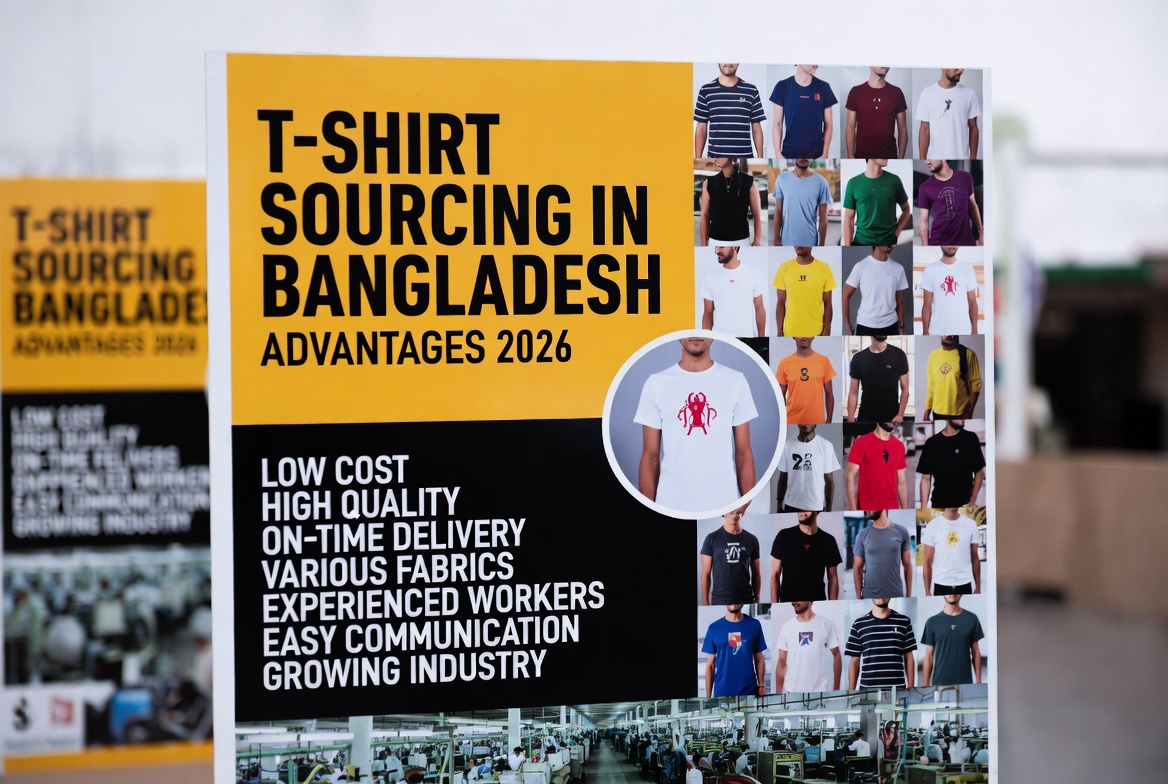
The global apparel industry is undergoing a major shift right now. Brands from the US, UK, Germany, and Australia are actively moving their production to Bangladesh — and for good reasons. In 2026, Bangladesh’s T-shirt sourcing advantages are stronger than ever before. The country is no longer just a low-cost option. It has grown into a world-class knitwear manufacturing hub with serious quality, compliance, and sustainability credentials.
Knitwear exports from Bangladesh crossed $20 billion in recent years, and the numbers keep climbing. Global buyers are taking notice. If you are a brand owner, retailer, or fashion buyer looking to reduce costs without sacrificing quality, Bangladesh is worth your full attention in 2026.
Professional Background in Bangladesh T-shirt Sourcing
First-Hand Industry Experience in Apparel Manufacturing
This guide is built on real sourcing experience — not just theory. Years of working directly with Bangladesh garment factories, fabric mills, and export houses have shaped every insight here. Understanding how a production floor operates, how lead times are managed, and how quality checks are done at the source makes a real difference when sourcing at scale.
Certifications, Compliance Training, and Sourcing Knowledge
Sourcing professionals working with Bangladesh suppliers today are trained in WRAP, BSCI, ISO, and OEKO-TEX certifications. These are not just paper qualifications. They represent real knowledge of factory audits, social compliance standards, and product testing — all things that protect buyers from costly mistakes.
Field Exposure to Bangladesh Knitwear Supply Chains
Walking through a knitwear factory in Gazipur or Narayanganj gives you a completely different perspective than reading a report. This guide reflects that ground-level knowledge — including how yarn is sourced, how fabric is knitted and dyed, and how finished T-shirts move from the production line to the export container.
Real-World Experience and Case Studies on Bangladesh T shirt Sourcing Advantages 2026
Example of Buyer Sourcing Shift to Bangladesh
A mid-size European fashion brand was sourcing basic cotton T-shirts from China at $4.80 per unit. After shifting to a certified Bangladesh T-shirt manufacturer, the same style dropped to $3.10 per unit, with similar quality and better compliance documentation. The shift happened within two seasons.
Production Challenges and How They Were Solved
Early on, the brand faced issues with colour consistency across bulk orders. The factory solved this by introducing spectrophotometer-based colour matching and tighter lab dip approval processes. Communication was improved by assigning a dedicated merchandiser to the buyer account.
Results: Cost Savings, Lead Time, and Quality Gains
The brand saved over 35% on unit costs in the first year. Lead times settled at 45 to 55 days for bulk production after the first sampling round. Defect rates dropped below 2%, and the buyer extended the contract for three more seasons. This is exactly the kind of outcome that Bangladesh sourcing can deliver when done right.
Core Economic Factors Behind Bangladesh T-shirt Sourcing Advantages 2026
Competitive Manufacturing Costs vs Other Asian Countries
Bangladesh offers some of the lowest manufacturing costs in Asia. Labour wages remain competitive compared to Vietnam, India, and Indonesia. A basic crew neck T-shirt can be produced for as low as $1.80 to $3.50 per unit, depending on fabric weight, print, and order quantity. This cost gap is a major reason global buyers continue to prioritise Bangladesh in their sourcing strategy.
Large-Scale Knitwear Production Ecosystem
Bangladesh has a fully integrated knitwear supply chain. Yarn spinning, fabric knitting, dyeing, cutting, sewing, finishing, and export — all happen within a short distance. This reduces dependency on imports and keeps lead times tight. The RMG industry in Bangladesh in 2026 continues to grow in both scale and capability.
Export Incentives and Currency Advantages
The Bangladesh government offers cash incentives of 1% to 4% on garment exports, depending on the product category and destination market. Combined with a favourable BDT-to-USD exchange rate, this gives manufacturers room to offer competitive prices while maintaining margins.
Quality Transformation Driving
Advanced Machinery and Automation Adoption
Modern Bangladesh factories run Mayer & Cie. circular knitting machines, automated cutting rooms with CAD systems, and high-speed Juki sewing lines. This is not the Bangladesh of 2005. Equipment investment has been massive over the last decade, and the results show in the final product.
Skilled Workforce Specialising in Knitwear
Bangladesh has built a multi-generational workforce trained specifically in knitwear production. Operators, quality controllers, pattern masters, and production managers often have 10 to 20 years of hands-on experience in T-shirt manufacturing. This specialisation is hard to replicate in newer sourcing destinations.
Improved Fabric Quality and Finishing Standards
Single jersey, pique, interlock, French terry, and fleece fabrics are all produced locally to high-quality standards. Finishing standards — including pre-shrinking, anti-pilling treatments, and GSM consistency — have improved dramatically. Buyers sourcing cotton T-shirt production in Bangladesh now receive products that meet or exceed EU and US market standards.
Compliance and Ethical Production
Factory Safety Upgrades and Monitoring Systems
Since the introduction of the Accord and Alliance safety programs, Bangladesh factories have undergone major structural, electrical, and fire safety upgrades. In 2026, over 90% of export-oriented factories have completed remediation and passed safety audits. CCTV systems, fire exits, and sprinkler systems are now standard in compliant factories.
Social Compliance Required by EU and US Buyers
EU and US retail buyers will not place orders without social compliance documentation. Bangladesh factories are well prepared. BSCI, Sedex, SA8000, and WRAP audits are routine. Factories maintain records of worker wages, working hours, contracts, and benefits — all available for buyer review.
Role of Industry Bodies Like BGMEA
The Bangladesh Garment Manufacturers and Exporters Association (BGMEA) plays a central role in setting industry standards, lobbying for favourable trade policies, and promoting Bangladesh to global buyers. Their data, factory directories, and compliance tracking tools are used by sourcing professionals worldwide.
Sustainability Leadership
Growth of LEED-Certified Green Factories
Bangladesh is home to the world’s highest number of LEED-certified garment factories. As of 2025, over 200 factories hold LEED certification, with more in the pipeline. This is a massive advantage for brands with ESG commitments and sustainability reporting requirements.
Organic Cotton and Recycled Fabric Adoption
Factories in Bangladesh are increasingly working with GOTS-certified organic cotton and GRS-certified recycled polyester. Buyers looking to launch sustainable T-shirt lines can source eco-friendly fabrics locally, reducing import complexity and costs.
Water, Energy, and Carbon Reduction Initiatives
Solar panels, rainwater harvesting, effluent Treatment plants (ETPs), and LED lighting are now common in leading Bangladesh factories. Several factories have achieved carbon-neutral certification and publish annual sustainability reports. This makes Bangladesh a strong partner for brands facing regulatory pressure on environmental disclosure.
Expert Insights and Professional Observations
Common Misconceptions About Bangladesh Manufacturing
Many buyers still assume Bangladesh only works for basic, low-end T-shirts. That is no longer true. Performance wear, organic cotton tees, fashion-forward cuts, and custom embroidery are all handled by top factories. The custom-embroidered T-shirt segment in Bangladesh alone has seen double-digit growth in recent years.
What Experienced Buyers Look for in Suppliers
Seasoned buyers check three things first: compliance certificates, production capacity, and quality management systems. They also look for factories with dedicated R&D teams, in-house fabric labs, and experienced merchandising staff. A factory that communicates clearly and hits deadlines consistently is worth far more than one that offers a low price.
How Professionals Reduce Risk in Sourcing
Smart buyers never skip the sampling stage. They receive a pre-production sample, a size-set sample, and a top-of-production sample before approving bulk. They also conduct in-line and final QC inspections — either through a third-party agent or their own team. Building a direct relationship with the factory owner or senior management also significantly reduces the risk of miscommunication.
Step-by-Step Process to Benefit
Preparing Tech Packs and Fabric Specs
A complete tech pack should include: garment measurements, construction details, fabric composition and GSM, colour references (Pantone codes), print or embroidery artwork, label and packaging requirements, and compliance standards. Factories work fastest when the buyer provides clear, complete specs upfront.
Sampling to Bulk Production Workflow
The standard workflow is: inquiry → factory selection → price negotiation → proto sample → fit sample → pre-production sample → bulk production → QC inspection → shipment. This process typically takes 60 to 90 days for the first order and shortens to 45 to 60 days for repeat orders.
Common Mistakes Buyers Make
The biggest mistakes include placing bulk orders without proper Sampling, failing to define quality standards in writing, choosing the cheapest factory without verifying compliance, and underestimating the lead time for fabric procurement. Buyers who skip these steps often face delays, quality failures, or compliance rejections.
Best Practices for Smooth Delivery
Always book your shipment slot early, confirm the booking with your freight forwarder at least 3 weeks before the cargo is ready, and ensure all export documents (packing list, invoice, certificate of origin, GSP form A) are prepared in advance. Clear written communication at every stage of production is non-negotiable.
Logistics and Market Access Supporting Bangladesh T-shirt Sourcing Advantages 2026
EU Duty-Free Access and Trade Benefits
Bangladesh benefits from the EU’s Everything But Arms (EBA) scheme, which grants duty-free, quota-free access to EU markets. This is a major financial advantage for brands importing from Bangladesh to Europe. Even with Bangladesh’s graduation from LDC status on the horizon, trade negotiations are underway to preserve preferential access.
Port Improvements and Shipping Efficiency
Chittagong Port, the main export gateway, has undergone major capacity expansion. New container terminals, improved yard management, and faster customs clearance have significantly reduced port congestion. Direct shipping lines to Rotterdam, Hamburg, Felixstowe, Los Angeles, and New York are available from Chittagong.
Lead Time Strategies for Global Buyers
For US buyers, sea freight from Chittagong to the East Coast takes approximately 25-30 days. For EU buyers, it is around 20 to 25 days. Buyers can reduce effective lead time by using indent orders, open orders, or booking factory capacity in advance during peak seasons.
Verified Data, Facts, and Evidence
Export Growth Statistics from Government Sources
| Year | Bangladesh Garment Export (USD Billion) | Knitwear Share (%) |
|---|---|---|
| 2020 | 27.94 | 52.3% |
| 2021 | 31.45 | 53.8% |
| 2022 | 42.61 | 55.1% |
| 2023 | 47.39 | 56.4% |
| 2024 | 50.2 (est.) | 57.2% |
Knitwear Market Share Trends
Knitwear now accounts for over 57% of Bangladesh’s apparel exports. T-shirts are the single largest product category within knitwear. Bangladesh currently holds approximately 6.4% of the global apparel export market share, making it the second largest apparel exporter in the world after China.
Fact-Based Insights Supporting Bangladesh’s Position
Over 4,500 export-ready garment factories operate in Bangladesh. The sector employs approximately 4.2 million workers, of whom the majority are women. Bangladesh produces for brands including H&M, Zara, Primark, C&A, Walmart, Target, and Tommy Hilfiger. These numbers confirm the depth and scale of the sourcing opportunity.
Technology and Digital Supply Chains
ERP, Automation, and Digital Order Tracking
Leading Bangladesh factories now run SAP, Oracle, and custom ERP systems that give buyers real-time visibility into order status, production milestones, and shipment tracking. Automated cutting machines, robotic sewing assistants, and AI-based quality detection cameras are being piloted in top-tier factories.
Faster Sampling Through 3D and Virtual Tools
3D virtual sampling tools like CLO3D and Browzwear are increasingly used by Bangladesh factories and buying houses. This allows buyers to approve garment designs and fits digitally before physical samples are made — cutting sampling time by 30-50% and significantly reducing courier costs.
Rise of Small MOQ Manufacturing for Brands
Small and growing brands no longer need to commit to 5,000-piece minimum orders. Many factories in Bangladesh now accept MOQs as low as 100-300 pieces per style. This is a game-changer for startups and DTC brands. If you are looking for a low-MOQ T-shirt manufacturer in Bangladesh, options are more accessible than ever in 2026.
Transparency, Risks, and Limitations
When Bangladesh May Not Be the Best Fit
Bangladesh is best suited for medium- to high-volume T-shirt orders with relatively standard constructions. If you need very complex woven garments, highly technical performance wear, or extremely fast 2-week turnarounds, Bangladesh may not always be the right match. Countries like Vietnam or Cambodia may be better suited to specific product categories.
Possible Risks in Lead Time or Communication
Longer lead times compared to local or near-shore manufacturing remain a real consideration for buyers with tight launch windows. Communication gaps — especially around design interpretation and quality standards — can lead to costly re-dos. These risks are manageable with clear documentation and experienced sourcing partners, but they are real and worth planning for.
What This Guide Does Not Cover
This guide focuses specifically on sourcing T-shirts and knitwear. It does not cover the manufacturing of woven apparel, footwear, accessories, or leather goods in Bangladesh. Pricing figures mentioned are indicative and subject to change based on order volume, fabric choice, print complexity, and market conditions at the time of sourcing.
Future Outlook of Bangladesh T-shirt Sourcing Advantages 2026 and Beyond
The future looks genuinely strong for Bangladesh as a global sourcing destination. Smart factories with automation, AI-driven quality control, and digital supply chain tools are becoming more common every year. As sustainability regulations tighten in the EU and UK, Bangladesh’s large pool of LEED-certified factories gives it a clear structural advantage over less-prepared competitors.
Bangladesh is on track to become the world’s top knitwear exporter within the next five to ten years. Brands that build strong factory relationships now will benefit from lower costs, better service, and priority access to capacity as global demand continues to grow. The Bangladesh T-shirt sourcing advantages 2026 are not a temporary trend — they are the foundation of a long-term sourcing strategy.
Frequently Asked Questions
What makes Bangladesh a top choice for T-shirt sourcing in 2026?
Bangladesh combines low production costs, large manufacturing capacity, strong compliance standards, and EU duty-free access — making it one of the most complete sourcing destinations available to global buyers today.
How much does it cost to manufacture a T-shirt in Bangladesh?
The cost of T-shirt manufacturing in Bangladesh typically ranges from $1.80 to $5.00 per unit, depending on fabric type, GSM, order quantity, and any value-added processes like printing or embroidery.
What is the minimum order quantity for T-shirts in Bangladesh?
Many factories now accept MOQs of 100 to 300 pieces per style, especially those set up for small-brand clients. Larger factories usually require 500 to 1,000 pieces per style for cost-effective production.
How long does it take to produce and ship T-shirts from Bangladesh?
A typical first-order timeline is 60 to 90 days from order confirmation to shipment, including Sampling and production. Repeat orders with approved samples can be completed in 45 to 60 days.
Are Bangladesh T-shirt factories socially compliant?
Yes — most export-oriented factories conduct audits under standards such as BSCI, Sedex, WRAP, or SA8000. Always request audit reports and verify them through the issuing body before placing an order.
Can I get private-label T-shirts made in Bangladesh?
Absolutely. Private-label T-shirt manufacturing in Bangladesh is well-established. Factories handle custom labels, tags, packaging, and branding for buyers of all sizes. You can explore options with a private-label T-shirt manufacturer in Bangladesh directly.
Is Bangladesh good for sustainable T-shirt production?
Bangladesh leads globally in LEED-certified green factories and has a growing supply of GOTS-certified organic cotton and GRS-certified recycled fabric — making it a strong fit for brands with sustainability goals.
What types of T-shirts are produced in Bangladesh?
From basic crew necks and V-necks to polo shirts, longline tees, oversized fits, French terry sweatshirts, and performance tees — the range is wide. Check the full range of T-shirt types produced in Bangladesh to understand what is available.
Conclusion
Bangladesh T-shirt sourcing advantages in 2026 are real, measurable, and growing. From low costs and skilled labour to green factories and digital supply chains, Bangladesh gives buyers a complete package. If you are ready to source smarter, get in touch with a trusted supplier and take the first step toward building a stronger, more cost-effective apparel supply chain.
