
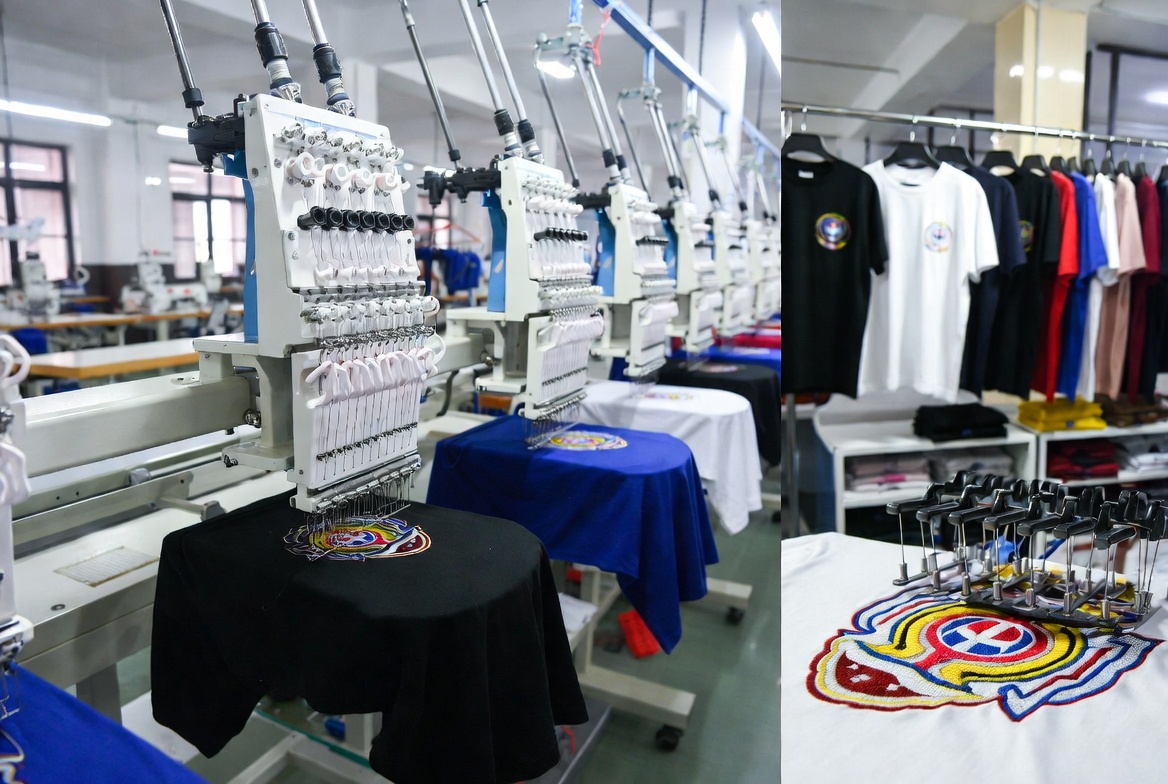
Custom embroidered T-shirt Bangladesh represent a growing segment in the global apparel industry, where precision meets affordability. Unlike standard printing methods, embroidery creates a permanent, textured design using thread stitches that withstand countless washes without fading or cracking. This durability makes embroidered apparel ideal for brands seeking long-term visibility and premium positioning.
Bangladesh has earned recognition as a reliable manufacturing hub for custom embroidered garments, combining skilled craftsmanship with competitive pricing. The country’s garment sector employs advanced multi-head embroidery machines operated by trained technicians who understand thread tension, digitizing accuracy, and fabric compatibility. Global buyers from Europe, North America, and Asia source their branded corporate wear and promotional merchandise from Bangladeshi factories.
Among the leading producers, Texasia has built a strong reputation for delivering export-quality embroidered T-shirts that meet international compliance standards. Their production capabilities range from small-batch orders to large-scale bulk manufacturing, making them a preferred partner for brands at all growth stages.
What is a Custom Embroidered T-shirt Bangladesh Manufacturing
Embroidery differs fundamentally from screen printing or DTG methods. While printing applies ink or dye onto fabric surfaces, embroidery penetrates the material with needle and thread, creating a raised, three-dimensional effect. This stitch-based technique produces designs that maintain color integrity even after years of regular use. The thread sits on top of the fabric rather than soaking into it, which prevents the common issues of cracking, peeling, or color bleeding seen in printed garments.
Long-term wear advantages make embroidered T-shirts the preferred choice for professional uniforms and premium brand merchandise. The textured appearance adds perceived value, helping companies position their products at higher price points.
Common Uses of Embroidered T-shirts in Bangladesh
Corporate uniforms represent the most extensive application, where company logos on polo shirts or T-shirts create a unified professional appearance. Banks, hotels, retail chains, and service companies order thousands of units annually.
Promotional apparel for trade shows, conferences, and marketing campaigns relies on embroidery for brand recall. The tactile quality of stitched logos makes recipients more likely to wear the items repeatedly.
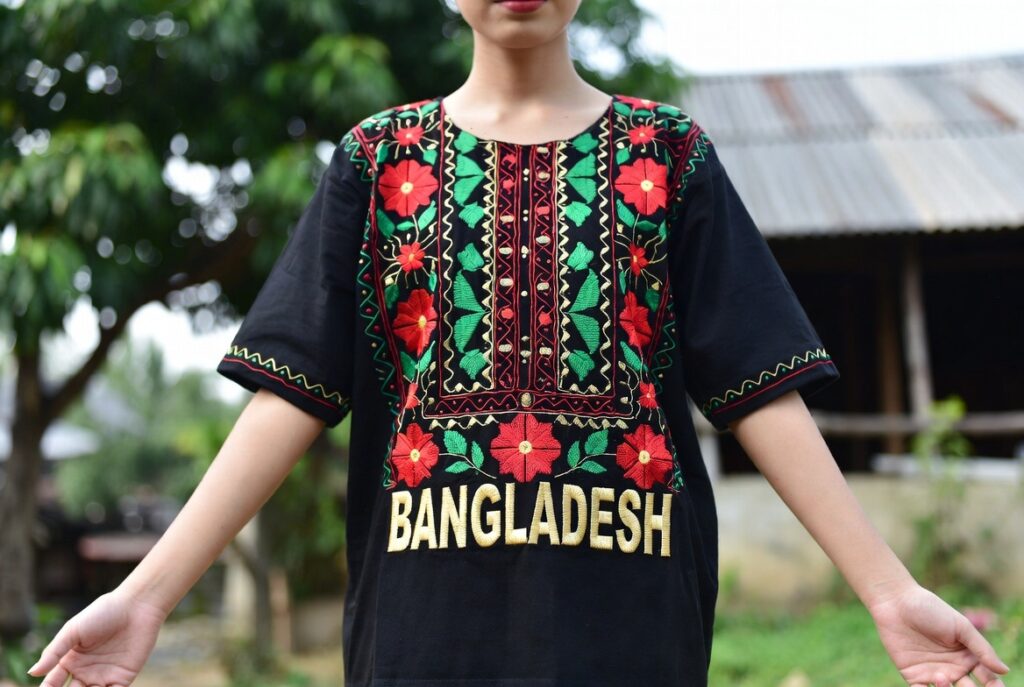
Fashion brands incorporate decorative embroidery as a design element, moving beyond simple logo placement to create artistic patterns and textures.
School and event merchandise benefits from the durability of embroidered designs, which survive frequent washing cycles better than printed alternatives.
Why Source Custom Embroidered T-Shirts from Bangladesh?
Cost Efficiency
Competitive labor costs in Bangladesh allow manufacturers to offer embroidery services at prices 30-40% lower than those in factories in developed markets. This cost advantage applies to both simple logo placements and complex multi-color designs.
Bulk embroidery efficiency improves when working with Bangladeshi suppliers who run multiple production lines simultaneously. Orders of 5,000 pieces or more receive significant per-unit discounts while maintaining quality standards.
Skilled Workforce Behind Custom Embroidered T-shirt in Bangladesh
Experienced embroidery operators undergo specialized training in digitizing software, machine maintenance, and quality checking. Many technicians have worked in the garment sector for over a decade, developing expertise in handling a range of fabric weights and thread types.
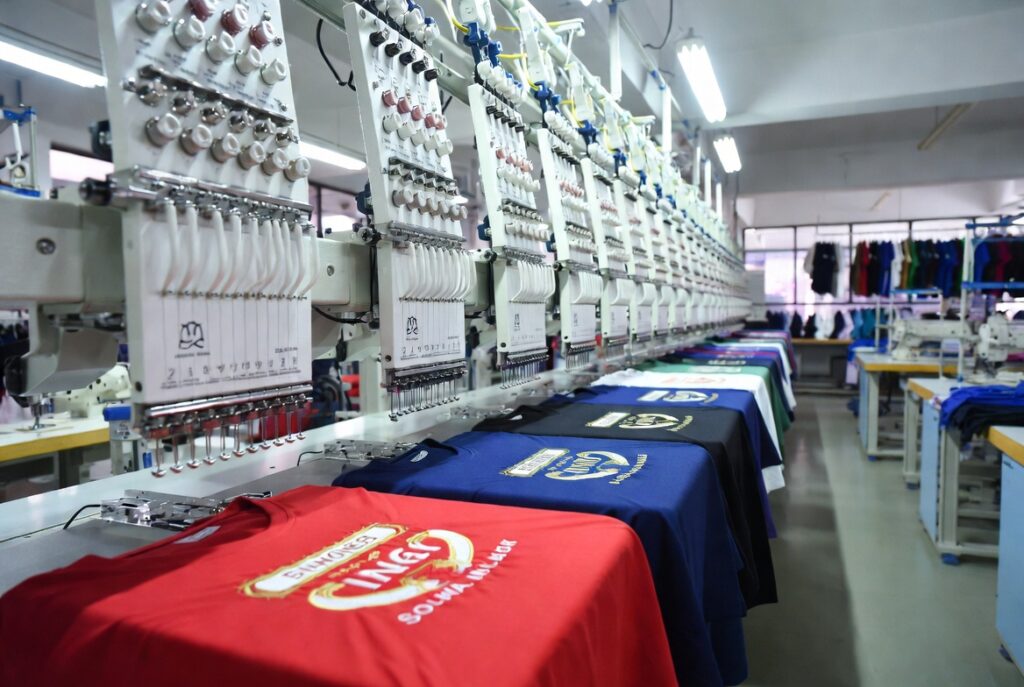
Advanced multi-head embroidery machines enable factories to complete large orders within tight deadlines. A single 15-head machine can produce 1,200-1,500 embroidered pieces daily, depending on design complexity.
Export-Focused Production for Custom Embroidered T-shirts in Bangladesh
Compliance with international buyer requirements includes certifications like WRAP, BSCI, and Sedex. Bangladeshi manufacturers maintain documentation systems that track every production stage from raw material sourcing to final packaging.
Large-scale order handling capabilities mean factories can manage seasonal demand spikes without compromising delivery schedules. This reliability matters for brands launching new product lines or running time-sensitive promotional campaigns.
Texasia’s Custom Embroidered T-Shirt Manufacturing Services
Texasia offers full‑service custom embroidered t‑shirt production in Bangladesh, combining ethical, certified factories with low MOQs and fast turnaround. From concept to container, they engineer premium garments with precise embroidery, consistent colors, and scalable capacity for global brands, retailers, and uniform buyers.
Logo Embroidery for Brands
Texasia applies high‑precision logo embroidery to t‑shirts, ensuring crisp, durable branding that withstands frequent wear. Their digitizing team optimizes stitch count and placement so logos look sharp on both small runs and large campaigns.
Corporate Uniform T-Shirts
For corporate clients, Texasia produces polished uniform t‑shirts with embroidered insignia, name tags, and department identifiers. Uniforms are tailored to size specs and style guides, with fabrics and stitching that support daily professional use.
Promotional Embroidered T-Shirts
Texasia crafts promotional t‑shirts with embroidered event logos, slogans, or sponsor marks for campaigns, giveaways, and employee gifts. Each batch is engineered for consistent print‑like embroidery across colors and sizes.
Private Label and OEM T-Shirt Production
Texasia supports private‑label and OEM t‑shirt programs, handling everything from pattern and fabric sourcing to final packaging under your brand. Their certified production lines ensure quality control, traceability, and ready‑to‑ship quantities for global importers.
Embroidery Techniques Used in Custom Embroidered
Flat Embroidery in Custom Embroidered T-shirt, Bangladesh
Clean logo embroidery works best for text-based designs, brand names, and simple graphics. The flat stitch creates a professional appearance suitable for business settings.
Ideal for corporate and retail use, this technique handles fine details better than raised embroidery methods. Letter heights as small as 4mm remain legible when properly digitized.
3D Puff Embroidery
The raised logo effect uses foam padding beneath the embroidery thread to create a bold, dimensional appearance. The puff material compresses slightly during washing but maintains its elevated profile for years.
Popular for streetwear and caps, this technique adds visual impact to casual apparel. Sports teams, music brands, and youth-oriented companies frequently request puff embroidery for its eye-catching quality.
Appliqué & Chain Stitch
Decorative embroidery methods, such as appliqué, involve sewing fabric pieces onto the base garment and stitching around the edges. This technique reduces stitch count while creating large, colorful designs.
Fashion-focused designs use chain stitch for flowing patterns, lettering with a handmade aesthetic, and vintage-inspired graphics. The technique works particularly well on heavyweight fabrics like fleece and denim.
Best Fabrics for Custom Embroidered T-Shirts
Combed cotton provides a smooth surface that prevents thread snagging during embroidery. The combing process removes short fibers, resulting in stronger yarn and better stitch definition.
Organic cotton meets the sustainability requirements of eco-conscious brands. Bangladeshi suppliers source certified organic materials from approved vendors, maintaining chain-of-custody documentation.
Blended Fabrics
Cotton-poly blends combine the natural fiber breathability of cotton with the synthetic durability of poly. Common ratios include 65/35 and 50/50, with higher polyester content offering better shape retention after washing.
Durability and shape retention matter for garments that undergo frequent laundering. The synthetic component resists shrinkage and maintains color vibrancy longer than 100% cotton alternatives.
GSM Selection
The impact of light, medium, and heavy GSM on embroidery quality requires careful consideration. Lightweight fabrics (140-160 GSM) work for simple designs with low stitch counts, while medium-weight materials (180-200 GSM) handle standard logo embroidery. Heavy fabrics (220+ GSM) support dense embroidery patterns without puckering or distortion.
Logo Placement Options for Embroidered T-Shirts
Logo Placement
Chest, sleeve, back, and collar embroidery options let brands create distinctive looks. Left chest placement remains the most popular for corporate wear, measuring 8-10cm wide. Full back embroidery creates maximum brand visibility for promotional items and team uniforms.
Thread Colors & Stitch Density
Pantone matching ensures color consistency across production batches. Manufacturers maintain thread libraries with hundreds of colors, or source custom-dyed threads for exact brand matches.
Premium thread durability comes from polyester and rayon materials that resist fading from sunlight and chlorine. High-quality threads maintain their sheen even after 50+ wash cycles.
Size Range & Fit Customization
Men, women, and unisex sizing options accommodate a range of body types and fit preferences. Size charts follow US, EU, or Asian standards depending on the target market, with measurements provided for chest width, body length, and sleeve length.
Minimum Order Quantity, Pricing, and Lead Time
Minimum Order Quantity
Small MOQs vs. bulk production create flexibility for different buyer types. Factories may accept orders as low as 300-500 pieces for standard designs, while premium pricing applies to runs of fewer than 1,000 units. Bulk orders of 5,000+ pieces unlock the best per-unit costs.
Cost Breakdown
Fabric costs range from $1.20 to $2.80 per piece, depending on GSM and fiber content. Embroidery stitches cost $0.40-$1.50 per piece, depending on design complexity and thread count. Packaging includes polybags, size stickers, and carton boxes, adding $0.15-$0.30 per unit.
Total FOB pricing typically falls between $2.50 and $5.50 per T-shirt for medium-weight cotton with standard embroidery.
Production & Delivery Timeline
Sampling requires 7-10 days after receiving logo files and specifications. Bulk manufacturing takes 25-35 days for orders up to 10,000 pieces, with production time increasing for larger quantities. Export shipments by sea to major ports take 20-30 days, while air freight reduces transit time to 5-7 days at a higher cost.
Quality Control for Embroidered T-Shirt Manufacturing
Pre-Production Checks
Digitizing accuracy determines final embroidery quality. Technicians convert logo files into stitch patterns, adjusting thread paths to prevent fabric distortion. This digitizing process requires skill to balance coverage with flexibility.
Sample approval allows buyers to verify colors, placement, and stitch quality before bulk production begins. Most factories provide 2-3 samples per design for evaluation.
In-Line & Final Inspection
Stitch consistency gets monitored during production, with operators checking every 50th piece for thread breaks, loose stitches, or misalignment. Quality teams measure embroidery dimensions to confirm they match approved samples.
Fabric defects such as holes, stains, or irregular dyeing are identified during the pre-embroidery inspection. Defective blanks get removed before embroidery to avoid wasted labor.
Packaging Standards for Custom Embroidered T-shirts in Bangladesh
Individual poly packing protects each garment from moisture and dust during shipping. Buyer-specific labeling includes hang tags, care labels, and size stickers positioned according to brand guidelines.
Sustainability & Compliance
Ethical Manufacturing
Worker safety protocols include proper ventilation in embroidery areas, ergonomic workstations, and protective equipment for machine operators. Factories conduct regular safety audits and maintain emergency response procedures.
Fair labor practices ensure that employees receive wages above the legal minimum and that overtime compensation is calculated in accordance with labor law. Many factories provide subsidized meals, transportation, and healthcare benefits.
Eco-Friendly Materials & Threads
Organic cotton sourced from certified farms has a lower environmental impact than conventional farming methods. The certification process verifies that no synthetic pesticides or fertilizers were used during cultivation.
OEKO-TEX certified threads meet strict standards for harmful substances, making the finished garments safe for direct skin contact. This certification particularly matters for children’s apparel and sensitive-skin products.
Why Texasia Is One of the Best Custom Embroidered T Shirt Bangladesh Manufacturers
Texasia’s Expertise in Custom Embroidered T Shirt Bangladesh
Years of experience in the garment manufacturing sector have positioned Texasia as a trusted partner for international brands. The company operates state-of-the-art facilities equipped for both knitting and embroidery, enabling vertical integration that reduces lead times and costs.
Export-ready infrastructure includes dedicated quality control labs, sample development rooms, and logistics coordination teams. This comprehensive setup enables Texasia to handle orders from initial inquiry through final delivery with minimal buyer intervention required.
The factory maintains relationships with major buyers across North America, Europe, and the Middle East, demonstrating its ability to meet diverse market requirements. Their production planning systems accommodate rush orders and seasonal peaks without sacrificing quality standards.
Advanced Embroidery Technology at Texasia
Multi-head machines from leading manufacturers like Tajima and Barudan form the backbone of Texasia’s embroidery department. These computer-controlled systems achieve stitch speeds up to 1,000 stitches per minute while maintaining precise needle placement.
Precision digitizing software converts customer artwork into embroidery patterns optimized for each fabric type. The digitizing team considers factors such as fabric stretch, thread tension, and design density to create patterns that embroider cleanly, without puckering or thread breaks.
Regular machine maintenance schedules and skilled technicians ensure minimal downtime. The factory stocks spare parts for all major machine components, enabling quick repairs and keeping production on schedule.
Why Global Buyers Trust Texasia
Consistent quality stems from documented procedures covering every production stage. From incoming fabric inspection to final garment checking, quality benchmarks are enforced through trained inspectors and random sampling protocols.
Competitive pricing results from economies of scale and efficient operations management. Texasia’s purchasing power for raw materials translates to cost savings passed along to customers. Their transparent costing breakdowns help buyers understand exactly what they pay for.
Reliable communication through dedicated account managers ensures buyers receive timely updates on production progress, shipping schedules, and any potential delays. The team responds to emails within 24 hours and accommodates video calls for design discussions or factory tours.
Custom Embroidered T-Shirt Production Process
Texasia manages a structured six‑step flow for custom embroidered t‑shirts, from initial design to global delivery. Each stage includes quality checks, technical approvals, and flexible timelines to match your launch schedule.
Step 1: Share Your Design or Tech Pack
Clients begin by sharing artwork, logos, or a full tech pack with size charts, colors, and construction details. Texasia’s technical team reviews all specs and offers feedback to align the design with manufacturability and quality standards.
Step 2: Logo Digitizing and Artwork Review
The logo is converted into embroidery‑ready digital files, adjusting stitch density and thread colors for optimal clarity. Designers then send a digital proof so you can approve placement, size, and thread matches before sampling.
Step 3: Fabric Selection and Sample Development
Texasia helps select suitable fabric weights, blends, and washes for your t‑shirts, then builds physical samples with actual embroidery. These samples confirm fit, color accuracy, and logo quality before moving to bulk production.
Step 4: Bulk Embroidery and T-Shirt Production
Approved samples go into mass production, where automated cutters and embroidery machines run batches with consistent tension and alignment. Each t‑shirt is stitched, trimmed, and inspected before passing to the final finishing line.
Step 5: Quality Inspection and Packing
Every embroidered t‑shirt undergoes visual and measurement checks for stitch defects, color consistency, and sizing. Corrected pieces are repaired or replaced, then garments are folded, tagged, and packed in export‑ready cartons.
Step 6: Export and Global Delivery
Texasia coordinates documentation, labeling, and logistics for air or sea freight, delivering bulk orders to ports or warehouses worldwide. Clients receive tracking updates and delivery confirmation to ensure on‑time arrival for retail or promotional use.
How to Order
Information Buyers Should Prepare
A logo file in vector format (AI, EPS, or PDF) provides the cleanest source for digitizing. Raster files like JPG work for simple designs but may require manual tracing.
Fabric choice based on end-use requirements affects both cost and production timeline. Buyers should specify desired GSM, fiber content, and any special finishes.
Quantity determines pricing tier and production scheduling. Providing firm order quantities upfront helps manufacturers allocate machine time and raw materials efficiently.
Sampling to Bulk Process
Approval stages include initial design digitizing, strike-off sample production, and final approval before bulk cutting begins. Most buyers request 2-3 rounds of samples to refine embroidery placement and thread colors.
Production flow follows a precise sequence: bulk fabric sourcing, cutting, embroidery, quality inspection, washing (if required), finishing, and packing. Factories provide weekly production reports showing completed quantities and projected completion dates.
Common Mistakes to Avoid When Ordering Embroidered T-Shirts
Ignoring stitch count leads to underestimating production costs. Complex designs with high stitch counts take longer to embroider and use more thread, significantly increasing per-piece pricing.
Choosing the wrong fabric GSM causes embroidery quality issues. Lightweight fabrics pucker under dense embroidery, while heavy materials may break needles if thread tension gets set incorrectly.
Skipping pre-production samples increases the risk of disappointment in bulk production. Colors may appear different when stitched than they look on screen, and logo proportions need verification on actual garments before committing to thousands of units.
Case Study: Custom Embroidered T-Shirts for a Business Client
In 2024, FastFleet, a rapidly growing logistics startup in Dhaka, faced a branding challenge. With 150 employees across Khulna and Dhaka divisions, they needed durable, professional uniforms to unify their team and boost visibility. Off-the-shelf T-shirts faded quickly in Bangladesh’s humid climate, and local printers delivered inconsistent embroidery that peeled after washes.
Founder Rahim Khan turned to Texasia, Bangladesh’s top custom embroidered T-shirt specialist. Texasia promised high-quality, industrial-grade embroidery using advanced Tajima machines and eco-friendly threads sourced locally. Rahim ordered 200 navy-blue T-shirts emblazoned with FastFleet’s logo—a stylized truck and tagline “Delivering Tomorrow, Today”—in vibrant, 12-color stitching.
The turnaround was impressive: designs approved in 24 hours, production completed in 5 days, and delivery to Khulna free of charge. At just BDT 450 per shirt (bulk pricing), costs beat competitors by 20%. Post-delivery surveys showed 98% employee satisfaction; the embroidery withstood 50+ washes without fraying.
Six months later, FastFleet expanded to 300 staff, reordering 500 more shirts. Customer inquiries surged 35% due to the polished branding. “Texasia’s precision and reliability made us stand out,” says Rahim. Texasia isn’t just a vendor it’s a growth partner for Bangladesh businesses seeking premium custom embroidered T-shirts.
FAQ
What is the minimum order quantity for custom-embroidered T-shirts in Bangladesh?
Most factories accept orders starting from 500-1,000 pieces, though smaller runs may incur setup fees that increase per-unit costs.
How long does embroidery production take?
Standard orders require 25-35 days after sample approval, with rush production available at a premium price.
Can embroidery be done on any fabric type?
Embroidery works on most woven and knit fabrics, though very lightweight or stretchy materials may need stabilizer backing.
What file format is best for embroidery logos?
Vector files (AI, EPS, PDF) provide the cleanest conversion to stitch patterns, though high-resolution PNG or JPG files work for simple designs.
Does embroidery fade or crack like printing?
Quality embroidery maintains color and structure for hundreds of wash cycles, far outlasting screen printing or DTG methods.
Can I mix different logo placements in one order?
Yes, factories accommodate mixed placements, such as chest logos on some units and sleeve embroidery on others, though this may affect pricing.
What thread types are available?
Polyester and rayon threads are standard, with metallic, glow-in-the-dark, and specialty threads available for custom requests.
How do I ensure color matching accuracy?
Provide Pantone color codes and request physical thread samples before bulk production begins to verify exact color matches.
Conclusion
Custom embroidered T-shirt in Bangladesh combines traditional craftsmanship with modern technology to deliver durable, professional-looking apparel at competitive prices. Choosing experienced partners like Texasia ensures quality results, on-time delivery, and responsive customer service throughout the production process.

