
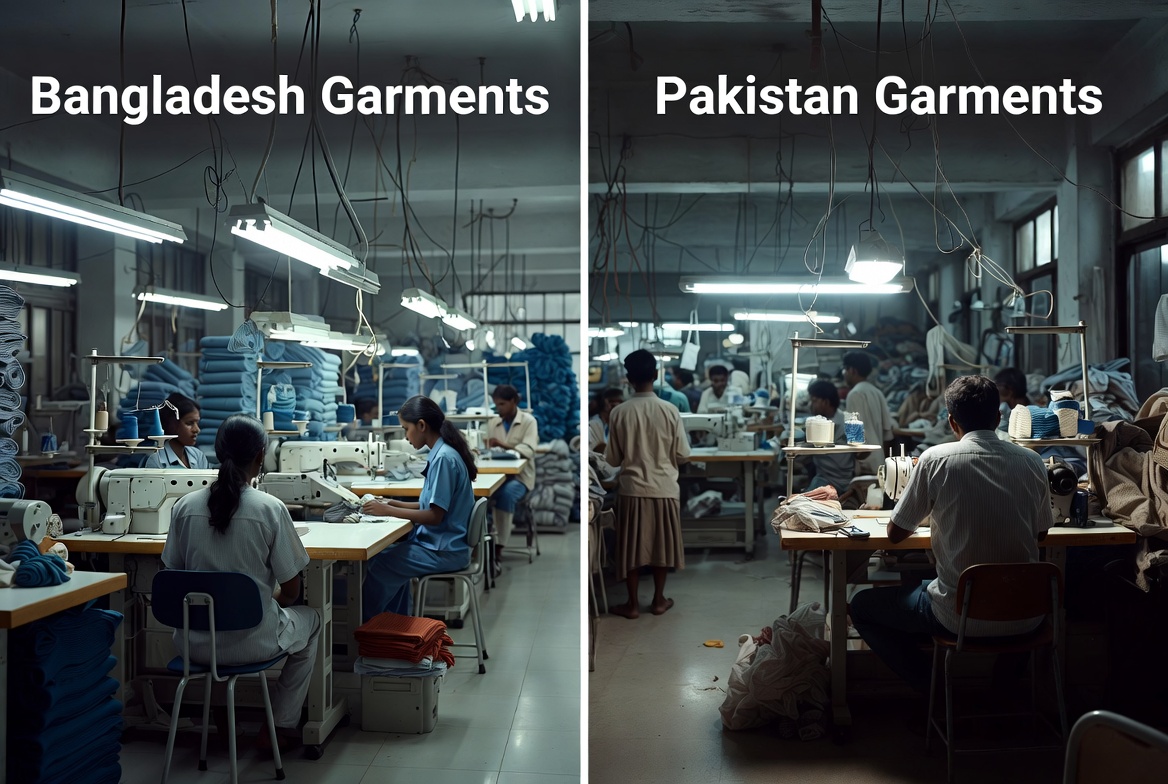
The textile industry in South Asia plays a massive role in global fashion and manufacturing. When we talk about Bangladesh garments vs Pakistan garments, we’re comparing two powerhouses that supply clothing to major brands worldwide. Bangladesh has become the second-largest garment exporter globally, right after China, while Pakistan maintains a strong presence with its rich textile heritage. Both countries have built their economies around fabric production, creating millions of jobs and shaping international supply chains. Texasia, a leading Bangladesh-based manufacturer, represents the quality and scale that makes Bangladeshi garments competitive on the world stage. Understanding the differences between these two nations helps buyers make smarter sourcing decisions and reveals how each country contributes uniquely to what we wear every day.
Production Scale and Export Figures
| Aspect | Bangladesh | Pakistan |
|---|---|---|
| Annual Export Value | $47-50 billion (2024) | $16-18 billion (2024) |
| Global Market Share | 6.8% of worldwide garment exports | 2.1% of worldwide garment exports |
| Workforce Size | Over 4.4 million workers | Approximately 2.5 million workers |
| Top Export Markets | USA (18%), Germany (14%), UK (9%), Spain (7%) | USA (25%), UK (8%), Germany (7%), UAE (6%) |
| Number of Factories | 4,500+ export-oriented factories | 1,200+ textile mills and garment units |
| Primary Products | Knitwear, woven garments, denim, sportswear | Cotton yarn, bed linen, home textiles, traditional wear |
| Growth Rate (Annual) | 7-9% year-over-year | 3-5% year-over-year |
Bangladesh clearly leads in production scale, processing orders that keep global retail shelves stocked year-round. The country’s massive workforce gives it the capacity to handle bulk orders that smaller nations cannot manage. Pakistan focuses more on cotton-based products and home textiles, carving out a different space in the market. The supply chain impact from Bangladesh reaches every continent, with fast fashion brands relying heavily on Bangladeshi manufacturers to meet tight deadlines and high volumes.
Quality of Garments: Bangladesh vs Pakistan
| Quality Factor | Bangladesh | Pakistan |
|---|---|---|
| Fabric Strength | High-quality cotton blends, excellent stitching | Premium long-staple cotton, traditional weaving |
| Finishing Standards | Modern finishing techniques, consistent quality control | Variable finishing, improving with new investments |
| Compliance Certifications | LEED, BSCI, WRAP, Oeko-Tex Standard 100 | ISO certifications, some GOTS compliance |
| Durability | Strong seams, wash-resistant colors | Excellent fabric longevity, classic construction |
| Design Capabilities | Trend-focused, Western fashion alignment | Traditional patterns, custom embroidery expertise |
| Quality Reputation | Known for reliable mass production quality | Respected for premium cotton quality |
Quality of Bangladesh garments has improved dramatically over the past decade. Manufacturers like Texasia maintain strict quality control systems that meet international standards. The focus on eco-friendly manufacturing practices means using safer dyes and better fabric treatments. Quality of Pakistan garments shines in cotton products – the country grows some of the finest cotton varieties in the world. Pakistani manufacturers excel at producing traditional fabrics with intricate details. The comparative analysis shows Bangladesh wins on consistency and modern quality systems, while Pakistan offers superior natural fiber quality and craftsmanship in specific categories.
Pricing and Cost Efficiency
| Cost Component | Bangladesh | Pakistan |
|---|---|---|
| Average Labor Cost (Monthly) | $95-120 per worker | $140-180 per worker |
| Production Cost (T-shirt) | $2.50-3.50 | $3.20-4.20 |
| Government Incentives | Cash incentives, duty-free machinery imports, tax holidays | Export rebates, subsidized energy for exporters |
| Utility Costs | Moderate electricity costs, improving infrastructure | Higher energy costs, gas supply issues |
| Raw Material Costs | Imported cotton, competitive pricing | Domestic cotton available, lower raw material transport |
| Overall Cost Advantage | 15-20% cheaper than Pakistan | Higher costs but better cotton quality |
Bangladesh competitive pricing comes from low labor costs and strong government support for textile production. The country offers cost advantages that make it attractive for budget-conscious brands. Buyers save money without sacrificing acceptable quality levels. Pakistan pricing structure reflects higher labor wages and energy expenses, but domestic cotton availability helps offset some costs. The comparative pricing analysis reveals that Bangladesh typically offers 15-20% lower prices for similar products, making it the go-to choice for high-volume, price-sensitive orders.
Technological Advancements in Textile Manufacturing
| Technology Area | Bangladesh | Pakistan |
|---|---|---|
| Automation Level | Growing adoption of automated cutting, sewing robots | Moderate automation, focusing on spinning and weaving |
| Sustainable Technology | Green buildings, solar power, water recycling systems | Developing renewable energy, limited green infrastructure |
| Digital Integration | ERP systems, digital pattern making, AI quality checks | Traditional processes with gradual digitization |
| Machinery Age | 60% modern equipment (less than 5 years old) | 40% modern equipment, aging machinery in some units |
| R&D Investment | $200-300 million annually across industry | $80-120 million annually |
| Smart Manufacturing | IoT sensors, real-time production tracking | Limited smart factory adoption |
Bangladesh technological progress stands out with companies like Texasia leading the way in modern textile machinery and sustainable practices. The country has invested heavily in upgrading factories to meet international buyers who demand efficiency and transparency. Pakistan technological edge exists mainly in spinning technology – their mills produce high-quality yarn. The technological comparison shows Bangladesh moving faster toward automation and AI in textile production, giving them better efficiency in fulfilling orders and reducing waste.
Sustainability and Eco-Friendliness
| Sustainability Metric | Bangladesh | Pakistan |
|---|---|---|
| Green Factories | 180+ LEED-certified green factories (world leader) | 15-20 certified green facilities |
| Water Usage | Advanced water treatment, recycling systems | Traditional water use, limited recycling |
| Carbon Footprint | Improving with renewable energy adoption | Higher emissions from coal-based power |
| Chemical Management | ZDHC compliance growing, safer dyes | Variable chemical management practices |
| Eco Certifications | GOTS, Oeko-Tex, Fair Trade increasing | Limited eco-certification penetration |
| Circular Economy | Fabric recycling programs emerging | Early-stage recycling initiatives |
Bangladesh sustainability initiatives have made the country home to the most green factories worldwide. The push for eco-friendly certifications attracts brands committed to environmental responsibility. Sustainable brands like Texasia demonstrate that green factories can be profitable while protecting the planet. Pakistan sustainability practices face challenges with energy infrastructure and water management. The sustainability comparison clearly favors Bangladesh in terms of carbon footprint reduction, water usage efficiency, and ethical practices. Bangladesh manufacturers understand that eco-friendliness is not just good ethics – it is good business.
Labor and Workforce
| Workforce Aspect | Bangladesh | Pakistan |
|---|---|---|
| Total Employment | 4.4+ million workers | 2.5 million workers |
| Women Workers | 60-65% of workforce | 25-30% of workforce |
| Minimum Wage (Monthly) | $113 (8,000 BDT) | $165 (45,000 PKR) |
| Skills Training | Growing vocational programs, on-job training | Established technical institutes, apprenticeships |
| Worker Rights | Improving after Rana Plaza reforms | Mixed enforcement of labor laws |
| Union Presence | Increasing unionization, better dialogue | Limited union activity in many regions |
| Safety Standards | Accord/Alliance programs, regular inspections | Variable safety compliance |
The labor force in Bangladesh garment sector consists mostly of women workers who bring dedication and skill to their craft. The country has made real progress on worker rights and safety after the tragic Rana Plaza collapse in 2013. The labor force in Pakistan garment sector draws on skilled labor with traditional textile knowledge passed through generations. The labor comparison shows Bangladesh employs nearly twice as many workers, creating more jobs but at lower wages. Both countries struggle with fully enforcing labor rights, though Bangladesh has seen more international pressure and improvement in recent years.
Global Market Trends: Bangladesh vs Pakistan
| Market Trend | Bangladesh Position | Pakistan Position |
|---|---|---|
| Fast Fashion | Major supplier to Zara, H&M, Uniqlo | Limited fast fashion presence |
| Sustainable Fashion | Growing organic cotton, recycled fabrics | Emerging sustainable cotton programs |
| E-commerce Growth | Adapting to smaller batch orders | Slow adaptation to online retail demands |
| Athleisure/Sportswear | Expanding capacity in performance fabrics | Limited technical sportswear production |
| Customization | Improving flexibility for custom orders | Strong in custom embroidery and design |
| Nearshoring Trends | Benefiting from China+1 strategy | Gaining ground in Middle East markets |
Market trends for Bangladesh garments show the country riding the wave of fast fashion demand and adapting to consumer preferences for quick turnarounds. Bangladesh keeps winning orders as brands diversify away from China. Similar to how the country compares with other nations in analyses like Bangladesh vs Vietnam apparel industry and Bangladesh vs China garment industry, the competitive edge lies in cost and capacity. Market trends for Pakistan garments point to strength in home textiles and traditional wear, but slower growth in trendy apparel. The comparative market analysis reveals Bangladesh better positioned for changing global market conditions and fashion trends, while Pakistan holds steady in niche markets where quality cotton matters most. You can also explore comparisons with other regional competitors like Bangladesh garments vs Sri Lanka to understand the broader competitive environment.
Ready to Source Quality Garments from Bangladesh?
Texasia stands as your trusted partner in accessing the best of what Bangladesh offers – competitive pricing, reliable quality, and sustainable manufacturing. Whether you need bulk orders or specialized production, our team delivers on time, every time. Contact us today to discuss your garment sourcing needs and experience the Bangladesh advantage firsthand!
Frequently Asked Questions
Which country produces more garments, Bangladesh or Pakistan?
Bangladesh produces significantly more garments, exporting nearly $50 billion worth annually compared to Pakistan’s $16-18 billion, making Bangladesh the clear leader in production volume.
Are Bangladesh garments better quality than Pakistan garments?
Both countries produce quality garments – Bangladesh excels in consistent mass production with modern quality controls, while Pakistan shines in premium cotton products and traditional craftsmanship.
Why are Bangladesh garments cheaper than Pakistan garments?
Lower labor costs and government incentives make Bangladesh garments 15-20% cheaper on average, though both countries offer competitive pricing compared to other manufacturing nations.
Which country is more sustainable in garment manufacturing?
Bangladesh leads in sustainability with over 180 LEED-certified green factories (the most globally), advanced water recycling, and growing eco-certifications, while Pakistan is developing its green infrastructure.
What are the main products from Bangladesh and Pakistan garments?
Bangladesh specializes in knitwear, woven garments, denim, and sportswear for global fashion brands, while Pakistan focuses on cotton yarn, bed linens, home textiles, and traditional clothing.
How do wages compare between Bangladesh and Pakistan garment workers?
Pakistan pays higher wages at approximately $165 monthly minimum compared to Bangladesh’s $113, but Bangladesh employs nearly twice as many workers overall.
Conclusion
The comparison of Bangladesh garments vs Pakistan garments reveals two different approaches to textile manufacturing. Bangladesh dominates in volume, pricing, and sustainability, making it the preferred choice for global fashion brands needing reliable, cost-effective production at scale. Pakistan maintains strengths in premium cotton quality and traditional textiles, serving buyers who prioritize natural fiber excellence. For most international buyers, Bangladesh offers the complete package of affordability, capacity, and modern manufacturing standards that today’s market demands.

