
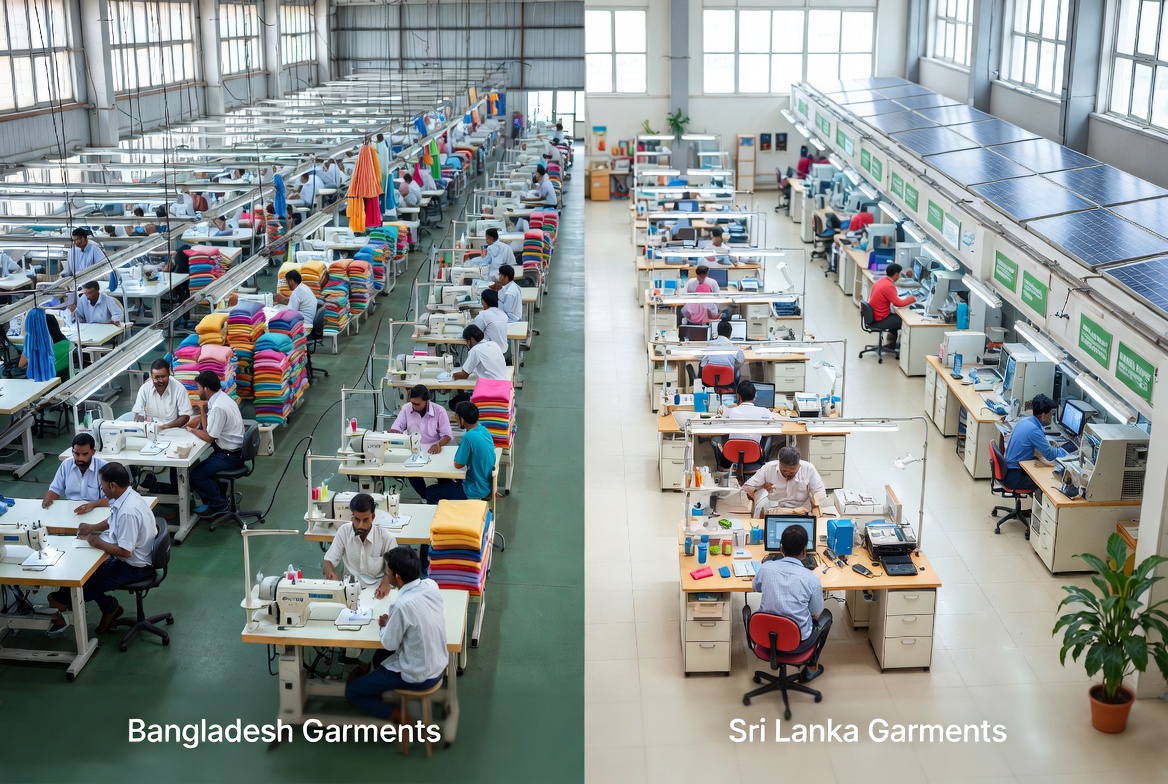
The global apparel industry is constantly evolving, with countries competing to become the go-to destination for clothing production. When it comes to Bangladesh garments vs Sri Lanka, this comparison has become essential for international buyers seeking the best manufacturing partner. Both nations have built strong reputations, but they differ significantly in cost efficiency, production capacity, quality standards, and sustainability practices. For brands looking to source from Asia, understanding these differences is critical. Among the top players, Texasia stands as one of the best Bangladesh garments manufacturers, setting industry benchmarks for quality and compliance.
Overview of Bangladesh Garments vs Sri Lanka Apparel Industries
Bangladesh Garments Industry Overview
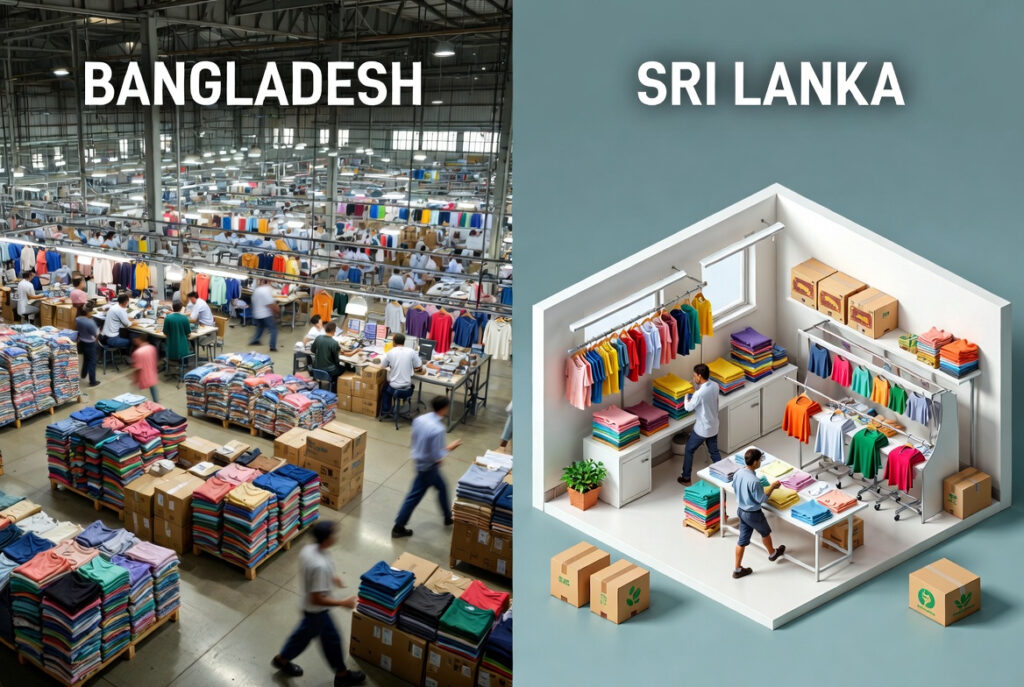
Bangladesh has transformed into a global powerhouse for ready-made garments over the past four decades. Starting in the 1980s, the country has grown to become the second-largest apparel exporter worldwide. With over 4,500 factories and employing more than 4 million workers, Bangladesh garments dominate international markets. The industry contributes roughly 84% of total export earnings, making it the backbone of the national economy. In this debate, Bangladesh wins on sheer scale, production volume, and competitive pricing. The country excels in producing basic to mid-range garments including t-shirts, jeans, casual wear, and workwear at unbeatable prices.
Sri Lanka Apparel Industry Overview
Sri Lanka entered the apparel sector in the 1960s and has carved out a niche for premium quality and ethical manufacturing. While smaller in scale compared to Bangladesh, Sri Lanka focuses on high-value products like lingerie, activewear, and fashion-forward designs. The country has built a reputation for superior finishing, compliance excellence, and worker welfare. Sri Lankan factories often produce for luxury brands that prioritize quality over cost. In this comparison, Sri Lanka positions itself as the premium alternative, targeting buyers who value craftsmanship and sustainability above rock-bottom pricing.
Cost Comparison – Bangladesh Garments vs Sri Lanka
| Cost Factor | Bangladesh Garments | Sri Lanka Apparel |
|---|---|---|
| Minimum Wage | $75-95 per month | $115-140 per month |
| Labor Cost Advantage | 30-40% lower | Higher labor costs |
| Raw Material Sourcing | Strong local textile base, imported cotton | More reliance on imports |
| Utility Costs | Lower electricity and gas rates | Higher energy costs |
| Production Expenses | Highly competitive | Moderate to high |
| Overall Cost Position | Most cost-effective | Premium pricing |
Product Quality – Bangladesh Garments vs Sri Lanka
| Quality Aspect | Bangladesh Garments | Sri Lanka Apparel |
|---|---|---|
| Fabric Quality | Good to excellent | Excellent to premium |
| Stitching Standards | High consistency | Superior finishing |
| Product Categories | Basic to mid-range | Mid-range to luxury |
| Design Capability | Growing rapidly | Advanced and creative |
| Quality Control | Improving with certifications | Mature systems in place |
Compliance and Sustainability – Bangladesh Garments vs Sri Lanka
| Compliance Area | Bangladesh Garments | Sri Lanka Apparel |
|---|---|---|
| Workplace Safety | Accord/RMG compliance, post-Rana Plaza reforms | Strong historical record |
| Building Standards | Significantly improved | Generally robust |
| Environmental Practices | Green factories emerging, wastewater treatment | Advanced eco-friendly processes |
| Certifications | WRAP, BSCI, GOTS, OEKO-TEX, ISO | WRAP, SA8000, LEED, Fair Trade |
| Labor Rights | Improving with international pressure | Better established |
| Sustainability Leadership | Rapid progress, 176+ LEED-certified factories | Mature sustainability culture |
Production Capacity and Lead Time – Bangladesh Garments vs Sri Lanka
| Capacity Factor | Bangladesh Garments | Sri Lanka Apparel |
|---|---|---|
| Number of Factories | 4,500+ | 300-400 |
| Annual Export Value | $47+ billion | $5-6 billion |
| Production Scale | Massive volume capability | Moderate capacity |
| Scalability | Rapid expansion possible | Limited growth space |
| Average Lead Time | 60-90 days | 75-100 days |
| MOQ Flexibility | High volume preferred | More flexible for smaller orders |
Export Markets – Bangladesh Garments vs Sri Lanka
| Market Aspect | Bangladesh Garments | Sri Lanka Apparel |
|---|---|---|
| Primary Markets | EU (60%), USA (25%), Canada, Japan | USA (45%), EU (40%), UK |
| Product Focus | Basic apparel, casualwear, denim | Lingerie, activewear, fashion apparel |
| Buyer Profile | Mass market brands, retailers | Mid to premium brands |
| Trade Benefits | GSP, EBA (duty-free EU access) | GSP+ (EU), limited USA benefits |
| Market Diversification | Expanding to new regions | Focusing on premium segments |
Technology and Innovation – Bangladesh Garments vs Sri Lanka
| Technology Factor | Bangladesh Garments | Sri Lanka Apparel |
|---|---|---|
| Automation Level | Growing investment in automation | Moderate automation |
| Smart Factories | Emerging smart manufacturing | Limited adoption |
| Design Innovation | Improving design capabilities | Strong design focus |
| Digital Integration | ERP, PLM systems adoption | Advanced digital tools |
| R&D Investment | Increasing focus | Established R&D culture |
| Future Readiness | Rapidly modernizing | Well-positioned for niche markets |
Labor Force – Bangladesh Garments vs Sri Lanka
| Labor Aspect | Bangladesh Garments | Sri Lanka Apparel |
|---|---|---|
| Workforce Size | 4+ million workers | 300,000+ workers |
| Gender Ratio | 80% female workers | 85% female workers |
| Training Programs | Expanding skill development | Established training systems |
| Craftsmanship | Improving with experience | High-level skilled workers |
| Workforce Scalability | Abundant labor supply | Limited labor pool |
| Productivity | Competitive and growing | High productivity per worker |
Why Global Buyers Prefer Bangladesh Garments or Sri Lanka
When international brands evaluate Bangladesh garments and Sri Lanka, several factors tip the scale toward Bangladesh. The competitive pricing makes Bangladesh the obvious choice for cost-conscious buyers. The massive production capacity means even the largest orders are manageable. Buyers appreciate having reliable sourcing partners who can deliver millions of pieces on schedule. Success stories abound of brands building long-term relationships with Bangladeshi manufacturers, benefiting from consistent quality at the best prices. For volume-driven fashion retailers, Bangladesh garments represent the optimal combination of cost, capacity, and quality.
Texasia – One of the Best Bangladesh Garments Manufacturers
Key Points:
- Leading manufacturer with decades of experience in Bangladesh garments production
- Comprehensive product range covering t-shirts, polo shirts, sweatshirts, jackets, and more
- Full compliance with international standards including WRAP, BSCI, OEKO-TEX, and ISO certifications
- State-of-the-art facilities featuring modern machinery and quality control systems
- Sustainability commitment with eco-friendly manufacturing processes
- Strong track record serving global brands with consistent quality
- Competitive pricing without compromising on standards
- Reliable delivery with efficient supply chain management
In the Bangladesh garments and Sri Lanka garments comparison, Texasia exemplifies why Bangladesh leads the industry. The company combines affordability with quality, making it a trusted partner for international buyers seeking the best value.
Challenges Facing Bangladesh Garments and Sri Lanka
| Challenge | Bangladesh Garments | Sri Lanka Apparel |
|---|---|---|
| Infrastructure | Power shortages, port congestion | Better infrastructure overall |
| Rising Labor Costs | Gradual wage increases | Steady cost pressure |
| Sustainability Pressure | Need for more green initiatives | Meeting stricter standards |
| Global Competition | Competition from Vietnam, Cambodia | Niche market competition |
| Adaptation Strategy | Automation, efficiency, compliance | Premium positioning, innovation |
Future Outlook
| Future Aspect | Bangladesh Garments | Sri Lanka Apparel |
|---|---|---|
| Growth Projection | Target $100 billion by 2030 | Steady growth in premium segment |
| Sustainability Roadmap | Expanding green factories | Carbon-neutral goals |
| Digital Transformation | AI, IoT, automation investment | Design tech, digital marketing |
| Market Evolution | Moving up the value chain | Strengthening luxury positioning |
| Long-term Competitiveness | Strong with continued reform | Solid in niche markets |
Partner with Texasia for Your Sourcing Needs
Ready to experience the best of Bangladesh garments manufacturing? Contact Texasia today to discuss your production requirements. Our team delivers exceptional quality, competitive pricing, and reliable service that sets us apart in the Bangladesh garments and Sri Lanka competition.
FAQ
What is the main difference between Bangladesh garments vs Sri Lanka?
Bangladesh garments focus on high-volume production at competitive prices, while Sri Lanka specializes in premium quality and ethical manufacturing for luxury brands.
Which country offers better pricing for garment manufacturing?
Bangladesh garments offer 30-40% lower costs compared to Sri Lanka, making Bangladesh the more affordable option for bulk orders.
Are Bangladesh garments compliant with international standards?
Yes, leading Bangladesh garments manufacturers hold certifications like WRAP, BSCI, GOTS, and OEKO-TEX, with 176+ LEED-certified green factories.
What products are Bangladesh and Sri Lanka best known for?
Bangladesh garments excel in t-shirts, jeans, casualwear, and workwear, while Sri Lanka is known for lingerie, activewear, and fashion apparel.
Which country has larger production capacity?
Bangladesh garments have significantly larger capacity with 4,500+ factories compared to Sri Lanka’s 300-400 factories.
How do lead times compare between Bangladesh garments or Sri Lanka?
Bangladesh garments typically offer 60-90 day lead times, while Sri Lanka averages 75-100 days, with both being competitive for their market segments.
Is sustainability a priority in Bangladesh garments manufacturing?
Yes, Bangladesh garments have made major sustainability progress with the world’s highest number of LEED-certified green garment factories.
Conclusion
The Bangladesh garments and Sri Lanka comparison reveals two distinct manufacturing models. Bangladesh garments win on cost, capacity, and scalability, making them ideal for volume buyers. Sri Lanka offers premium quality for luxury brands. For most international buyers, Bangladesh garments provide the best overall value proposition.

