
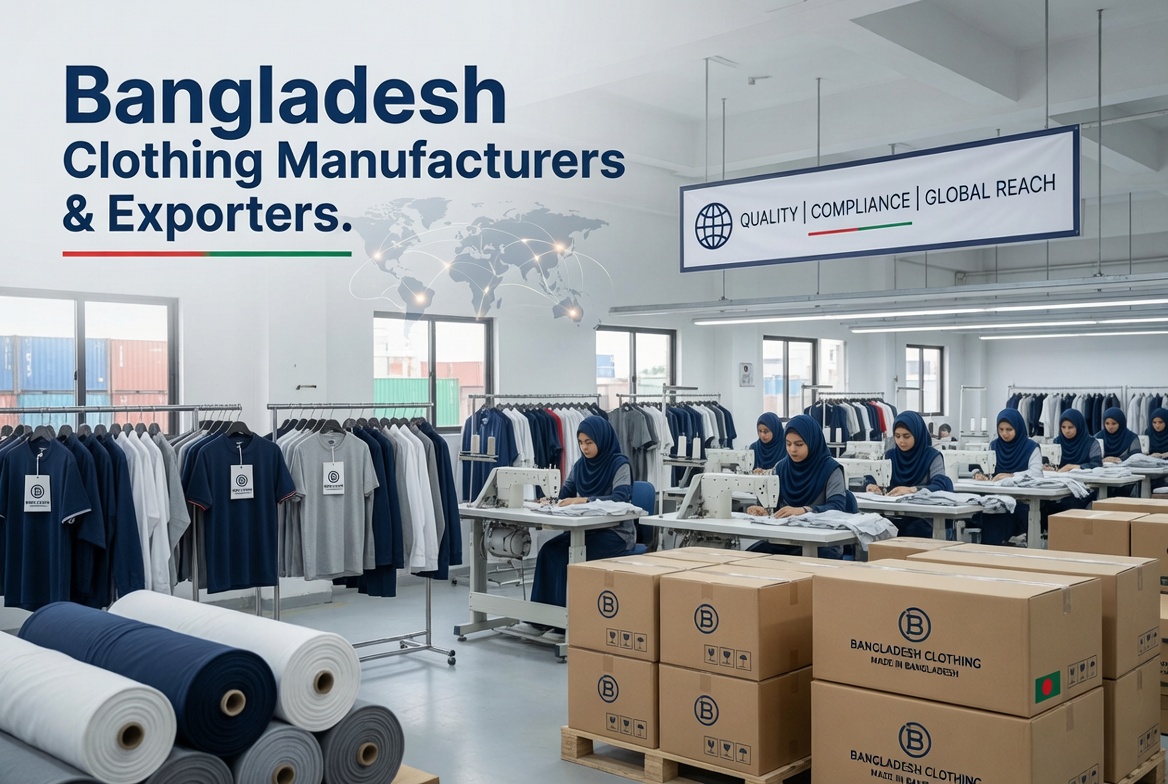
Bangladesh has secured its place as a cornerstone of the global apparel industry, ranking second only to China in total garment exports and supplying millions of clothing items annually to major fashion markets worldwide. With a manufacturing landscape of over 4,500 garment factories and a workforce of nearly 4 million people, the country’s ready‑made garment (RMG) sector drives more than 84 % of national export revenue, spanning everything from basic T‑shirts to high‑end sportswear, woven apparel, and specialty garments.
This comprehensive guide explores the leading clothing manufacturers and exporters in Bangladesh, highlighting the companies that have shaped the nation’s reputation for competitive pricing, scalable production, and compliance with international quality and ethical standards. Among these industry players, Texasia International Co. Ltd. stands out as a notable manufacturer and exporter known for its diverse product range, strong global buyer relationships, and full‑service garment solutions — from custom design and material sourcing to production and export logistics
Overview of Bangladesh’s Apparel Industry
Bangladesh is one of the biggest names in global fashion supply. The country produces millions of garments every single year. From basic T-shirts to high-end sportswear, Bangladeshi factories do it all. The apparel industry here is massive, well-organized, and keeps growing fast.
Right now, Bangladesh has over 4,500 garment factories running across the country. These factories employ millions of workers, mostly women. The industry is the backbone of the national economy and a key player in world fashion.
Economic Importance of Clothing Manufacturing
The garment sector brings in over 84% of Bangladesh’s total export earnings. That is a huge number. No other industry comes close to this level of contribution. Millions of families depend on this sector for their daily income.
| Indicator | Data |
|---|---|
| Total Garment Factories | 4,500+ |
| Workers Employed | 4 million+ |
| Share of Total Exports | 84% |
| Annual Export Value | $47 billion+ (2023) |
| Global Rank in Apparel Export | 2nd |
The clothing manufacturing sector also supports thousands of smaller businesses. These include fabric suppliers, transport companies, and packaging firms. So the impact goes far beyond the factory floor.
Global Position in Garment Exports (Focus: Texasia)
Bangladesh holds the second spot in global garment exports, right after China. That position did not come easily. It took decades of hard work, smart investments, and a strong workforce.
Companies like Texasia International Co. Ltd. are helping push Bangladesh further up the global ranks. Texasia works with international brands and delivers quality clothing at competitive prices. Their work is a great example of what Bangladesh clothing manufacturers and exporters can achieve on the world stage.
History and Development of the Clothing Industry
Early Beginnings
The garment story in Bangladesh started in the late 1970s. A few small factories began producing basic garments for export. The workforce was mostly untrained at first. But people learned fast, and the industry started picking up speed.
By the 1980s, Bangladesh had already attracted major international buyers. Low labor costs and a large workforce made the country very attractive. Orders started pouring in from Europe and North America.
Key Milestones in Export Growth
| Year | Milestone |
|---|---|
| 1978 | First garment factory set up for export |
| 1984 | Export earnings crossed $100 million |
| 2000 | Bangladesh became top 5 global exporter |
| 2013 | Rana Plaza incident led to major reforms |
| 2020 | Export value crossed $27 billion despite COVID |
| 2023 | Exports reached $47 billion+ |
Each milestone pushed the industry to grow stronger. Even after setbacks, Bangladesh clothing manufacturers and exporters bounced back and improved.
Evolution of Manufacturing Infrastructure
Early factories were simple and small. Now Bangladesh has some of the most modern garment facilities in the world. Many factories have green building certifications, advanced machinery, and digital production systems.
The BGMEA (Bangladesh Garment Manufacturers and Exporters Association) played a big role in pushing this upgrade. Safety, quality, and worker welfare all improved over time.
Top 10 Bangladesh Clothing Manufacturers and Exporters
1. Ha-Meem Group
Ha-Meem Group is one of the largest garment conglomerates in Bangladesh. They produce woven garments, denim, and casual wear for global brands. Their client list includes some of the biggest names in American and European fashion. Ha-Meem has over 50,000 employees working across multiple factories. They are known for high-volume production and strong quality control. Their export numbers place them among the top Bangladesh clothing manufacturers and exporters every year.
2. Beximco Apparels Limited (Beximco)
Beximco is a name the global fashion world respects deeply. They produce everything from basic knitwear to high-end fashion garments. Beximco was one of the first Bangladeshi companies to get international compliance certifications. They work with brands like Walmart, Zara, and H&M. Their factories use eco-friendly production methods. Beximco is also a pioneer in sustainable garment manufacturing in Bangladesh.
3. Square Fashions Ltd.
Square Fashions focuses heavily on knitwear and casual clothing. They are part of the well-known Square Group, which operates in pharmaceuticals, media, and textiles. Their garment division runs modern, automated factories. Square Fashions exports to Europe and North America regularly. They maintain strict quality standards that meet global buyer expectations. Their workforce is trained, skilled, and well-compensated by industry standards.
4. DBL Group
DBL Group stands among the most respected names in Bangladeshi textiles. They cover the full production cycle, from yarn to finished garment. That kind of vertical integration makes them very cost-effective and reliable. DBL exports knitwear, woven garments, and specialty clothing. Their green factories are certified by LEED (Leadership in Energy and Environmental Design). DBL is a preferred supplier for many top European fashion brands.
5. Ananta Group
Ananta Group produces a wide range of garments, including sportswear, denim, and casualwear. They have a strong reputation for meeting tight deadlines. Ananta works with global buyers who need large volumes delivered fast. Their factories follow strict ethical sourcing standards. They have received multiple certifications for labor rights and environmental practices. Ananta is a strong example of responsible garment export from Bangladesh.
6. Epyllion Group
Epyllion Group is a major player in Bangladesh’s knitwear export market. They specialize in T-shirts, polo shirts, and jersey products. Epyllion runs multiple spinning, knitting, dyeing, and sewing units under one roof. This setup gives them total control over product quality. They export to over 30 countries around the world. Epyllion is also known for its worker-friendly environment and strong HR policies.
7. Standard Group
Standard Group is known for producing high-quality woven garments. They serve buyers across Europe, the USA, and Canada. Standard Group has invested heavily in digital production technology. This allows them to produce complex designs quickly and accurately. Their compliance record is clean, making them a trusted name among global fashion buyers. Standard Group continues to grow its export capacity every year.
8. Asian Apparels Limited
Asian Apparel focuses on producing premium garments for international markets. They work with both large retail chains and boutique fashion labels. Their production facility is equipped with modern stitching and finishing machines. Asian Apparels maintains a strong focus on on-time delivery and product consistency. They are growing their presence in markets across Europe and Australia. Their team prioritizes quality at every step of the production process.
9. Akij Textile Mills Ltd.
Akij Textile Mills is part of the large Akij Group conglomerate. They produce yarn, fabric, and finished garments for both local and export markets. Akij Textile has a strong presence in the denim and woven garment segment. Their mills are equipped with the latest spinning and weaving machines. They follow international safety and quality standards across all production units. Akij continues to expand its export reach year after year.
10. Texasia International Co. Ltd.
Texasia International Co., Ltd. is one of the most talked-about names among Bangladesh clothing manufacturers and exporters today. They work with fashion brands from Europe, the USA, and beyond. Texasia offers a wide product range that covers everything from basics to specialty garments.
What makes Texasia special is its focus on custom clothing manufacturing. They produce T-shirts, polo shirts, hoodies, sweatshirts, tank tops, rompers, and bodysuits for global buyers. Each product is made with care, precision, and an eye for detail.
Texasia also serves clothing brands in Europe and other regions. They have specific manufacturing solutions for clothing manufacturers in Europe, Georgia, and California. They even cater to niche markets like baby clothing suppliers and custom clothing for Italy.
If you are looking for wholesale name-brand clothing in the USA, Texasia is worth checking out. Their team is easy to work with and understands what international buyers need. You can reach them directly through their contact page to start a conversation about your next order.
Major Clothing Manufacturers in Bangladesh
Overview of Leading Manufacturers
Bangladesh has hundreds of large-scale garment manufacturers. The top ones all share a few common traits. They invest in quality machinery, trained workers, and compliance systems. These factories produce garments at a scale that is hard to match anywhere else.
Company Profiles and Specializations
Each major manufacturer has a specialty area. Some focus on knitwear, while others are experts in woven garments or denim. This variety means buyers can find exactly what they need from Bangladeshi factories. Whether you need custom clothing manufacturer in Bangladesh services or bulk basic garments, there is a factory ready for the job.
Custom clothing manufacturer in Bangladesh options are growing fast. More factories now offer private-label and brand-specific production. This is great news for small and mid-size fashion brands worldwide.
Production Capacity and Workforce
| Category | Data |
|---|---|
| Total Workforce | 4 million+ |
| Female Workers | ~65% |
| Green Certified Factories | 200+ (LEED) |
| Average Monthly Production | 500 million pieces |
| Export Markets Served | 150+ countries |
Bangladesh factories can handle both small orders and massive bulk runs. This flexibility is one of the biggest reasons global brands keep coming back.
Export Market Overview
Main Export Destinations
Bangladesh exports garments to over 150 countries. The top markets include:
| Country/Region | Share of Exports |
|---|---|
| European Union | ~60% |
| United States | ~18% |
| United Kingdom | ~7% |
| Canada | ~3% |
| Japan and Australia | ~4% |
| Rest of World | ~8% |
Germany, France, Spain, and the UK are among the biggest buyers from the EU. The USA remains the single largest country destination for Bangladeshi garments.
Export Statistics and Trends
Bangladesh clothing manufacturers and exporters have seen steady growth over the past decade. Even during COVID-19, the industry managed to recover faster than most expected. By 2023, exports crossed $47 billion, a new record.
The trend is clear: demand for Bangladeshi garments is not slowing down. New markets in Asia, the Middle East, and Latin America are opening up. This gives manufacturers more room to grow.
Role in Global Supply Chains
Bangladesh plays a critical role in global fashion supply chains. Major brands like H&M, Zara, Gap, and Primark source heavily from Bangladeshi factories. Without Bangladesh, many of the affordable clothes people wear daily would cost much more.
The country is also becoming a key player in sustainable supply chains. More buyers now prefer factories with green certifications and ethical labor practices.
Types of Clothing Produced
Ready-Made Garments (RMG)
The Ready-Made Garment (RMG) sector is the heart of Bangladesh’s export economy. RMG includes everything from basic tees to formal shirts and trousers. These garments are cut, sewn, and finished in Bangladesh before being shipped worldwide.
The RMG sector is split into two main categories: knitwear and woven garments. Both are equally important to the country’s export total.
Knitwear vs. Woven Garments
| Type | Products | Export Share |
|---|---|---|
| Knitwear | T-shirts, polo shirts, sweaters, hoodies | ~50% |
| Woven | Shirts, trousers, jackets, denim | ~50% |
T-Shirt manufacturers in Bangladesh make up a huge chunk of the knitwear export sector. Bangladeshi factories produce billions of T-shirts every year for global brands.
Polo shirt manufacturers in Bangladesh are also in high demand. Brands love Bangladeshi polo shirts for their quality and competitive price points.
Hoodie manufacturers in Bangladesh and sweatshirt manufacturers in Bangladesh have grown rapidly in recent years. As athleisure became more popular, these product categories exploded.
Specialty Clothing (Denim, Sportswear, Formalwear)
Bangladesh has become a global hub for denim production. The Denim Supplier in the Bangladesh market is worth billions. Factories produce raw denim fabric, finished jeans, jackets, and more.
Sportswear is another growing category. Many global athletic brands now source from Bangladeshi factories. Formalwear, including suits and dress shirts, is also produced here for export.
Tank tops manufacturers in Bangladesh, rompers manufacturers in Bangladesh, and bodysuits manufacturers in Bangladesh are categories that have seen rapid growth. These products are popular in Western fashion markets and are being produced in large volumes now.
Industry Standards and Compliance
Labor Standards and Certifications (SA8000, BSCI)
After the Rana Plaza tragedy in 2013, Bangladesh’s garment industry went through major safety reforms. Today, most large factories carry internationally recognized certifications.
- SA8000 – Covers fair wages, working hours, and child labor prevention
- BSCI (Business Social Compliance Initiative) – Ensures ethical business practices
- WRAP (Worldwide Responsible Accredited Production) – Focuses on factory safety and worker rights
These certifications are now expected by most global buyers before they place orders.
Environmental Standards (LEED, ISO 14001)
Bangladesh now has the highest number of LEED-certified green garment factories in the world. This is a major achievement. Over 200 factories hold LEED certification, with more applying every year.
- ISO 14001 – Covers environmental management systems
- LEED (Leadership in Energy and Environmental Design) – Recognizes energy-saving and eco-friendly factory design
- OEKO-TEX Standard 100 – Certifies chemical safety in textiles
These standards show that Bangladesh clothing manufacturers and exporters are serious about sustainability.
Ethical Sourcing and Corporate Social Responsibility
Many top Bangladeshi factories now publish CSR (Corporate Social Responsibility) reports. They invest in worker education, childcare, and community programs. Brands like Texasia are leading the way in showing that ethical production and profitable export can go hand in hand.
Challenges Faced by Manufacturers and Exporters
Infrastructure and Energy Issues
Power supply is still a challenge in some parts of Bangladesh. Factories sometimes face electricity shortages that slow production. Poor road conditions in some areas make transportation slower. These are real problems that manufacturers deal with daily.
The government is working on improving energy supply and road networks. But progress takes time, and factories must plan around these limitations.
Competition from Other Low-Cost Countries
Countries like Vietnam, Cambodia, and Ethiopia are offering similar low-cost garment production. This puts pressure on Bangladeshi manufacturers to stay competitive. Wage increases in Bangladesh have also made pricing tighter than before.
To stay ahead, Bangladeshi factories are focusing on quality, speed, and compliance. These are areas where Bangladesh still has a clear edge over newer competitors.
Compliance and Safety Concerns
While things have improved greatly since 2013, compliance remains an ongoing concern. Smaller factories sometimes struggle to meet international standards. Buyers must do proper due diligence before placing orders.
Large companies with solid compliance records, like Texasia, make sourcing safer and easier for international buyers.
Supply Chain Disruptions
COVID-19 showed how fragile global supply chains can be. Bangladesh’s garment sector was hit hard in 2020. Orders were canceled, shipments were delayed, and factories had to adjust fast.
Since then, many manufacturers have built more flexible systems. They now hold more inventory and work with multiple logistics partners to reduce risk.
Opportunities and Growth Potential
Rising Demand in New Markets
New markets are opening up for Bangladeshi clothing manufacturers and exporters. Countries in Southeast Asia, the Middle East, and Africa are buying more Bangladeshi garments. These markets may not be as big as Europe or the USA yet, but they are growing fast.
Brands looking for affordable, quality garments are also exploring Bangladesh more than ever before.
Sustainable Fashion
The sustainable fashion movement is a big opportunity for Bangladesh. Green-certified factories are in high demand from eco-conscious brands. More factories are switching to organic cotton, recycled fabrics, and water-saving production methods.
This shift is attracting new buyers who want to build responsible supply chains. Bangladesh is well-positioned to lead this trend in Asia.
Government Incentives and Trade Agreements
The Bangladesh government offers strong support to the garment sector. Key benefits include:
- Cash incentives for exporters
- Tax holidays for new factories
- Duty-free access to EU markets under EBA (Everything But Arms)
- Reduced tariffs under GSP+ trade agreements
These incentives make Bangladesh one of the most attractive sourcing destinations globally.
Case Studies and Success Stories: Texasia
Leading Manufacturer Strategies
Texasia International Co. Ltd. built its reputation by focusing on three things: quality, reliability, and customer service. They do not just take orders and ship products. They work closely with brands to understand their needs and deliver the right solutions.
Their product range covers the full spectrum of casual and everyday wear. From custom T-shirts and hoodies to dresses and bodysuits, Texasia handles it all under one roof. This saves buyers time and reduces coordination headaches.
Notable Export Achievements
Texasia has successfully shipped garments to buyers across Europe, North America, and Asia. They have built long-term relationships with international fashion brands. Their repeat order rate is high, which says a lot about their reliability.
They have also helped smaller brands break into the global market by offering low minimum order quantities (MOQs). This is a huge advantage for startup fashion labels and growing mid-size brands.
Lessons from Successful Brands
What can other manufacturers learn from Texasia? A few key things:
- Focus on communication. Buyers love working with factories that respond fast.
- Invest in quality control. One bad batch can cost you a long-term client.
- Build compliance early. Getting certified takes time, so start the process soon.
- Offer flexibility. Brands need partners who can adapt to changing order sizes and timelines.
These lessons apply to any factory looking to grow in the global garment market.
Frequently Asked Questions
What makes Bangladesh a top choice for garment sourcing?
Bangladesh offers low production costs, a skilled workforce, and strong international compliance standards, making it one of the best garment sourcing destinations in the world.
How many garment factories are operating in Bangladesh?
There are over 4,500 registered garment factories in Bangladesh, with thousands more smaller units operating across the country.
What types of garments do Bangladesh factories produce?
Bangladeshi factories produce T-shirts, polo shirts, hoodies, sweatshirts, denim, dresses, sportswear, bodysuits, rompers, and many other clothing categories.
Is the Bangladesh garment industry environmentally responsible?
Yes, Bangladesh has the highest number of LEED-certified green factories in the world, showing a strong commitment to environmental responsibility.
How can I find a reliable clothing manufacturer in Bangladesh?
Look for factories with strong compliance records, international certifications, and good client reviews. Companies like Texasia are a great starting point for international buyers.
What certifications should I look for in a Bangladesh garment factory?
Key certifications include SA8000, BSCI, WRAP, ISO 14001, LEED, and OEKO-TEX Standard 100 for textile safety.
Does Bangladesh export to the United States?
Yes, the USA is one of Bangladesh’s largest garment export markets, accounting for roughly 18% of total garment exports.
What is the minimum order quantity for Bangladesh manufacturers?
MOQs vary by factory. Large manufacturers may require 5,000 pieces or more per style, while smaller factories and companies like Texasia may accept lower quantities.
Are labor conditions safe in Bangladesh garment factories?
Major reforms since 2013 have greatly improved workplace safety and labor rights in Bangladeshi garment factories, especially in larger, certified facilities.
How long does it take to ship garments from Bangladesh?
Shipping time to Europe takes around 20 to 30 days by sea, while shipping to the USA takes about 25 to 35 days, depending on the port and logistics partner.
Conclusion
Summary of Bangladesh’s Role in Global Apparel
Bangladesh clothing manufacturers and exporters are a critical part of the global fashion supply chain. The country produces affordable, quality garments at a massive scale for buyers worldwide.
Future Outlook for Manufacturers and Exporters
With rising demand, green production growth, and government support, Bangladesh’s garment industry is set for an even stronger future ahead.

