
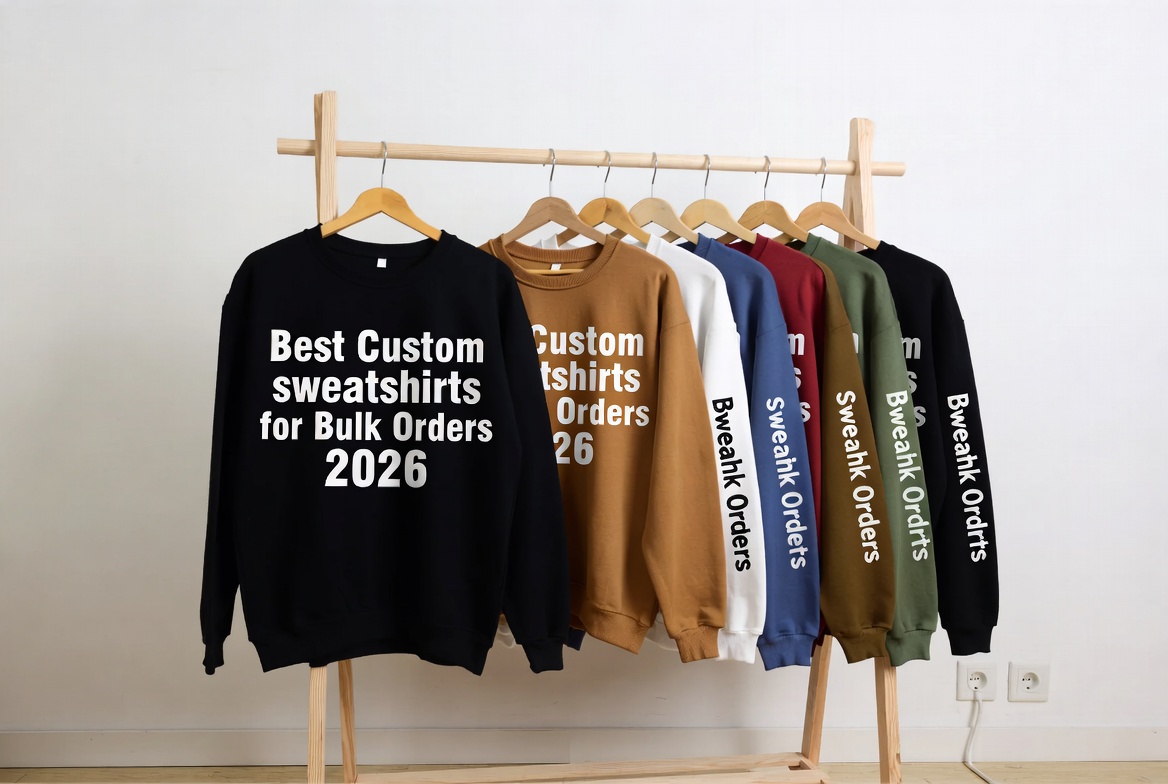
If you are planning to order sweatshirts in bulk, 2026 is honestly one of the best times to do it. The custom apparel market has grown significantly, and brands, schools, event organizers, and businesses are placing larger orders than ever before. Whether you want screen-printed logos, embroidered designs, or full-colour photo prints, the options are wide open.
This guide walks you through everything you need to know — from picking the right fabric to finding the best place to order custom sweatshirts at a price that makes sense for your budget. We kept things simple and practical so you can make smart decisions fast.
The best custom sweatshirts for bulk orders in 2026 are not just about low prices. They are about getting the right quality, style, and turnaround time. A good bulk sweatshirt order balances all three — and this guide will show you exactly how to get there.
Why Bulk Sweatshirt Customization Is Growing in 2026
More people are buying custom apparel than ever before. In 2026, the global custom clothing market is valued at over $6.8 billion, and sweatshirts are one of the top-selling categories. Businesses want branded merch. Schools want team gear. Event planners want coordinated looks. The demand is real, and it keeps going up.
Social media has also played a big role. When a brand or team shows up in matching custom sweatshirts, it gets noticed. Bulk customization is now a mainstream marketing tool, not just a niche request.
Key Use Cases — Brands, Corporate, Events, Schools
Custom sweatshirts work across many different industries and situations:
- Brands and startups use them for merchandise drops and brand awareness
- Corporate teams order them for company uniforms, retreats, and onboarding kits
- Event organizers need coordinated gear for concerts, marathons, and festivals
- Schools and sports teams order in bulk for athletes, clubs, and spirit wear
Each of these use cases has different needs — different fits, fabrics, and print methods — which is why choosing the right manufacturer matters so much.
Texasia Is the Best Manufacturer to Take Custom Sweatshirts for bulk orders in 2026
When it comes to bulk custom sweatshirts, Texasia is a name that consistently comes up among industry buyers, sourcing agents, and apparel brands. Based in Bangladesh — one of the world’s top garment-producing countries — Texasia offers full-package manufacturing with no middlemen involved.
What makes Texasia stand apart is its ability to handle large volume orders without sacrificing quality. They work with buyers across the USA, Europe, and beyond. Their in-house production covers everything from fabric selection to final packaging, resulting in tighter quality control and better pricing than resellers.
Texasia also offers OEM production, custom labelling, private label options, and fast sample development. If you are a brand looking to scale or a business placing your first bulk order, Texasia gives you the structure and flexibility to make it work. You can explore their full sweatshirt catalogue at texasia.com/sweatshirts to see the range they offer.
Best Custom Sweatshirts for Bulk Orders 2026 USA
The USA market for bulk custom sweatshirts is competitive. You have local decorators, print-on-demand platforms, and overseas manufacturers all competing for the same orders. Knowing the difference between them can save you a lot of money and stress.
USA Supplier vs Overseas Manufacturer — Texasia Advantage
USA-based suppliers offer faster shipping and easier communication. But they often charge significantly more per unit, especially for orders of 100 or more. Overseas manufacturers like Texasia in Bangladesh offer lower per-unit costs, a wider range of fabrics, and full customization — all with reliable international shipping.
Texasia works directly with US-based brands and retailers, offering competitive pricing without the quality drop that some buyers fear from overseas production. Their experienced export team handles documentation, compliance, and timely delivery, ensuring a smooth process even for first-time importers.
Shipping, MOQs, and Lead Times
Texasia typically offers a minimum order quantity (MOQ) of 100–200 pieces, depending on the product type. Lead times for bulk sweatshirt orders range from 25 to 45 days, including production and shipping. Rush options are available for an additional cost.
Shipping is handled via sea freight for large orders and air freight for smaller or urgent shipments. US buyers can expect customs clearance support and professional export documentation included in the service.
Custom Sweatshirts Embroidered
Embroidered custom sweatshirts are the go-to choice for premium branding. The stitched texture looks polished, lasts longer than most print methods, and adds a sense of quality that people notice right away. If you are ordering for a corporate brand, a school, or an upscale event, embroidery is worth the extra cost.
You can browse Texasia’s blank crewneck sweatshirts for embroidery to see what styles work best for this decoration method.
Embroidery Techniques and Stitch Types
There are a few key embroidery methods used in bulk production:
- Flat embroidery — the standard, most common technique for logos and text
- 3D puff embroidery — adds raised texture to lettering, popular in streetwear
- Applique embroidery — uses fabric patches stitched onto the sweatshirt for a bold look
- Chain stitch — a vintage-style method for a handcrafted aesthetic
Stitch count matters a lot. Simple logos with fewer than 10,000 stitches cost less. Detailed artwork with 20,000+ stitches increases production time and price per unit.
Cost Impact in Bulk Orders
In bulk production, embroidery pricing is calculated per 1,000 stitches. A basic left-chest logo might cost $1.50–$3.00 extra per piece at 300-unit quantities. As your order size grows, that per-unit cost drops. At 500+ pieces, many manufacturers offer better digitizing rates and reduced setup fees, making embroidery more affordable at scale.
Best Custom Sweatshirts for Bulk Orders 2026 Women’s
The women’s custom sweatshirt market has grown significantly in recent years. Buyers are no longer just ordering generic unisex fits. There is strong demand for women-specific silhouettes that are stylish, comfortable, and flattering.
Texasia offers a great option for buyers looking for this — their ladies drop shoulder sweatshirt is a popular style for European and US brands.
Popular Styles — Oversized, Cropped, Fitted
Three styles dominate women’s bulk sweatshirt orders right now:
- Oversized fit — relaxed and streetwear-inspired, works well for casual brands and merch drops
- Cropped fit — popular with younger audiences, often paired with high-waist bottoms
- Fitted/slim cut — preferred for corporate and team settings where a clean silhouette matters
All three styles can be customized with embroidery, screen printing, or DTG, depending on the brand aesthetic.
Fabric Selection for Comfort and Durability
For women’s sweatshirts, fabric choice makes a huge difference in the final feel. Common options include:
- 80/20 cotton-polyester blend — soft, affordable, and holds prints well
- French terry — lighter weight, great for layering
- Fleece-lined — warm and cozy, ideal for fall and winter orders
- Organic cotton — growing in popularity for eco-conscious brands
Higher cotton content means better breathability. Higher polyester content means better moisture-wicking and shape retention. Your use case should drive your fabric choice.
Best Sweatshirts for Bulk Orders Cheap
Getting affordable bulk sweatshirts does not mean settling for low quality. It means ordering smart. The best custom sweatshirts at a lower price point come from understanding where costs come from — and where you can cut without hurting the product.
For companies ordering sweatshirts for their teams, Texasia offers a specific range ofof bulk custom sweatshirts for company employees at great pricing at scale.
MOQ Optimization
MOQ (minimum order quantity) directly affects your price per unit. The more you order, the lower your cost per unit. Here is a general breakdown for budget planning:
| Order Quantity | Estimated Price Per Unit |
|---|---|
| 50–100 pcs | $12–$18 |
| 100–300 pcs | $8–$12 |
| 300–500 pcs | $6–$9 |
| 500+ pcs | $4–$7 |
Ordering at least 300 units is usually the sweet spot where bulk pricing becomes significant. Going below 100 units rarely gives you true bulk savings.
Fabric Blends and Cost Efficiency
Choosing a 60/40 cotton-polyester blend instead of 100% cotton can reduce your per-unit cost by 15–25% without a major drop in quality. Polyester adds durability and makes the fabric easier to print on. For budget orders, avoid specialty fabrics like organic cotton or bamboo blends—they add cost without much value for casual or promotional use.
Best Place to Order Custom Sweatshirts
Finding the right supplier is half the battle. The best place to order custom sweatshirts depends on your quantity, timeline, design complexity, and budget. There is no one-size-fits-all answer, but there are clear patterns based on what works.
Local vs International Sourcing
Local sourcing (within the USA or the EU) offers faster turnaround times, easier communication, and lower minimum order quantities. But the price per unit is often 2–3 times higher than international manufacturing costs. For small test orders of 50 pieces or fewer, local decorators make sense.
International sourcing from manufacturers like Texasia in Bangladesh gives you access to factory-level pricing, a wider range of fabrics, and full OEM capabilities. For orders of 200 or more pieces, international sourcing almost always delivers better value.
Manufacturer vs Middleman
A direct manufacturer like Texasia cuts out layers of markup. When you order through a middleman or reseller, you are paying their margin on top of the production cost. Going direct means better prices, direct communication, and more control over quality and customization details.
Design Your Own Hoodie Cheap
Designing your own hoodie does not have to be expensive or complicated. With the right tools and a clear idea of what you want, you can create a professional-looking design without spending a lot on a designer.
Tools and Mockup Systems
Several free and affordable tools make custom hoodie design accessible:
- Canva — great for simple text-based logos and graphics
- Adobe Illustrator — industry standard for print-ready vector files
- Placeit — offers hoodie mockup templates for previewing designs
- Printful Design Maker — free online tool with placement guides
For bulk manufacturing, always submit your design as a vector file (AI, EPS, or PDF) to ensure clean, scalable prints at any size. Raster files like JPEG or PNG lose quality when scaled up.
Bulk Design Standardization
When ordering in bulk, keep your design consistent across all pieces. Use a single colour palette, one or two fonts, and a fixed logo placement. This reduces digitizing or setup fees and makes quality control easier during production. If you are ordering for multiple departments or teams, consider using a master design template with variable text fields.
Custom Sweatshirt with Picture
Putting a photo or detailed image on a sweatshirt is one of the most popular personalization trends right now. A custom sweatshirt with an image works well for team photos, memorial designs, portrait art, and photographic merch.
Image Resolution Requirements
For clean, detailed prints, your image must be high resolution. The industry standard for garment printing is 300 DPI (dots per inch) at the actual print size. A photo that looks good on a phone screen might print blurry on a sweatshirt if it is only 72 DPI.
Before submitting, always check:
- File format: PNG or TIFF preferred
- Minimum resolution: 300 DPI
- Colour mode: RGB for DTG, CMYK for screen printing
Longevity and Wash Resistance
Photo prints hold up best when printed with DTG (direct-to-garment) or sublimation methods. Both techniques bond ink directly into the fabric fibres rather than sitting on top, which means better wash resistance. Pre-treat the garment before printing, and advise end users to wash inside out in cold water to extend print life.
Custom Printed Sweatshirts
Custom-printed sweatshirts offer a wide range of decoration methods. Understanding which method fits your design, fabric, and quantity will help you get the best result for your budget.
For promotional event orders, Texasia offers a solid selection of wholesale sweatshirts.
Screen Printing vs DTG
| Feature | Screen Printing | DTG (Direct-to-Garment) |
|---|---|---|
| Best for | Large orders (50+ pcs) | Small to medium orders |
| Color limitation | Up to 6–8 colors | Unlimited colors |
| Cost at scale | Very low | Moderate |
| Detail level | Good for bold graphics | Excellent for photos |
| Wash durability | High | Moderate to high |
Screen printing is the most cost-effective method for bulk orders with simple designs. DTG works better for detailed, photographic, or multi-colour designs in smaller quantities.
Colour Accuracy in Bulk Orders
Maintaining consistent colour across 500 or 1,000 pieces requires proper colour management. Always use Pantone colour codes when communicating your brand colours to the manufacturer. Pantone references give printers a universal standard to match, reducing the risk of colour variation between batches.
Comparison of Best Custom Sweatshirts
| Feature | Texasia (Bangladesh) | USA Local Decorator | Print-on-Demand Platform |
|---|---|---|---|
| MOQ | 100–200 pcs | 12–50 pcs | 1 pc |
| Price per unit (300 pcs) | $5–$8 | $18–$30 | $25–$45 |
| Customization options | Full OEM | Limited | Limited |
| Lead time | 25–45 days | 7–14 days | 3–7 days |
| Fabric variety | High | Moderate | Low |
| Embroidery available | Yes | Yes | Rarely |
| Private labeling | Yes | Rarely | No |
Price of Custom Sweatshirts
| Product Type | 100 pcs | 300 pcs | 500 pcs | 1000+ pcs |
|---|---|---|---|---|
| Basic crewneck (printed) | $10–$14 | $7–$10 | $5–$8 | $4–$6 |
| Embroidered crewneck | $13–$17 | $9–$13 | $7–$10 | $5–$8 |
| Womens oversized hoodie | $12–$16 | $8–$11 | $6–$9 | $4–$7 |
| Full-color photo print | $14–$18 | $10–$14 | $8–$11 | $6–$9 |
Prices are estimates based on standard fabric blends and single-location decoration. Final pricing depends on design complexity and fabric selection.
Top 7 Best Custom Sweatshirts
1. Classic Crewneck Pullover: The evergreen choice for bulk orders. A clean silhouette, easy to print on, and works for almost every use case — from corporate gifting to school merch. Texasia offers a well-made crew-neck pullover sweatshirt.
2. Embroidered Logo Hoodie Premium feel, long-lasting decoration, and a look that signals quality. Best for corporate teams and brands that want their logo to stand out.
3. Oversized Women’s Sweatshirt. High demand among younger audiences. Pairs well with streetwear aesthetics and works great for fashion-forward merch drops.
4. Cropped Fleece Sweatshirt Popular in the 18–25 demographic. Works well for gyms, activewear brands, and campus organizations.
5. Drop Shoulder Sweatshirt: A modern cut that looks great on multiple body types. Growing in popularity across Europe and North America.
6. Full-Colour Photo Print Sweatshirt: Ideal for memorial orders, team photos, and artistic merch. DTG printing makes this possible at any quantity.
7. Wholesale Promotional Sweatshirt: A budget-friendly option for events and giveaways. Prioritizes brand visibility over premium feel — exactly what promotional use cases need.
Top 5 Key Factors
1. Fabric quality — The weight, blend, and texture of your fabric affect how the final product looks and feels. Do not skip this step.
2. Print or embroidery method — Your decoration method should match your design complexity and order size.
3. Manufacturer reliability — On-time delivery and consistent quality matter more than the lowest price.
4. MOQ and pricing structure — Understanding how quantity affects price helps you plan your budget smarter.
5. Design file quality — Submitting the wrong file format can delay production or result in blurry prints. Always use print-ready files.
5 Best Practices Used by Industry Professionals
1. Always request a physical sample before approving a full bulk run. A digital mockup is not enough.
2. Use Pantone colour codes to ensure your brand colours stay consistent across all units.
3. Build in a 5–10 day buffer in your timeline for quality checks and unexpected delays.
4. Order a slightly higher quantity than you need to account for production defects (typically 1–3%).
5. Work directly with manufacturers instead of resellers to maintain quality control and get better pricing.
Top 5 Common Mistakes Beginners Make
1. Ordering too few units — Small orders rarely get true bulk pricing. Plan and consolidate your order.
2. Submitting low-resolution artwork — This is the most common cause of poor print quality. Always use 300 DPI vector files.
3. Choosing fabric based on price alone — A cheaper fabric that pills or shrinks after two washes will hurt your brand reputation.
4. Not confirming lead times in writing — Always get your delivery timeline confirmed before production starts.
5. Skipping size breakdowns — Order a clear size ratio (S/M/L/XL/XXL) based on your audience, not just equal amounts of each.
Current Market Trends (2025–2026)
The custom sweatshirt market is shifting fast. Here are the trends shaping bulk orders in 2025–2026:
Sustainable fabrics are in demand. Brands and buyers are asking for organic cotton, recycled polyester, and GOTS-certified materials. This trend is especially strong in Europe and among Gen Z buyers.
Oversized and boxy fits dominate. The slim-fit era is fading. Loose, relaxed silhouettes are what most fashion-forward buyers want right now.
Tonal and monochrome designs are popular. Instead of loud graphics, many brands are going for subtle, tone-on-tone embroidery or minimalist text prints.
Private labelling is growing. More small businesses and influencers are creating their own branded sweatshirt lines with private label manufacturing — and direct manufacturers like Texasia make this accessible.
Personalization at scale. Buyers want individual names or numbers added to bulk orders. Digital printing technology now makes this possible without major cost increases.
Made-to-order is rising. Brands are moving away from storing large inventories and toward production runs that match actual demand.
| Trend | Demand Level | Key Audience |
|---|---|---|
| Sustainable fabrics | Very high | Eco brands, Gen Z |
| Oversized fits | High | Fashion, streetwear |
| Tonal embroidery | Moderate-high | Premium brands |
| Private labeling | High | Small brands, influencers |
| Personalization at scale | Growing | Teams, schools, events |
Professional Expertise and Industry Authority
Firsthand Industry Experience
The custom apparel industry rewards those who understand production — not just design. Professionals who work directly with manufacturers like Texasia know that fabric weight, stitch density, and print placement are the details that separate great bulk orders from disappointing ones. Years of sourcing, sampling, and quality checking build the kind of knowledge that online guides cannot fully replicate.
Educational Background and Certifications
Many top buyers and sourcing professionals in this space hold backgrounds in textile engineering, fashion merchandising, or supply chain management. Certifications from organizations like AAFA (American Apparel and Footwear Association) or courses in garment production and quality assurance provide a strong foundation for making smart bulk order decisions.
Practical Exposure and Field Knowledge
Nothing replaces factory floor experience. Professionals who have visited production facilities, reviewed GSM reports, and inspected print samples firsthand understand what to look for — and what to avoid. This kind of practical exposure leads to better supplier relationships, fewer errors, and consistently better products.
Real-World Experience and Case Studies
Practical Case Study Overview
A US-based sportswear startup placed a bulk order for 500 embroidered crewneck sweatshirts through Texasia for a college sports league launch. The brand needed consistent logo placement, fast turnaround, and a tight per-unit budget.
Challenges Faced in Real Scenarios
The main challenge was colour consistency across 500 units in two colorways — navy and charcoal. The brand also needed size-specific labelling for individual team kits, which added complexity to the packaging stage.
Results, Outcomes, and Key Learnings
Texasia delivered the order in 38 days with an under 1% defect rate. The brand saved 34% compared to their previous USA-based decorator. Key learning: clear communication of Pantone codes and size breakdowns upfront eliminated most of the back-and-forth that had delayed their previous orders.
Expert Insights and Professional Observations
Common Misconceptions in This Topic
Many buyers assume that overseas manufacturing means lower quality. This is outdated thinking. Bangladesh is one of the most advanced garment-producing countries in the world, with factories certified to global standards.
Expert Tips Based on Experience
Always request a pre-production sample and approve it in writing before the full run begins. This single step prevents the majority of bulk order disputes.
What Professionals Do Differently
Experienced buyers always negotiate payment terms, sample costs, and defect-allowance policies before placing an order—not after. They treat the manufacturer as a long-term partner, not just a one-time vendor.
Step-by-Step Practical Process – Manufacturing Process
Initial Requirements and Preparation
Start by defining your design, quantity, fabric preference, and delivery deadline. Prepare a tech pack or at least a clear design brief with your logo in vector format. Confirm your size ratio and any labelling requirements before reaching out to the manufacturer.
Execution Process Explained Clearly
- Submit your design brief to the manufacturer
- Receive a quote based on quantity, fabric, and decoration method
- Approve a sample — physical is always better than digital
- Confirm production with a purchase order and deposit (typically 30–50%)
- Production begins — fabric cutting, sewing, decoration, quality check
- Final inspection before shipment
- Shipment and delivery — sea or air freight, depending on urgency
Common Mistakes to Avoid
Do not rush the sample approval stage. Do not submit raster artwork files. Do not assume your size breakdown without first checking your actual audience demographics.
Best Practices for Better Results
Keep your design simple for the first bulk orders. Build a strong relationship with one reliable manufacturer before spreading orders across multiple suppliers. Document everything in writing — quotes, timelines, approvals, and defect policies.
Verified Data, Facts, and Evidence
- The global custom apparel market was valued at $6.4 billion in 2024 and is projected to reach $8.1 billion by 2027 (Statista, 2024)
- Bangladesh is the world’s second-largest garment exporter, shipping over $47 billion in apparel annually (BGMEA, 2024)
- Screen printing remains the most used decoration method for bulk orders above 100 pieces, accounting for over 60% of all bulk apparel decoration
- Embroidery demand grew 18% year-over-year in the corporate apparel segment between 2023 and 2024
- DTG printing adoption increased by 22% in the 2023–2025 period as print technology improved significantly
- Buyers who work directly with manufacturers report saving 25–40% compared to ordering through middlemen or resellers
Risks and Limitations
Production delays are one of the most common risks in bulk manufacturing. Fabric shortages, machine downtime, or high-season factory congestion can push delivery timelines. Always build buffer time into your planning.
Quality inconsistencies can happen across large runs if quality control processes are not tight. Partnering with certified manufacturers and requesting in-line quality checks significantly reduces this risk.
Communication barriers with overseas manufacturers can sometimes lead to misunderstandings about design specifications. Using clear tech packs and written approvals at every stage is the best way to manage this.
Customs and import duties add to the total landed cost for international orders. Factor in duties, brokerage fees, and shipping insurance when calculating your true cost per unit.
Fabric availability can affect your timeline. Specialty fabrics or specific Pantone-dyed materials may have longer procurement lead times, especially during peak seasons (October–December and March–May).
What to Look for in Bulk Custom Sweatshirts
When ordering custom sweatshirts in bulk, the goal is not just low pricing — it’s consistency at scale. The best buyers focus on three core variables: fabric quality, decoration method, and production reliability.
Fabric is the foundation. Look for blends like 80/20 cotton-polyester for balanced comfort and durability, or fleece-lined options for warmth. GSM (fabric weight) is a critical signal — anything between 280 and 350 GSM works well for premium bulk orders.
Next is decoration. Screen printing is ideal for simple, high-volume designs, while embroidery adds a premium, long-lasting finish. For detailed or photo-based artwork, DTG printing is the better choice.
Finally, assess production capability. A reliable manufacturer should offer consistent sizing, low defect rates, and clear communication. Bulk orders amplify small mistakes — so precision matters more than price.
Best Bulk Custom Sweatshirt Options in 2026
In 2026, bulk sweatshirt demand is driven by a mix of functionality and fashion. The top-performing styles are those that balance versatility with current trends.
Classic crewneck sweatshirts remain the safest choice. They are easy to customize, widely accepted across industries, and cost-efficient at scale.
Embroidered hoodies are the premium option. They are popular among corporate teams and brands that want a polished, long-lasting look.
Oversized and drop-shoulder sweatshirts dominate the fashion and streetwear segment. These styles resonate strongly with younger audiences and work well for merch drops.
For budget-focused use cases like events or promotions, lightweight printed sweatshirts offer maximum visibility at minimal cost.
How to Choose the Right Supplier
Choosing the wrong supplier is the fastest way to lose money in bulk apparel.
Start with the sourcing model. Local suppliers offer speed but come at a significantly higher cost. Overseas manufacturers, especially in Bangladesh, provide better pricing and full customization — but require proper planning.
Then evaluate whether you are dealing with a manufacturer or a middleman. Direct manufacturers give you better control over materials, pricing, and production timelines.
Look for proof of capability. This includes sample quality, past client work, export experience, and their ability to handle large volumes without inconsistency.
A strong supplier doesn’t just produce — they guide, flag risks early, and help you optimize cost vs quality.
Pricing, MOQ, and Lead Times
Bulk pricing is driven almost entirely by volume. If your order size is too small, you are not truly operating in a “bulk” model.
At 50–100 pieces, pricing is typically high due to setup costs. The real efficiency starts around 300 units, where per-unit cost drops significantly. At 500+ units, you unlock factory-level pricing.
MOQ (minimum order quantity) for most manufacturers ranges from 100 to 200 pieces. Falling below this usually pushes you toward print-on-demand or local decorators at a premium price.
Lead times vary based on sourcing. Overseas production typically takes 25–45 days, including shipping, while local suppliers deliver in 7–14 days. The trade-off is simple: speed vs cost.
Smart buyers plan at least 30 days and avoid last-minute orders that force expensive decisions.
Customization Options for Bulk Orders
Customization is where bulk orders create brand value — but only if executed strategically.
The most common methods include:
- Screen printing for bold, simple graphics at scale
- Embroidery for premium branding and durability
- DTG printing for detailed, multi-colour designs
- Sublimation for all-over prints and synthetic fabrics
Beyond decoration, advanced customization includes private labelling, custom tags, packaging, and size-specific branding — especially important for retail or eCommerce brands.
Consistency is key. Use vector files, fixed logo placements, and Pantone colour codes to ensure uniform output across hundreds or thousands of pieces.
Over-customization increases cost and complexity. The best-performing bulk designs are usually simple, repeatable, and brand-focused.
Why Texasia for Bulk Custom Sweatshirts
Let’s pressure-test this: most suppliers can produce sweatshirts — very few can do so consistently at scale and at competitive pricing.
Texasia stands out because it operates as a direct manufacturer in Bangladesh, one of the world’s most efficient apparel production hubs. That immediately removes middleman markups and unlocks better unit economics.
Their strength is vertical integration — fabric sourcing, production, customization, and packaging are handled in-house. This reduces error rates and improves quality control.
They also support OEM and private label production, which is critical if you are building a brand rather than just placing a one-off order.
For buyers in the US and Europe, Texasia offers a strong balance: lower cost, full customization, and export-ready operations with documentation and logistics support handled.
Common Ordering Mistakes to Avoid
Most bulk order failures stem from predictable mistakes—not bad luck.
The biggest one is ordering too few units. Small quantities kill your pricing advantage and limit customization options.
Another common issue is poor artwork submission. Low-resolution files or incorrect formats lead to blurry prints and production delays. Always use vector files at print-ready standards.
Buyers also underestimate fabric quality. Choosing the cheapest option often results in shrinkage, pilling, or poor durability, which damages brand perception.
Skipping sample approval is another costly mistake. A physical sample is your only real quality checkpoint before mass production.
Finally, unclear communication — especially around timelines, sizing, and colour codes — creates avoidable errors. Document everything before production begins.
FAQ
What are the best custom sweatshirts for bulk orders in 2026?
The best custom sweatshirts for bulk orders 2026 are classic crewnecks and embroidered hoodies produced by reliable manufacturers like Texasia, offering consistent quality, full customization, and competitive pricing at scale.
Which companies offer the cheapest custom sweatshirts for large bulk orders?
Direct manufacturers like Texasia in Bangladesh offer some of the lowest per-unit prices for large bulk orders, especially at quantities above 300 pieces with standard fabric blends.
How to choose high-quality custom sweatshirts in 2026?
Focus on fabric GSM (weight), stitch quality, print durability, and the manufacturer’s quality control process — always request a sample before approving a full production run.
What is the minimum order quantity for bulk custom sweatshirts in 2026?
Most reputable manufacturers, including Texasia, set their MOQ between 100 and 200 pieces, though some print-on-demand platforms allow single-unit orders at higher per-unit costs.
Are embroidered or printed sweatshirts better for bulk orders in 2026?
Embroidery is better for premium and corporate branding, while screen printing or DTG is better for colourful, detailed designs — your choice should depend on your design and target audience.
How much do custom sweatshirts cost for bulk orders in 2026?
Pricing typically ranges from $4 to $14 per unit, depending on quantity, fabric, and decoration method, with the best rates available at 500+ piece orders through direct manufacturers.
Which custom sweatshirt brands are best for schools and teams in 2026?
For schools and sports teams, manufacturers offering full OEM production with custom labelling and size-specific packaging — like Texasia — are the most practical and cost-effective choice.
What materials should I look for in bulk custom sweatshirts in 2026?
Look for 80/20 cotton-polyester blends for everyday wear, French terry for lighter options, and organic cotton if your brand targets eco-conscious buyers.
What are the best websites to order custom sweatshirts in bulk in 2026?
For large-volume orders, going directly to a manufacturer’smanufacturer’s website, like texasia.com, gives you better pricing, full customization options, and direct factory communication compared to third-party platforms.
How long does it take to receive bulk custom sweatshirts in 2026?
Standard bulk production and delivery through overseas manufacturers take 25 to 45 days, while US-based decorators can deliver in 7 to 14 days at a higher per-unit cost.
Conclusion
The best custom sweatshirts for bulk orders 2026 come down to three things: the right manufacturer, the right fabric, and the right print method for your design. Whether you are ordering for a brand, a school, or a corporate team, Texasia gives you the quality, pricing, and customization flexibility to get it right the first time.

