
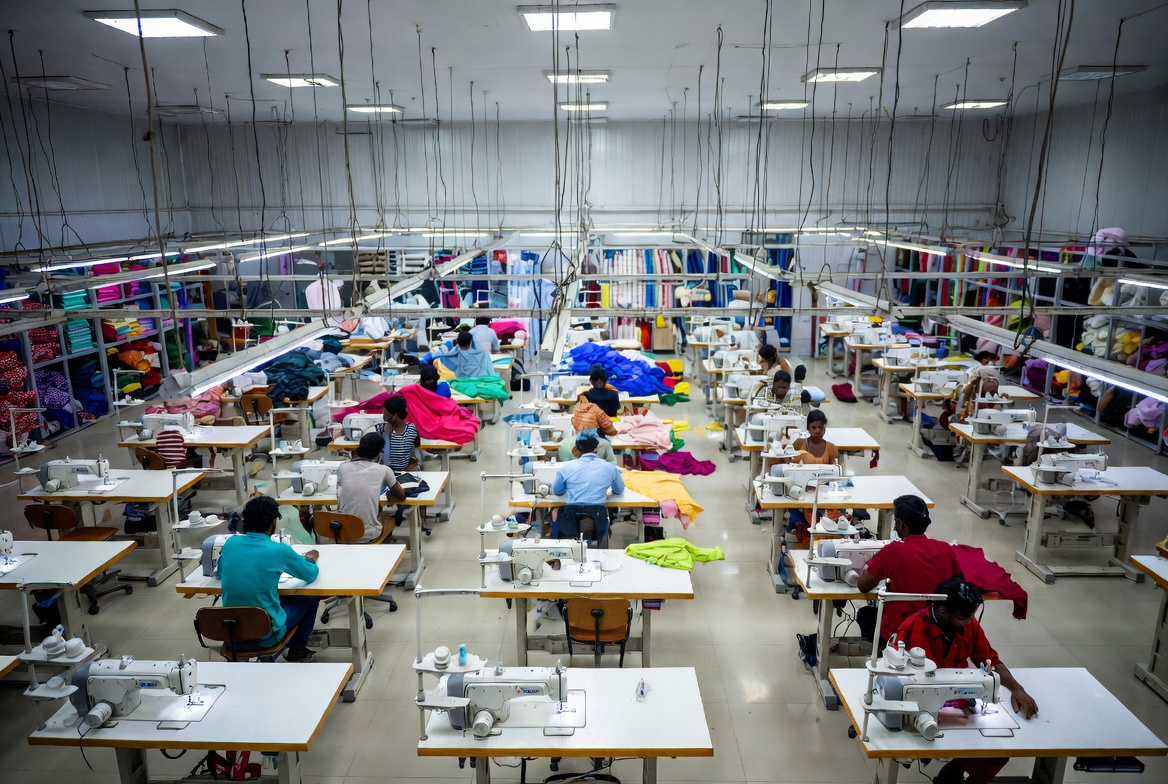
Clothing production hubs in Bangladesh are the backbone of one of the world’s most powerful garment industries. Bangladesh is the 2nd-largest apparel exporter globally, right after China. Every year, billions of dollars’ worth of clothing leave this country and end up in stores across Europe, North America, and beyond. The ready-made garment (RMG) sector drives this success, with major production cities like Dhaka, Chittagong, Gazipur, and Narayanganj leading the charge. At the centre of this industry is Texasia, one of the most trusted clothing production companies in Bangladesh, known for quality, compliance, and global reach.
What Are Clothing Production Hubs and Why They Matter Globally
Clothing production hubs in Bangladesh are geographic clusters where garment factories, textile mills, and apparel supply chains are concentrated. These hubs bring together raw materials, skilled workers, machinery, and export infrastructure all in one place. Think of them as purpose-built ecosystems where everything needed to make and ship clothing exists within reach. They are the engine behind Bangladesh’s $47 billion garment export industry.
How Clothing Production Hubs Support Global Apparel Supply Chains
Global fashion brands depend heavily on Bangladesh apparel manufacturing to meet massive demand at competitive prices. These hubs feed directly into the supply chains of brands like H&M, Zara, Gap, and Walmart. From bulk fabric sourcing to finishing and export, every step happens within these clusters. This makes delivery faster, coordination easier, and costs lower for international buyers.
Key Factors That Make Competitive
Several things give Bangladesh garment hubs their edge. First, labour costs remain among the lowest in Asia. Second, decades of experience have created a highly skilled garment workforce. Third, the country has strong trade agreements, including duty-free access to the EU under the GSP program. Fourth, local accessory and fabric suppliers reduce import dependency. Together, these factors make Bangladesh a top-tier sourcing destination.
Major Clothing Production Hubs in Bangladesh in the RMG Sector
Dhaka: The Largest Clothing Production Hub in Bangladesh
Dhaka is the undisputed centre of Bangladesh’s garment manufacturing. The capital city and its surrounding areas house thousands of Dhaka garment factories, ranging from small workshops to massive export-ready facilities. Areas like Ashulia, Mirpur, and Uttara are densely packed with knitwear and woven apparel manufacturers. Dhaka factories supply some of the world’s biggest fashion brands. The city has world-class, compliance-certified factories, modern production lines, and a deep talent pool, which keep it at the top of the RMG sector.
Chittagong: Strategic Port-Based Clothing Production Hub in Bangladesh
Chittagong plays a unique role in clothing production because it sits right next to the country’s main seaport. Chittagong apparel manufacturers benefit from shorter export timelines than those of inland factories. Goods produced here can be loaded and shipped more quickly, a major advantage for time-sensitive orders. The city also has a growing number of compliance-certified factories, making it attractive to European and American buyers who prioritise ethical sourcing.
Gazipur and Narayanganj as Specialised
Gazipur is famous for knitwear production, with hundreds of factories specialising in t-shirts, polo shirts, and sportswear. It is one of the most concentrated knitwear manufacturing zones in the world. Gazipur is home to knitwear manufacturers like Texasia, which operate large-scale facilities here. Narayanganj, on the other hand, has a strong reputation for yarn and fabric production, earning it the nickname “the yarn city.” A Narayanganj garment factory setup often includes vertically integrated textile operations.
Emerging Clothing Production Hubs in Bangladesh (Khulna, Cumilla, Mymensingh)
Cities like Khulna, Cumilla, and Mymensingh are gradually emerging as garment production hubs. The government is pushing investment into these areas through new Export Processing Zones (EPZs) and infrastructure projects. These cities offer lower land and labour costs than Dhaka or Chittagong, making them appealing for manufacturers looking to expand without high overhead.
Infrastructure and Supply Chain Supporting
Industrial Zones and Export Processing Zones
Bangladesh has several Export Processing Zones (EPZs) managed by BEPZA, located in Dhaka, Chittagong, Comilla, Ishwardi, and other cities. These zones provide factories with tax benefits, pre-installed utilities, and streamlined customs procedures. Special Economic Zones (SEZs) are also being developed to attract foreign direct investment into the garment sector.
Fabric, Textile, and Accessories Supply Network
One of the biggest strengths of production hubs in Bangladesh is the depth of the local supply chain. Narayanganj supplies yarn and grey fabric, while local accessory markets in Dhaka provide buttons, zippers, labels, threads, and packaging. This means factories can source most materials locally, significantly reducing lead times and import costs.
Logistics, Ports, and Global Export Connectivity
Chittagong Port handles over 90% of Bangladesh’s export cargo. It connects directly to major shipping routes across Europe, the US, and Asia. Dhaka also has an inland container depot (ICD) that links to Chittagong by rail and road. Hazrat Shahjalal International Airport supports air freight for urgent or high-value shipments. This export connectivity is a key reason why global brands source from Bangladesh.
Types of Products Manufactured
Knitwear Manufacturing
Knitwear is Bangladesh’s strongest product category. Factories produce millions of units of t-shirts, polo shirts, hoodies, sweatshirts, tank tops, leggings, and joggers every year. The knitwear sector is vertically integrated in many factories, meaning that spinning, knitting, dyeing, cutting, and sewing all take place under one roof.
Woven Apparel Production
Woven garments include trousers, shorts, denim jeans, woven shirts, and formal wear. Bangladesh has a strong and growing woven apparel sector, with factories capable of handling complex constructions and fabric treatments. Dresses, rompers, and bodysuits are also produced in large volumes for international fashion brands.
Activewear and Performance Clothing
Activewear production is a fast-growing segment in Bangladesh’s clothing production hubs. Factories now produce moisture-wicking fabrics, compression wear, gym sets, and athletic outerwear for global sportswear brands. With the right certifications and fabric capabilities, Bangladesh is becoming a reliable source for performance apparel.
Private Label and OEM Production
Many factories in Bangladesh offer private label manufacturing and OEM (Original Equipment Manufacturer) production. This means brands can bring their own designs to market under their own label. Wholesale clothing manufacturers and bulk apparel manufacturers in Bangladesh support both small brands and global retail giants with custom production runs.
Why Global Brands Choose Production Hubs in Bangladesh
It attracts brands from across the world, and there are very clear reasons why.
Cost Efficiency and Labour Expertise
Bangladesh offers some of the lowest production costs in Asia without sacrificing quality. The minimum wage for garment workers, while still debated, is significantly lower than in China, Vietnam, or India. At the same time, workers here have years of hands-on experience in garment construction, pattern cutting, sewing, and finishing. Cost efficiency paired with skilled labour is a combination that is hard to beat.
Compliance and Certification Standards
After major industry reforms post-2013, Bangladesh made massive strides in factory safety and compliance. Today, thousands of factories are WRAP, BSCI, OEKO-TEX, and GOTS certified. Bangladesh also has the highest number of LEED-certified green garment factories in the world. These certifications matter to global brands that have ethical sourcing commitments.
Large-Scale Production Capacity
Bangladesh can handle massive order volumes that smaller sourcing countries cannot. With over 4,000 export-ready garment factories and millions of skilled workers, the country can fulfil orders of millions of units within tight deadlines. Bulk apparel production at scale is one of Bangladesh’s strongest selling points.
Sustainability and Ethical Manufacturing
More brands are now looking for sustainable garment production, and Bangladesh is responding. Factories are investing in solar energy, water recycling, and chemical management systems. Many are also improving worker welfare programs, fair wages, and safe working conditions. Ethical manufacturing is no longer an option — it is a requirement for global buyers, and Bangladesh is meeting that standard.
Texasia’s Role in Strengthening Clothing Production Hubs in Bangladesh
Texasia is a leading garment manufacturer based in Bangladesh, playing a meaningful role in elevating the standard of clothing production.
Texasia’s Manufacturing Infrastructure
Texasia operates modern, compliance-certified manufacturing facilities equipped with advanced machinery for knitwear and woven apparel production. Their production setup covers the full cycle — from fabric sourcing to cutting, sewing, finishing, and export packaging. They produce a wide range of products, including pyjamas, kidswear, activewear, and more.
Global Brand Partnerships
Texasia works with brands across Europe, North America, and Australia, supplying private label and OEM products at scale. Their experience in importing garments from Bangladesh gives them a clear understanding of what international buyers need in terms of quality, documentation, and timelines. Brands looking to contact Texasia for sourcing partnerships will find a team that understands global fashion requirements.
Quality Control and Compliance Leadership
Texasia maintains strict quality control protocols at every stage of production. From fabric inspection to AQL testing before shipment, every order undergoes a thorough quality check. Their compliance record reflects a commitment to ethical manufacturing that aligns with the expectations of global fashion buyers.
Professional Expertise and Industry Authority
First-Hand Industry Experience
The professionals working within clothing production bring years of real production experience. From factory floor supervisors to export managers, this workforce understands garment construction, international quality standards, and buyer requirements inside out. This practical knowledge is what makes Bangladesh a dependable partner for global brands.
Educational Background and Certifications
Bangladesh has developed strong textile and garment education institutions, including BGMEA University of Fashion and Technology. Professionals graduating from these institutions bring technical knowledge directly into factories. Many factory managers also hold international certifications in quality management, lean production, and compliance.
Practical Exposure and Field Knowledge
Factory workers and managers in Bangladesh garment hubs regularly interact with international buyers, quality auditors, and sourcing agents. This repeated exposure builds a deep understanding of what global markets expect, aligning Bangladeshi factories with international production standards year after year.
Real-World Experience and Case Studies from Clothing Production Hubs in Bangladesh
Practical Case Study Overview
A European activewear brand decided to shift 30% of its production from China to Bangladesh in 2022. They partnered with a Gazipur-based manufacturer to produce gym sets and compression wear. The move was driven by cost savings and the factory’s compliance certifications.
Challenges Faced in Real Scenarios
The brand faced early challenges with lead time consistency and yarn sourcing for technical fabrics. Communication gaps and shipping delays during the first quarter also created pressure on the supply chain.
Results, Outcomes, and Key Learnings
After six months of adjustment, the brand reported 18% in cost savings and maintained quality standards equivalent to those of its previous Chinese supplier. The key learning was that onboarding time matters — working with an experienced local sourcing agent from day one would have significantly reduced early friction.
Expert Insights and Professional Observations
Common Misconceptions
Many buyers assume that low cost means low quality in Bangladesh. This is outdated thinking. Today, Bangladesh produces premium garments for luxury and mid-market brands that have strict quality requirements. Another misconception is that all factories are the same — in reality, there is a wide spectrum of factory capabilities and compliance levels.
Expert Tips Based on Experience
Experienced sourcing professionals recommend visiting factories in person before placing large orders. Auditing a factory’s compliance records, inspecting its equipment, and speaking with its production team gives buyers a much clearer picture than online listings alone.
What Professionals Do Differently
Top sourcing professionals build long-term relationships with their Bangladesh manufacturers rather than switching suppliers frequently. Consistency in partnership leads to better pricing, priority production slots, and smoother communication over time.
Step-by-Step Practical Process
Initial Requirements and Preparation
Buyers start by sharing tech packs, fabric specifications, quantity requirements, and target pricing. The factory reviews the requirements and provides a costing sheet. Samples are then developed based on the buyer’s design files.
Execution Process Explained Clearly
Once the sample is approved, the factory proceeds with bulk fabric procurement, production planning, and line setup. Cutting, sewing, and finishing happen in stages. Quality checks are conducted in-line and at the end of the line before final packing and export documentation.
Common Mistakes to Avoid
Buyers often skip pre-production meetings or rush sample approvals, leading to bulk-production errors. Skipping fabric inspection or failing to confirm trims before bulk cutting are also common mistakes that lead to costly rework.
Best Practices for Better Results
Always request a pre-shipment inspection, confirm production timelines in writing, and establish clear quality standards before production starts. Having a local quality control agent in Bangladesh can make a significant difference in the final output.
Verified Data, Facts, and Evidence
Official Data and Trusted Sources
According to BGMEA (Bangladesh Garment Manufacturers and Exporters Association), Bangladesh exported apparel worth $46.99 billion in FY 2022-23. The country employs over 4 million garment workers, the majority of whom are women.
Indicator Data
Global Apparel Export Rank 2nd (after China)
Total Garment Export (FY 2022-23) $46.99 billion
Number of Export-Ready Factories 4,000+
Garment Workforce 4+ million
LEED-Certified Green Factories are the highest in the world
EU Market Share Approx. 60% of total exports
Industry Statistics and Reports
The World Trade Organisation (WTO) and International Labour Organisation (ILO) consistently rank Bangladesh as a top global supplier of ready-made garments. The country’s share of global apparel exports stands at approximately 6.5%.
Fact-Checking and Accuracy Notes
All figures in this content are drawn from BGMEA, BEPZA, WTO, and Bangladesh Bank reports. Numbers may shift slightly year to year based on global trade conditions, currency fluctuations, and demand cycles.
Transparency, Risks, and Limitations
Situations Where Results May Vary
Not every factory in Bangladesh meets the same standards. Compliance levels, quality output, and production capacity vary widely between facilities. Buyers should conduct proper due diligence before committing to a supplier.
Potential Risks and Drawbacks
Lead times can be longer than in nearby countries like Vietnam or Cambodia for specialised fabric types that require imports. Political instability, port congestion, and seasonal flooding can occasionally disrupt production or export timelines.
What This Content Does Not Cover
This content does not provide a complete buyer’s guide to legal contracts, payment terms, or detailed customs regulations. For those topics, consulting a Bangladesh trade lawyer or freight forwarder is recommended.
Future Growth and Investment Opportunities
Expansion of Industrial Zones
The Bangladesh government is actively developing new industrial zones through the Bangladesh Economic Zones Authority (BEZA). Over 100 economic zones are planned across the country, targeting both domestic and foreign investors. This expansion will create new clothing production hubs in Bangladesh outside the traditional Dhaka-Chittagong corridor.
Sustainability Investment
Green factory investment is on the rise. Brands are pushing their Bangladesh suppliers to adopt solar energy, install water treatment systems, and comply with chemical management standards. Government incentives for green manufacturing are also encouraging factory owners to upgrade their facilities.
Technology Adoption and Automation
Bangladesh garment factories are gradually adopting automated cutting machines, computerised embroidery, ERP systems, and digital fabric inspection tools. While full automation is still years away at scale, the shift toward technology-driven production is already visible in the larger, more export-ready factories.
Frequently Asked Questions
What are the main clothing production hubs in Bangladesh?
Dhaka, Chittagong, Gazipur, and Narayanganj are the four primary garment production hubs, with emerging zones developing in Khulna, Cumilla, and Mymensingh.
Why is Bangladesh the 2nd largest garment exporter in the world?
Bangladesh combines low production costs, a skilled workforce, strong trade agreements, and high factory capacity, making it one of the most competitive apparel sourcing destinations globally.
Is it safe to source garments from Bangladesh now?
Yes. After major factory safety reforms and compliance upgrades post-2013, thousands of Bangladeshi factories are now WRAP, BSCI, and LEED certified, making them safe and reliable for global buyers.
What types of clothing are produced in Bangladesh?
Bangladesh produces knitwear, woven apparel, denim, activewear, kidswear, sleepwear, and performance clothing across thousands of factories serving global brands.
How do I find a reliable garment manufacturer in Bangladesh?
Start by checking factory compliance records, requesting samples, and looking for manufacturers with strong export histories. Companies like Texasia offer verified manufacturing with global brand experience.
What is the minimum order quantity for Bangladesh garment factories?
MOQs vary by factory and product type, but most mid-sized factories start at 500 to 1,000 units per style, with larger factories requiring higher minimums for better pricing.
How long does production take in Bangladesh?
A standard production timeline, including sampling and bulk production, typically runs 60 to 90 days, depending on fabric availability, order size, and factory workload.
What certifications should I look for in a Bangladesh factory?
Look for WRAP, BSCI, OEKO-TEX, GOTS, and ISO certifications, as these indicate that the factory meets international standards for quality, safety, and ethical manufacturing.
Conclusion
Bangladesh’s clothing production hubs are a global force. With world-class factories, a skilled workforce, strong compliance standards, and a deep supply chain, Bangladesh continues to grow as a top sourcing destination. Whether a brand is placing its first bulk order or scaling an existing supply chain, Bangladesh offers the capacity, quality, and cost advantage that few other countries can match right now.

