
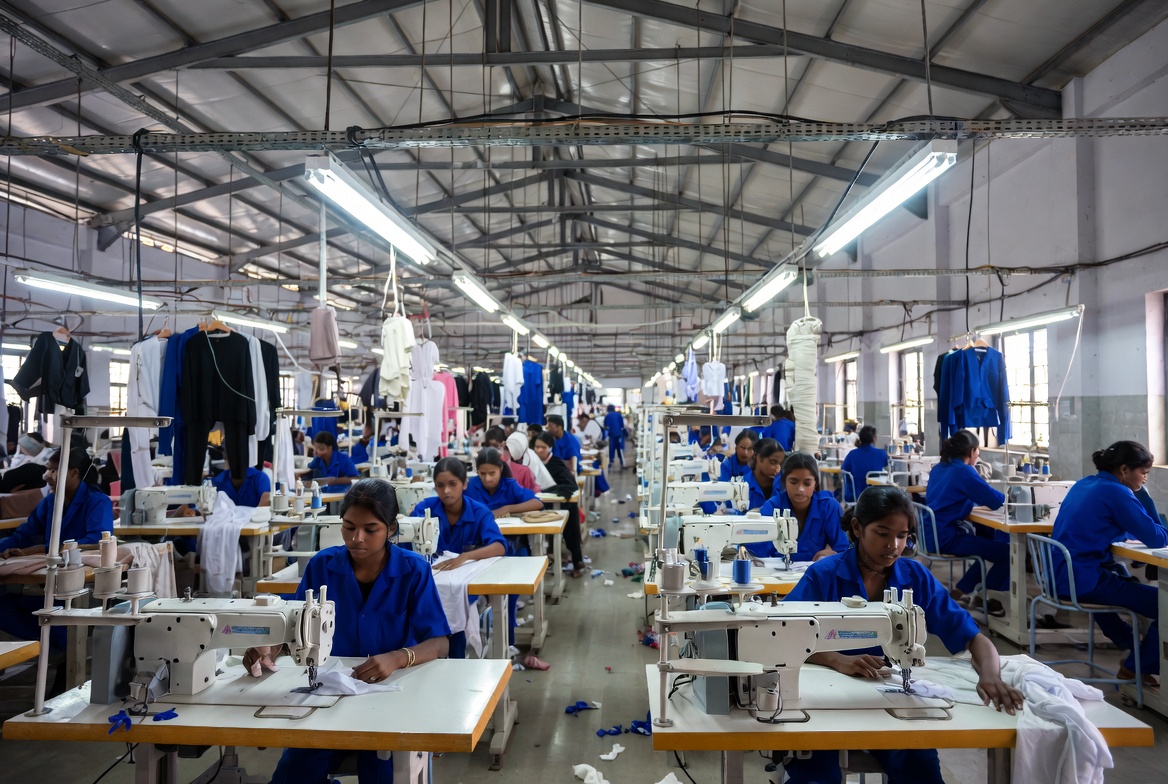
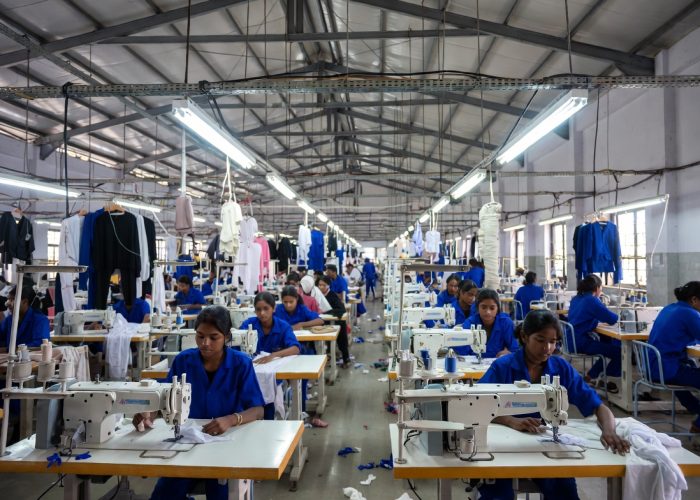
The Bangladesh clothing export industry is one of the most powerful forces in global fashion supply chains. From high-street retailers in Europe to major retail brands in North America, countless labels depend on Bangladesh for affordable, high-quality, and compliant garment production. Bangladesh has grown from a small-scale textile producer into the second-largest apparel exporter in the world, right behind China.
Every year, billions of dollars’ worth of clothing leave Bangladeshi ports bound for customers across the globe. The industry supports millions of workers, drives national economic growth, and keeps global fashion brands competitive on price. For sourcing managers, buyers, and importers, Bangladesh remains the go-to destination for bulk apparel manufacturing at scale.
Among the many players in this space, Texasia stands out as a leading clothing exporter in Bangladesh, known for its high-quality output, compliance with industry standards, and strong buyer relationships across multiple continents.
Overview of Bangladesh RMG Export Sector and Global Position
The Bangladesh RMG export sector, RMG standing for Ready-Made Garments, is the backbone of the country’s economy. The sector includes everything from basic T-shirts and polo shirts to complex woven trousers, outerwear, and children’s clothing. It is a fully integrated industry that covers spinning, knitting, weaving, dyeing, cutting, stitching, finishing, and export.
Bangladesh earns roughly 84% of its total export revenue from the garment sector. In fiscal year 2022-23, the country exported over $46 billion worth of apparel and textiles, making it a critical player in the global supply chain.
Country Global Apparel Export Rank Estimated Annual Export Value
China 1st ~$159 billion
Bangladesh 2nd ~$46 billion
Vietnam 3rd ~$37 billion
India 4th ~$16 billion
Turkey 5th ~$19 billion
Compared to competitors such as Vietnam and India, Bangladesh offers a unique combination of lower labor costs, greater production capacity, and strong buyer familiarity built over decades. China, while still the largest exporter, is seeing production costs rise, which is pushing more global brands toward Bangladesh.
The clothing export industry contributes nearly 11-13% to the national GDP and employs over 4 million workers, the majority of whom are women. This makes the sector not just an economic engine but also a major driver of social development.
Historical Growth of the Bangladesh Clothing Export Industry
The export industry began in the early 1980s. The first garment factory was established in the late 1970s, and by 1983-84, garment exports crossed the $31 million mark. The government recognized the potential early and started offering export incentives, duty drawback benefits, and bonded warehouse facilities.
Through the 1990s and 2000s, the industry scaled up rapidly. Multi-Fiber Arrangement (MFA) quotas actually worked in Bangladesh’s favor, as brands looked to diversify their sourcing. Trade agreements, such as the Generalized System of Preferences (GSP) with the EU, gave Bangladesh duty-free access to major markets. By 2010, the country had crossed $12 billion in garment exports, and growth has not stopped since.
Major Export Destinations
The ready-made garment export network of Bangladesh covers nearly every major clothing market worldwide. The top destinations include:
- United States: The largest single-country buyer of Bangladeshi garments
- Germany, the top EU destination, is sourcing heavily in knitwear and woven categories
- United Kingdom: A major market with strong sourcing volume post-Brexit
- Spain and France are growing fashion retail markets, importing a wide range of apparel
- Italy is primarily focused on mid-range and fashion-forward categories
- Canada is a consistent buyer, especially in casualwear and basics
- Australia: An emerging destination with rising import volumes
The European Union collectively accounts for about 60% of Bangladesh’s total garment exports, making it the most important trade bloc for the industry.
Structure of Apparel Export Companies in Bangladesh
The apparel export companies in Bangladesh are not all the same. The industry has several distinct types of operators, each playing a different role in the supply chain. Understanding this structure helps global buyers choose the right partner for their specific needs.
Direct exporters handle the full cycle from production to export documentation and shipping. They have their own factories or long-term factory partnerships and manage everything to ensure a successful end.
Manufacturers focus purely on production. They may not have export licenses themselves and often work through exporters or buy houses to get products to international markets.
Buying houses acts as an intermediary. They represent international brands in Bangladesh, coordinate production across multiple factories, and manage quality, compliance, and communication on behalf of the buyer.
Sourcing companies are similar to real estate agents, but often work with a broader network and may have global offices. They advise brands on supplier selection, pricing, and supply chain structure.
Type Main Function Best For
Direct Exporter Production + Export to large volume buyers
Manufacturer Production only Buyers with sourcing agents
Buying House Coordination Brands new to Bangladesh
Sourcing Company Strategy + Supply Chain Multi-country sourcing brands
Exporter vs Manufacturer vs Buying House Roles
Each player in the Bangladesh industry fills a specific gap. A direct exporter is the most self-sufficient; they can receive your order, produce it, pack it, and ship it to your warehouse. A manufacturer needs external help for export paperwork and buyer communication. Buying a house bridges the gap between buyer and factory, especially useful for brands sourcing from Bangladesh for the first time.
Choosing the wrong type of partner can lead to communication gaps, compliance failures, or missed deadlines. For most international brands, working with a direct exporter that owns a factory or has strong factory partnerships is the safest and most efficient path.
How Texasia Supports Global Apparel Export Operations
Texasia supports international buyers through every stage of the export process. From the moment a buyer sends an inquiry, Texasia handles export coordination, product development, and sample production. Their team manages all quality control checkpoints during bulk production, including inline inspection, pre-final inspection, and final random inspection before shipment.
On the logistics side, Texasia coordinates with freight forwarders, handles export documentation, and ensures that all shipments meet the customs requirements of the destination country. Buyer communication is managed by a dedicated team that keeps clients informed at every stage, from production start to cargo loading.
Export Products in Ready-Made Garments Export Bangladesh
The ready-made garment export industry in Bangladesh covers an impressive range of product categories. Bangladesh is no longer just a source of basic T-shirts; it now produces complex fashion items, performance wear, and specialty clothing for all ages.
Major export categories include:
- Knitwear (T-shirts, polos, hoodies, sweatshirts, leggings, joggers)
- Woven garments (trousers, denim jeans, shirts, shorts)
- Activewear and sportswear (tank tops, performance leggings, athletic sets)
- Outerwear and winter clothing (jackets, fleece, quilted wear)
- Children’s apparel (kidswear across all sub-categories)
Product Category Bangladesh Strength Key Export Markets
Knitwear Very High USA, Germany, UK
Woven Trousers High EU, Canada
Denim Jeans Growing USA, UK
Children’s Wear High Germany, France, Australia
Activewear Rapidly Growing in the USA and Australia
Knitwear Export Leadership
The Bangladesh export industry has always been strongest in knitwear. Products like T-shirts, polo shirts, hoodies, sweatshirts, leggings, and joggers are produced in massive volumes with strong quality consistency. Bangladesh has a highly developed backward linkage in knitwear — meaning that most yarn, fabric, and accessories are sourced locally, which significantly reduces lead times and production costs. The Gazipur and Narayanganj regions are particularly well-known as hubs of knitwear production.
Woven Garment Export Capabilities
The woven segment of Bangladesh’s ready-made garment exports has grown sharply over the last decade. Products including trousers, denim jeans, shorts, and woven tops are now exported in large volumes to the EU and North American markets. Woven garments require more complex fabric sourcing and production processes, and Bangladeshi factories have invested in advanced machinery and skilled operators to meet global demand. The woven export sector is expected to grow further as brands look for diversified sourcing beyond knitwear.
Export Supply Chain and Operational Process
The Bangladesh clothing export industry follows a well-structured operational process that global buyers can rely on. Here is how the full cycle works from first contact to cargo delivery:
Step 1 Buyer Inquiry: The buyer shares product specifications, target price, quantity, and delivery requirements.
Step 2 Product Development and Sampling: The exporter develops a sample based on the buyer’s specifications. This may go through multiple revision rounds before approval.
Step 3: Costing and Negotiation. Once the sample is approved, the exporter submits a costing sheet. Price negotiation takes place here, along with confirmation of the MOQ (Minimum Order Quantity).
Step 4 Bulk Production: After purchase order confirmation and advance payment, bulk production begins. Fabric is sourced, cut, stitched, and finished in accordance with approved specifications.
Step 5 Quality Inspection: Inline inspections are conducted during production. A final random inspection is carried out before packing, often by a third-party quality control agency.
Step 6 Packaging: Garments are packed per buyer requirements — polybag type, carton specifications, shipping marks, and labels.
Step 7 Shipping and Export Documentation: The consignment is moved to the port, and all export documents are prepared for customs clearance and delivery to the buyer.
Export Documentation
The Bangladesh industry relies on a standard set of documents to move goods across international borders. Every shipment must include:
- A commercial invoice states the buyer, seller, product details, quantity, and total value.
- Packing List Breaks down carton contents, weights, and dimensions.
- Bill of Lading: The key shipping document issued by the freight carrier
- A Certificate of Origin confirms that the goods were produced in Bangladesh, required for GSP duty benefits in the EU and other markets.
Missing or incorrect documentation is one of the most common causes of customs delays. Experienced exporters like Texasia ensure all documents are accurate and submitted on time.
Logistics and International Shipping Process
Ready-made garment export shipments from Bangladesh are primarily moved through Chittagong Port, the main seaport that handles over 90% of the country’s export cargo. Goods are loaded into FCL (Full Container Load) or LCL (Less than Container Load) shipments depending on order volume. Major shipping lines service routes to Europe, North America, and Australia. Transit times typically range from 18 to 28 days for Europe and 20 to 35 days for North America, depending on the shipping line and port of destination. Air freight is also available for urgent shipments, though at a much higher cost.
Competitive Advantages
The Bangladesh industry continues to attract global brands year after year because of a clear set of competitive strengths:
Low Production Costs Bangladesh offers some of the most competitive labor rates in the world, keeping garment production costs significantly lower than in China, Vietnam, or Turkey.
Large Skilled Workforce Over 4 million workers are employed in the sector, with years of experience in knitting, weaving, and garment assembly. Skilled supervisors and mid-level managers are widely available.
Scale and Capacity: Bangladesh has thousands of export-oriented garment factories capable of handling multi-million-piece orders. This makes it ideal for large global brands that need a consistent, high-volume supply.
Compliance with Global Standards. The industry has invested heavily in worker safety, environmental practices, and social compliance. Most major factories are audited by international buyers and certified under globally recognized standards.
Government Support: The Bangladesh government offers cash incentive schemes, bonded warehouse facilities, duty drawback benefits, and preferential trade agreements that reduce export costs to major markets.
Compliance, Certifications, and Export Standards
The industry has made compliance a central part of its global competitiveness. After the Rana Plaza tragedy in 2013, the industry undertook a massive factory safety remediation program led by the Accord on Fire and Building Safety and the Alliance for Bangladesh Worker Safety. Today, factories are regularly audited, and many have achieved world-class safety standards.
Key certifications common in the industry include:
- ISO 9001 Quality management systems
- WRAP (Worldwide Responsible Accredited Production) Social compliance certification
- BSCI (Business Social Compliance Initiative) European social audit standard
- OEKO-TEX Standard 100 certifies that textiles are free from harmful substances
- GOTS (Global Organic Textile Standard) for organic and sustainable production
Sustainable export practices are growing fast. More factories are installing solar panels and water-recycling systems, and using sustainable raw materials to meet the demands of eco-conscious European and North American brands.
Professional Expertise and Industry Authority
The export industry is not just a numbers game; it is built on deep expertise accumulated over four decades. Industry professionals working in export operations bring firsthand knowledge of production monitoring, quality systems, compliance requirements, and international buyer management.
Many export professionals in Bangladesh hold degrees in Textile Engineering or Business Administration and have additional certifications in social compliance auditing, quality management, and supply chain management. This educational foundation, combined with years of on-the-floor factory experience, produces professionals who understand both the technical and commercial sides of the business.
The practical exposure that comes from managing real orders, negotiating prices, resolving production issues, and handling shipment delays builds a kind of expertise that no classroom can fully teach.
Real-World Experience and Case Studies
Case Study: Knitwear Export to a European Fashion Brand
A mid-sized European fashion brand approached a Bangladeshi exporter seeking 50,000 units of organic cotton hoodies in 12 weeks, a tight lead time for a complex product. The key challenges were sourcing GOTS-certified fabric locally, meeting the brand’s strict color consistency requirements, and arranging pre-shipment quality inspection by a third-party agency.
The exporter worked with a Gazipur-based knitwear manufacturer that had established relationships with certified yarn suppliers. Inline quality checks were conducted weekly. The shipment was delivered within the agreed window, passed the buyer’s quality inspection, and the brand placed a repeat order within three months. The key learning: working with experienced, certified exporters who have strong factory networks is what separates a smooth export from a disaster.
Expert Insights and Professional Observations
One of the most common misconceptions about the export industry is that quality is always low. This is simply not accurate. Factories supplying to major global brands like H&M, Zara, Primark, and Gap consistently meet strict quality benchmarks. The quality depends entirely on the factory, the compliance standards they follow, and the quality systems in place.
Experienced sourcing professionals know to look at certifications, audit reports, and production capacity before selecting a supplier. They do not just compare prices; they evaluate the full picture.
What professionals in the industry do differently is that they invest in ongoing quality monitoring throughout production rather than just checking finished goods. This proactive approach catches problems early and protects the buyer from costly rejections or rework.
Step-by-Step Practical Process
Before placing an order with any exporter in Bangladesh, buyers need to clarify their requirements completely, including target price, quality standards, compliance requirements, packaging specifications, and delivery timeline. Incomplete briefs are one of the biggest causes of production errors.
The execution process moves from sample approval to purchase order, then into bulk production with regular quality checkpoints, followed by final inspection, packing, and shipment.
Common mistakes to avoid:
- Choosing a supplier based purely on the lowest price
- Skipping sample approval and going straight to bulk
- Poor communication during production
- Not conducting pre-shipment inspection
Best practices: Work with established, certified exporters. Use third-party quality inspection services. Keep communication clear and documented throughout. Companies like Texasia are equipped to guide buyers through every step of the process.
Verified Data, Facts, and Evidence
The clothing export industry data is tracked and published by credible official bodies:
- BGMEA (Bangladesh Garment Manufacturers and Exporters Association) is the primary trade body publishing factory counts, export values, and employment data
- The Export Promotion Bureau (EPB) is a government body that tracks monthly export statistics.
- Bangladesh Bank Tracks foreign exchange earnings from exports
Key verified statistics:
Data Point Figure Source
Total RMG Export (2022-23) $46.99 billion EPB
Share of Total Exports ~84% BGMEA
Total Employed Workers 4+ million BGMEA
Number of Export Factories ~3,500+ BGMEA
Global Ranking 2nd WTO
All figures are government-verified and updated regularly. Buyers and researchers should cross-check data with the official publications of BGMEA and EPB for the most up-to-date numbers.
Transparency, Risks, and Limitations
Like any global supply chain, the clothing export industry carries certain risks that buyers should be aware of before sourcing.
Production delays can occur due to fabric sourcing issues, power outages, or worker-related disruptions. Experienced exporters build buffer time into production schedules to manage this.
Supply chain disruptions, whether caused by global shipping congestion, port strikes, or geopolitical events, can affect delivery timelines. Buyers should plan orders well in advance and avoid extremely tight delivery windows.
Global demand fluctuations affect order volumes. During economic downturns in key markets like the EU or the USA, order cancellations can impact factory capacity and lead times for remaining buyers.
This content covers the overall export industry structure, process, and competitive landscape. It does not cover specific exporter contract negotiations, individual factory pricing structures, or legal advice on trade agreements. Buyers should consult legal and trade compliance professionals for those specifics.
Future Trends in the Bangladesh Industry
The Bangladesh clothing export industry is entering a new phase of growth, one that goes beyond volume and price competition.
Sustainable manufacturing is becoming a core requirement for global brands. Bangladesh already has the highest number of LEED-certified green garment factories in the world, a fact that positions the country well as brands tighten their environmental commitments.
Automation is being adopted across cutting, spreading, and finishing, improving consistency and reducing production time. While full automation remains limited by the nature of garment assembly, technology is playing an increasingly important role each year.
Eco-friendly materials, including organic cotton, recycled polyester, and Tencel, are increasingly used as brands face pressure from consumers and regulators to clean up their supply chains.
High-value apparel categories like performance wear, sustainable fashion, and technical textiles are growing export segments. Bangladesh is no longer limited to basic commodities; the industry is moving up the value chain.
The next decade is likely to see Bangladesh consolidate its position as the preferred sourcing destination for brands that care about price, compliance, sustainability, and production scale.
Why International Brands Choose Texasia for Export Partnership
When global brands look for reliable apparel export companies in Bangladesh, Texasia consistently stands out as a trusted partner. With deep roots in Bangladesh’s garment industry and a product range spanning bodysuits and rompers to dresses, pajamas, and kidswear, Texasia serves buyers across Europe, North America, and beyond.
Texasia operates with full compliance transparency, sharing audit reports, certifications, and factory credentials with buyers before any order is placed. Their quality assurance process covers every stage of production, from raw material inspection to final packing checks.
Buyers working with Texasia get a dedicated team for communication, sampling, costing, and order tracking. The team speaks the language of international sourcing, understanding buyer expectations around lead times, tech packs, labeling, and compliance requirements.
For brands that want a partner who can handle wholesale clothing manufacturing and bulk apparel production with professionalism and accountability, Texasia is the right choice.
Frequently Asked Questions
What is the Bangladesh clothing export industry?
The Bangladesh clothing export industry refers to the country’s large-scale production and export of ready-made garments, including knitwear and woven products, to international markets across Europe, North America, and beyond.
How much does Bangladesh earn from garment exports?
Bangladesh earned approximately $46.99 billion from garment exports in fiscal year 2022-23, making it the second-largest apparel exporter in the world.
What types of garments does Bangladesh export?
Bangladesh exports a wide range of products, including T-shirts, polo shirts, hoodies, woven trousers, denim jeans, activewear, children’s clothing, dresses, and outerwear, among others.
Which countries buy the most garments from Bangladesh?
The United States, Germany, the United Kingdom, Spain, and France are among the top buyers of Bangladeshi garments, with the EU collectively accounting for roughly 60% of exports.
Is Bangladesh’s garment production compliant with international standards?
Most major export-oriented factories in Bangladesh are certified under international standards, including WRAP, BSCI, OEKO-TEX, and ISO, and are regularly audited by global brands and third-party agencies.
What is BGMEA?
BGMEA (Bangladesh Garment Manufacturers and Exporters Association) is the main trade body representing the garment export industry and publishes official data on factories, exports, and employment.
How long does shipping from Bangladesh take?
Sea freight from Bangladesh to Europe typically takes 18 to 28 days, while shipments to North America usually take 20 to 35 days, depending on the shipping line and destination port.
What certifications should I look for in a Bangladesh exporter?
Look for exporters with WRAP, BSCI, OEKO-TEX, ISO 9001, and GOTS certifications, as these confirm compliance with international quality, safety, and environmental standards.
Can I source sustainable and eco-friendly garments from Bangladesh?
Yes, Bangladesh has the highest number of LEED-certified green garment factories globally, and many factories now work with organic cotton, recycled fabrics, and eco-friendly production processes.
Why should I work with Texasia for Bangladesh garment exports?
Texasia offers end-to-end export support, backed by strong compliance credentials, quality assurance systems, and a wide product range, making it a dependable partner for global brands sourcing from Bangladesh.
Conclusion
The Bangladesh clothing export industry is a world-class supply chain built on decades of experience, a skilled workforce, competitive costs, and growing sustainability commitments. For any global brand looking to source quality apparel at scale, Bangladesh remains the smartest choice, and working with experienced, certified partners like Texasia makes the entire process smoother, safer, and more reliable.

